CM Bhajanlal flags off 144 new Rajasthan Roadways buses from Jaipur
Synopsis
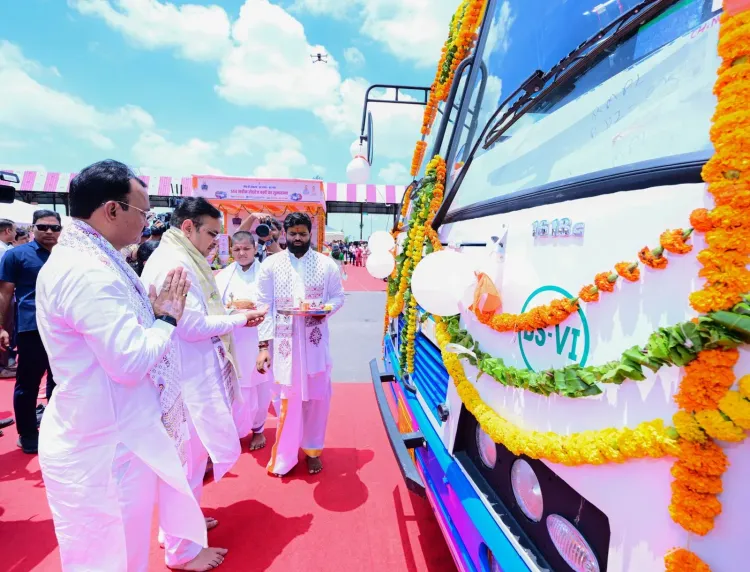
Chief Minister Bhajanlal Sharma flagged off 144 new Rajasthan Roadways buses from Jaipur's Hirapura Bus Terminal on 27 July 2026, declaring RSRTC has turned profitable. He also distributed helmets to women road-safety ambassadors and urged citizens to follow traffic rules.
Key Takeaways
144 new buses were flagged off from Hirapura Bus Terminal, Jaipur on 27 July 2026 by CM Bhajanlal Sharma .
The Chief Minister stated that Rajasthan Roadways (RSRTC) has moved from losses to a profitable position due to positive policies and effective management.
The government's stated priority is to provide safe, accessible, and modern public transport to every corner of Rajasthan .
CM Sharma distributed helmets to women designated as road-safety ambassadors at the event.
He appealed to all Rajasthan residents to follow traffic rules and wear helmets mandatorily while riding two-wheelers.
The fleet expansion continues a longer pattern of phased RSRTC modernisation targeting rural and semi-urban connectivity.
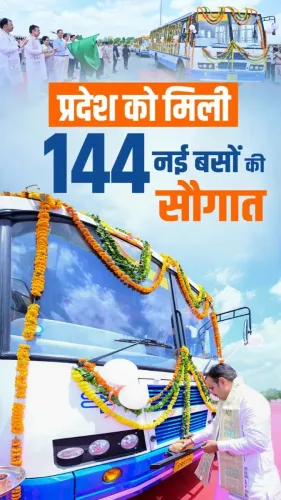
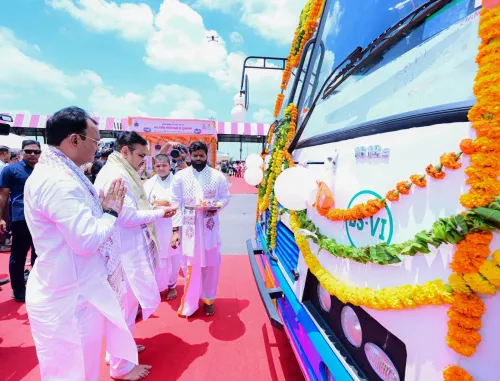
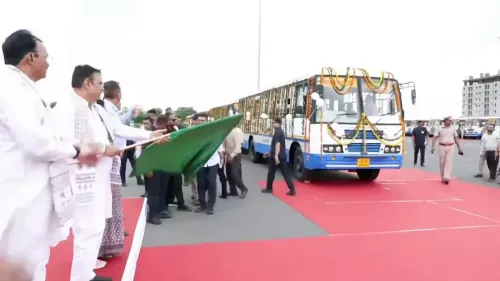
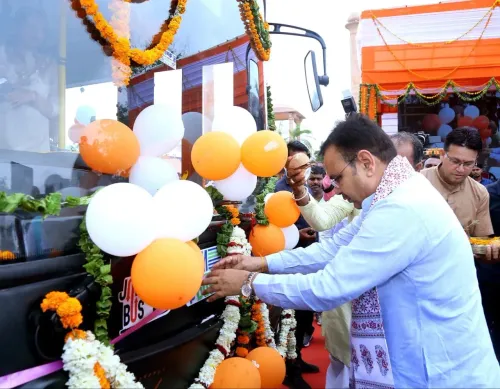
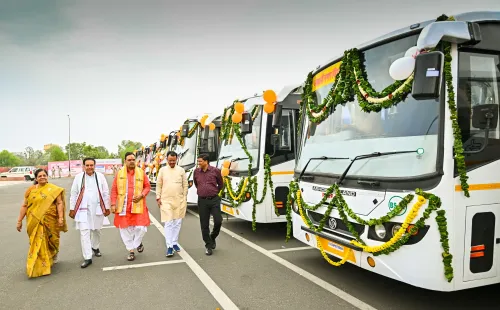
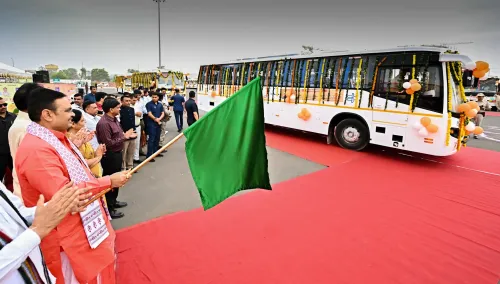
Chief Minister Bhajanlal Sharma on Monday, 27 July 2026, flagged off 144 new buses of Rajasthan Roadways from the Hirapura Bus Terminal in Jaipur, marking a significant expansion of the state's public transport fleet. The Chief Minister's Office of Rajasthan announced the development, underscoring the government's commitment to extending safe, accessible, and modern transport to every corner of the state.
Context
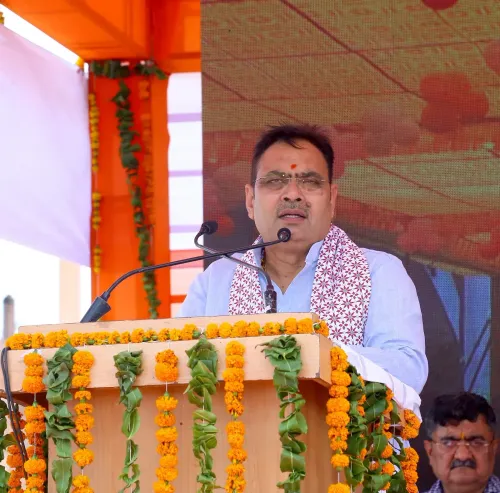
Addressing the gathering at Hirapura, CM Sharma stated that providing 'surakshit, sulabh aur aadhunik sarvajanik parivahan' (safe, accessible and modern public transport) to every part of Rajasthan is a priority of the state government. The flag-off signals a concrete step toward that goal, adding 144 vehicles to the operational fleet of the Rajasthan State Road Transport Corporation (RSRTC).
The Chief Minister also highlighted a financial turnaround at the corporation, stating that owing to 'positive policies and effective management,' Rajasthan Roadways has moved out of losses and into a profitable position. This marks a notable shift for a public utility that had long struggled with operational deficits.
Policy Backdrop
RSRTC, the state-owned inter-city and rural bus service, has been a focus of successive Rajasthan governments seeking to modernise its ageing fleet and rationalise routes. Earlier transport department plans had envisaged phased fleet upgrades to improve last-mile connectivity, particularly to rural and semi-urban areas. The current induction of 144 buses is in line with that longer arc of incremental modernisation.
The profitability claim, if sustained, would represent a meaningful governance outcome. Route rationalisation and operational reforms introduced in the period following December 2023 — when CM Sharma took office — are credited by the government as key drivers of the financial improvement.
Stakeholders and Impact
The primary beneficiaries are the millions of daily bus passengers across Rajasthan, especially those in districts underserved by private transport. Newer buses are expected to improve ride quality, punctuality, and safety standards on inter-city and rural routes. Commuters in remote areas stand to gain the most from any expansion of RSRTC's network reach.
Separately, CM Sharma used the occasion to distribute helmets to women designated as 'sadak suraksha agradoot' (road safety ambassadors). He appealed to the people of Rajasthan to follow traffic rules and to mandatorily wear helmets while riding two-wheelers. The gesture ties the fleet launch to a broader road-safety awareness campaign running alongside the transport initiative.
What's Next
Attention will now turn to the deployment of these 144 buses — specifically which district headquarters and rural corridors receive priority coverage. The government's claim of RSRTC's return to profitability will face scrutiny when the corporation's next financial disclosures are made public. Further fleet expansion, and any dedicated budget allocations for RSRTC in upcoming state finance cycles, will indicate whether this initiative is a one-time push or part of a sustained capital investment plan. The road-safety ambassador programme, anchored by helmet distribution, is also expected to continue in subsequent phases across the state.
Point of View
So any credible turnaround narrative strengthens the government's reform credentials ahead of future electoral cycles. The helmet distribution to women ambassadors also signals an attempt to build a visible, community-level road-safety identity, a tactic that doubles as grassroots outreach. Whether the 144-bus induction translates into measurable improvements in rural connectivity will ultimately determine the initiative's policy legacy.
NationPress
27 Jul 2026
Frequently Asked Questions
How many new buses did Rajasthan Roadways get in July 2026?
144 new buses were added to the Rajasthan Roadways fleet when CM Bhajanlal Sharma flagged them off from Hirapura Bus Terminal in Jaipur on 27 July 2026 .
Is Rajasthan Roadways (RSRTC) profitable now?
CM Bhajanlal Sharma stated on 27 July 2026 that Rajasthan Roadways has moved out of losses and into a profitable position, attributing the turnaround to positive policies and effective management.
What is the Hirapura Bus Terminal in Jaipur?
Hirapura Bus Terminal is a major bus depot in Jaipur that serves as a key hub for Rajasthan State Road Transport Corporation (RSRTC) operations and has been used for several state transport initiative launches.
What road safety initiative did CM Bhajanlal Sharma announce at the bus flag-off?
At the event, CM Sharma distributed helmets to women road-safety ambassadors ( sadak suraksha agradoot ) and appealed to all Rajasthan residents to follow traffic rules and wear helmets while riding two-wheelers.
What is the Rajasthan government's goal for public transport?
The Bhajanlal Sharma government has stated its priority is to provide safe, accessible, and modern public transport to every corner of Rajasthan , with the new fleet induction forming part of that broader objective.