CM Bhajanlal launches 41 projects worth ₹74 cr at Aburaj
Synopsis
Chief Minister Bhajanlal Sharma launched 41 development projects worth over ₹74 crore in Aburaj, Sirohi on 21 June 2026, and formally restored the name Aburaj for Abu Parvat, framing the twin move as honouring PM Modi's 'heritage and development' principle.
Key Takeaways
Chief Minister Bhajanlal Sharma inaugurated and laid foundation stones for 41 development works worth over ₹74 crore in Aburaj, Sirohi on 21 June 2026 .
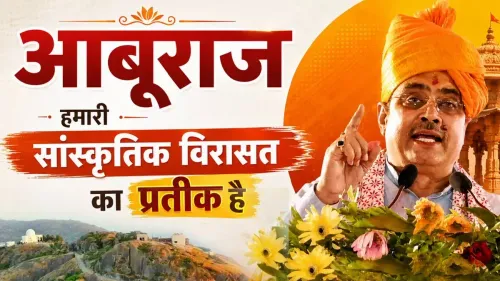
The Rajasthan government formally restored the name Aburaj for the Abu Parvat area, framing it as respect for local culture, heritage, and the sentiments of the sant samaj.
CM Sharma invoked PM Narendra Modi 's 'Virasat bhi, Vikas bhi' principle to link the infrastructure drive with the cultural name restoration.
Senior dignitaries present included two MPs, two state ministers, an MLA, and religious leader Mahant Pratappuri .
Mount Abu in Sirohi district is Rajasthan's only hill station and a significant Jain pilgrimage destination, making it a high-visibility venue for state-level announcements.
The event follows an established BJP pattern of pairing district-level infrastructure launches with heritage-linked symbolic acts across BJP-governed states.
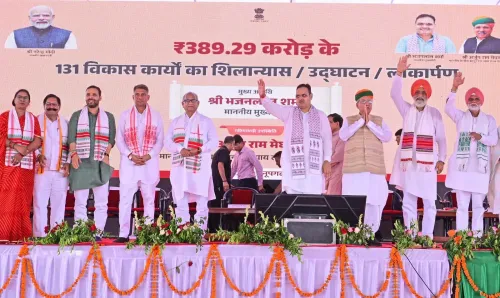
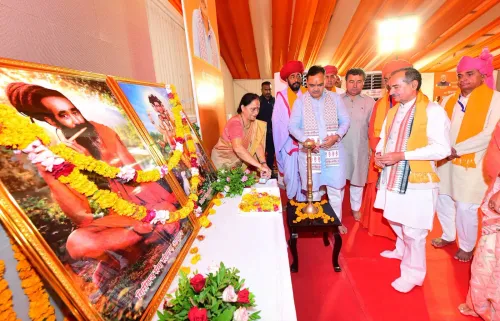
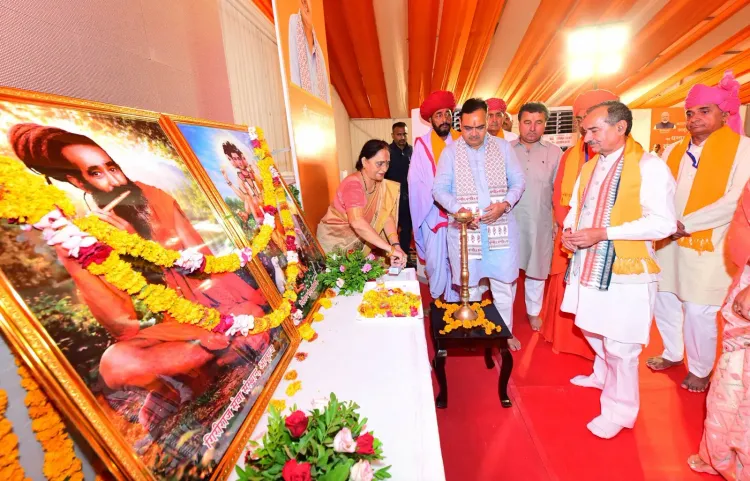
The Chief Minister's Office of Rajasthan announced on Sunday, 21 June 2026, that Chief Minister Bhajanlal Sharma inaugurated and laid the foundation stones for 41 development works valued at over ₹74 crore in Aburaj, Sirohi district. The event, held as a Dhanyawaad Sabha evam Sant Samagam (thanksgiving assembly and saints' congregation), also marked the formal restoration of the name Aburaj for the Abu Parvat area.
Context
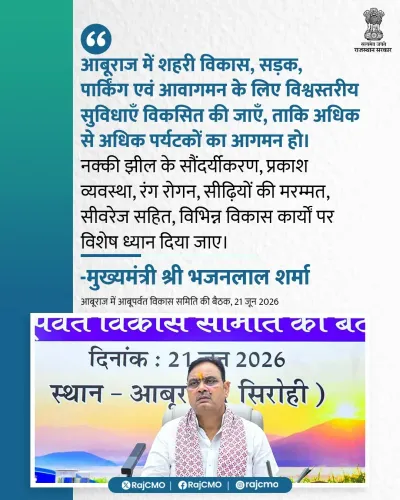
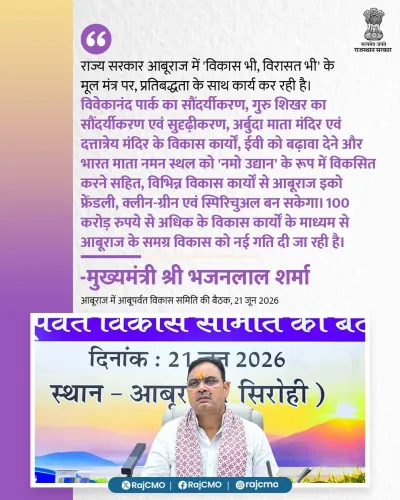
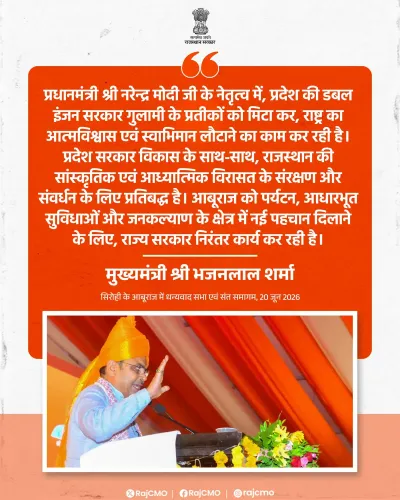
Addressing the gathering, Chief Minister Sharma invoked Prime Minister Narendra Modi's guiding principle of 'Virasat bhi, Vikas bhi' ('Heritage too, Development too'), stating that 'today the country is moving forward with Prime Minister Modi's core mantra of heritage alongside development.' He framed the name restoration as consistent with that philosophy, saying the renaming of Abu Parvat to Aburaj 'is not merely a change of name — it is respect for our culture, our heritage, the faith of the people, and the sentiments of the sant samaj.'
The event brought together state ministers, elected representatives, religious leaders and a large number of devotees and residents of Sirohi. Among those present were Panchayati Raj Minister of State Ota Ram Dewasi, Industries and Commerce Minister of State K.K. Vishnoi, Members of Parliament Madan Rathore and Lumbaram Chaudhary, MLA Samaram, and Mahant Pratappuri.
Policy Backdrop
The 'Virasat bhi, Vikas bhi' framework has been a central plank of the BJP-led central government since 2014, used to justify pairing physical infrastructure investment with heritage-linked cultural measures at sites of religious or historical significance. Rajasthan, under the BJP government that returned to power in December 2023 with Bhajanlal Sharma as Chief Minister, has adopted the same dual-track approach at the district level.
The pattern — announcing multiple local works at a single high-visibility event while foregrounding a heritage or symbolic narrative — has been replicated across BJP-governed states including Uttar Pradesh, Madhya Pradesh, and Gujarat. The presence of religious figures such as Mahant Pratappuri alongside elected officials underscores the deliberate convergence of governance and cultural messaging.
Stakeholders and Impact
Mount Abu, situated in Sirohi district, is Rajasthan's only hill station and a prominent Jain pilgrimage destination, drawing visitors from across the country. The 41 development works — spanning an investment of over ₹74 crore — are expected to benefit local residents, pilgrims, and the tourism ecosystem of the Aburaj region. The sant samaj (community of religious leaders) has been identified as a key stakeholder in the name-restoration decision, reflecting the administration's effort to align governance with the sentiments of religious communities in the area.
State ministers and MPs attending the event signals that the government views the Sirohi–Mount Abu corridor as a priority zone for both infrastructure delivery and cultural outreach ahead of future electoral cycles.
What's Next
Observers will watch for follow-through on the 41 projects in subsequent state budget allocations and any tourism master-plan updates covering the Aburaj corridor. The name restoration could also prompt parallel proposals for other heritage sites across Rajasthan, a trend seen in other BJP-governed states. The government's ability to deliver the announced works on schedule will be a key metric for assessing the administration's district-level execution capacity under Chief Minister Bhajanlal Sharma.
Point of View
A place-name restoration — to maximise political reach across both development-seeking and identity-conscious voter blocs. By invoking PM Modi's 'Virasat bhi, Vikas bhi' mantra, Chief Minister Bhajanlal Sharma explicitly ties state-level action to the national party narrative, reinforcing vertical alignment within the BJP. The participation of the sant samaj alongside elected officials signals that the Rajasthan government is actively cultivating religious constituencies in the Sirohi–Mount Abu belt. Whether the ₹74 crore in projects translates into visible on-ground delivery will determine whether this event is remembered as a governance milestone or a ceremonial exercise.
NationPress
19 Sept 2026
Frequently Asked Questions
What is Aburaj and why was the name changed from Mount Abu or Abu Parvat?
Aburaj is the restored historical name for the Abu Parvat area in Sirohi district, Rajasthan. Chief Minister Bhajanlal Sharma announced the restoration on 21 June 2026, describing it as a mark of respect for local culture, heritage, and the faith of the sant samaj, in line with PM Modi's 'Virasat bhi, Vikas bhi' principle.
What are the 41 development projects inaugurated in Aburaj?
CM Bhajanlal Sharma inaugurated and laid foundation stones for 41 development works valued at over ₹74 crore in Aburaj, Sirohi. The exact list of individual projects was not detailed in the official announcement; further specifics are expected to be released by the state government.
What does 'Virasat bhi, Vikas bhi' mean and how does it apply here?
'Virasat bhi, Vikas bhi' translates to 'Heritage too, Development too' — a guiding principle of PM Narendra Modi's government since 2014 that links infrastructure investment with the preservation of cultural and religious heritage. In Aburaj, the Rajasthan government applied it by combining ₹74 crore in infrastructure works with the symbolic restoration of the area's traditional name.
Who attended the Aburaj sant samagam event on 21 June 2026?
The event was attended by Panchayati Raj MoS Ota Ram Dewasi, Industries MoS K.K. Vishnoi, MPs Madan Rathore and Lumbaram Chaudhary, MLA Samaram, Mahant Pratappuri, and a large number of devotees and residents.
Is Mount Abu and Aburaj the same place?
Yes. Aburaj is the restored name for the Abu Parvat region that includes the area commonly known as Mount Abu — Rajasthan's only hill station and a major Jain pilgrimage centre in Sirohi district. The Rajasthan government has formally revived the name Aburaj to reflect the area's historical and cultural identity.