CM Bhajanlal Directs UIT to Fast-Track New Housing Schemes
Synopsis
The Rajasthan Chief Minister's Office on 10 July 2026 directed the Urban Improvement Trust to expedite new residential scheme plans, reinforcing the Bhajanlal Sharma government's push for faster urban housing delivery across the state's major cities.
Key Takeaways
The Chief Minister's Office of Rajasthan issued a public directive on 10 July 2026 to the Urban Improvement Trust (UIT) to prepare new residential scheme plans promptly.
The instruction was addressed to Chief Minister Bhajanlal Sharma and tagged with the state government's campaign hashtag #आपणो_अग्रणी_राजस्थान .
UITs are statutory bodies overseeing planned urban development in cities including Jaipur , Jodhpur , and Kota .
The directive aligns with the central government's Pradhan Mantri Awas Yojana (Urban) framework, which channels funds through state agencies for affordable housing.
Rajasthan governments have issued similar UIT directives periodically since 2019 , with execution timelines varying by city and available land.
Concrete next steps hinge on UIT plan submissions and any linked budget provisions or land acquisition notifications from the state government.
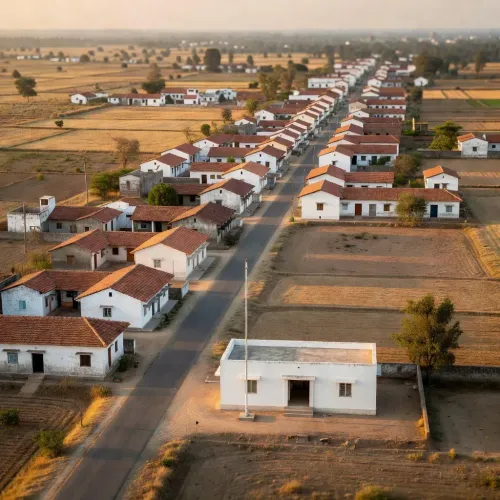
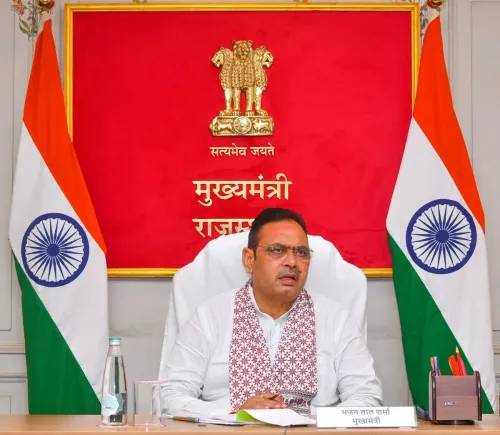
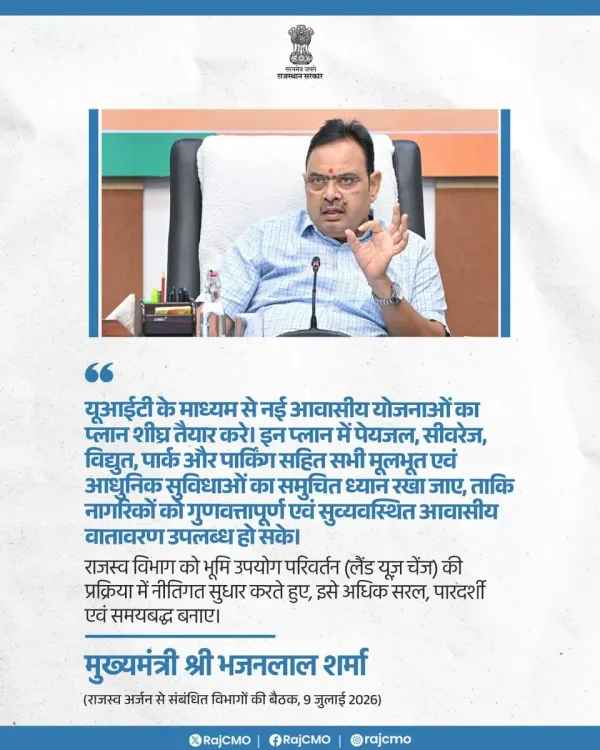
The Chief Minister's Office of Rajasthan on Friday, 10 July 2026 directed the Urban Improvement Trust (UIT) to expedite the preparation of new residential schemes across the state, issuing the instruction publicly through Chief Minister Bhajanlal Sharma's official handle.
The post, addressed directly to @BhajanlalBjp and tagged with the campaign hashtag #आपणो_अग्रणी_राजस्थान ('Our Leading Rajasthan'), stated: 'Prepare the plan for new residential schemes through UIT soon.' The directive signals a push to accelerate planned urban housing delivery through Rajasthan's statutory town-planning bodies.
Context
The Urban Improvement Trust is a network of statutory urban development bodies established under Rajasthan law, operating across major cities including Jaipur, Jodhpur, and Kota. UITs are mandated to plan and execute housing layouts, infrastructure projects, and residential colonies in their respective jurisdictions. The 10 July directive is the latest in a line of state-level instructions asking UITs to move faster on residential planning to keep pace with rapid urban population growth.
Policy Backdrop
Rajasthan governments have periodically issued orders to UITs — notably in 2019–2021 — directing them to prepare master plans and new residential layouts to address persistent housing shortages in tier-2 and tier-3 cities. These efforts have run in parallel with the Pradhan Mantri Awas Yojana (Urban), launched in 2015, which provides central government support for affordable housing through state agencies, including UITs. The BJP administration that took office in December 2023 under Chief Minister Bhajanlal Sharma has continued this emphasis on visible urban infrastructure delivery.
Stakeholders and Impact
Urban residents — particularly middle-income and lower-income families seeking planned residential plots — stand to benefit most directly if UITs act swiftly on the directive. Real estate developers and construction firms operating in Rajasthan's urban markets will also watch closely, as new UIT schemes typically open land parcels and layout approvals that stimulate private investment. Unplanned settlements and encroachments in peri-urban zones of cities like Jaipur and Jodhpur have historically grown fastest where planned supply has lagged.
What's Next
The key indicators to watch are the timelines UIT bodies set for submitting their residential scheme plans and whether the state government follows up with linked budget provisions or land acquisition notifications in the Rajasthan Legislative Assembly. Similar directives in the past have varied widely in execution speed, with outcomes depending on land availability, inter-agency coordination, and municipal financing. A formal timeline or notification from the UITs would mark the next concrete step in translating this directive into deliverable housing supply.
Point of View
Demonstrating executive urgency on housing without requiring immediate legislative action. For the Bhajanlal Sharma administration, accelerating visible urban infrastructure ahead of local body elections is a strategic priority that aligns state delivery with national BJP housing commitments. The use of a campaign hashtag alongside a policy instruction also reflects how the ruling party blurs the line between governance communication and political branding. Whether this directive translates into new scheme notifications or remains aspirational will be the real test of the administration's urban delivery capacity.
NationPress
8 Oct 2026
Frequently Asked Questions
What did the Rajasthan CMO direct the UIT to do on 10 July 2026?
The Rajasthan Chief Minister's Office directed the Urban Improvement Trust to quickly prepare plans for new residential housing schemes across the state.
What is the Urban Improvement Trust in Rajasthan?
The Urban Improvement Trust (UIT) is a network of statutory bodies under Rajasthan law that plan and execute housing layouts, residential colonies, and urban infrastructure in major cities like Jaipur, Jodhpur, and Kota.
Who is Bhajanlal Sharma?
Bhajanlal Sharma is a BJP politician who has served as Chief Minister of Rajasthan since December 2023, following the state assembly elections.
How does this UIT directive relate to Pradhan Mantri Awas Yojana?
UITs in Rajasthan are among the state agencies that implement Pradhan Mantri Awas Yojana (Urban), the central government's affordable housing programme launched in 2015, making faster UIT scheme preparation directly relevant to national housing targets.
What happens next after the Rajasthan government's UIT housing directive?
The next concrete steps would be UIT bodies submitting their residential scheme plans and the state government issuing linked budget provisions or land acquisition notifications, which would indicate real progress beyond the directive.