CM Bhajanlal Sharma Pushes Natural Farming at Udaipur Chaupal
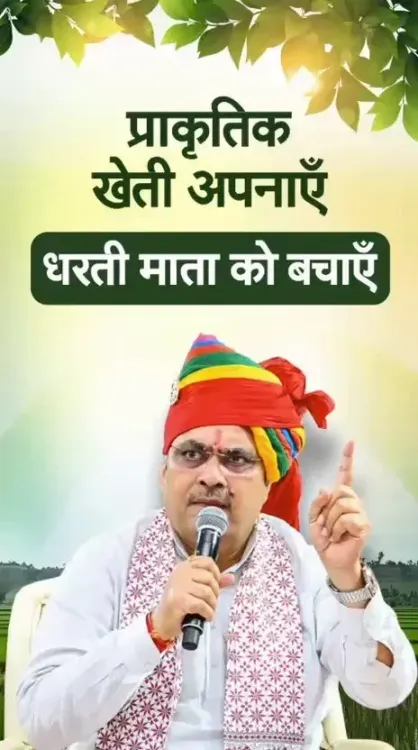
Synopsis
Chief Minister Bhajanlal Sharma addressed farmers at a Gram Vikas Chaupal in Bida village, Jhadol, Udaipur on August 2, 2026, calling for a shift to natural farming and reduced chemical fertilizer use to protect agricultural land for future generations.
Key Takeaways
CM Bhajanlal Sharma addressed a Gram Vikas Chaupal at Bida village, Jhadol, Udaipur on August 2, 2026 .
He called for modernising agriculture while shifting toward natural farming and reducing chemical fertilizer use.
Sharma invoked ancestral stewardship of land to frame the shift as an intergenerational responsibility.
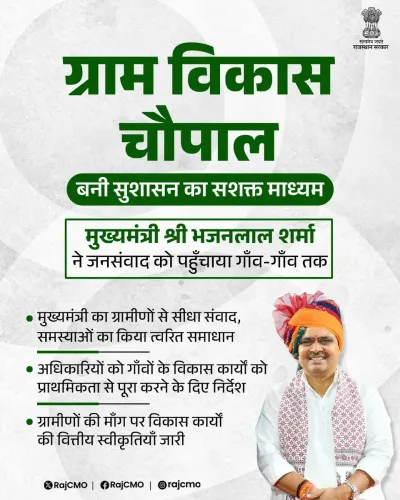
The event is part of a district-by-district Gram Vikas Chaupal rollout across Rajasthan.
The push aligns with the central government's Paramparagat Krishi Vikas Yojana (PKVY) , launched in 2015 .
The Rajasthan BJP government has emphasised sustainable agriculture consistently since its return to power after the December 2023 assembly elections .
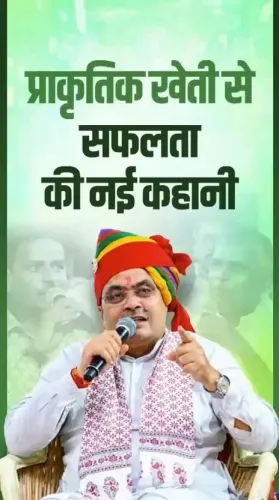
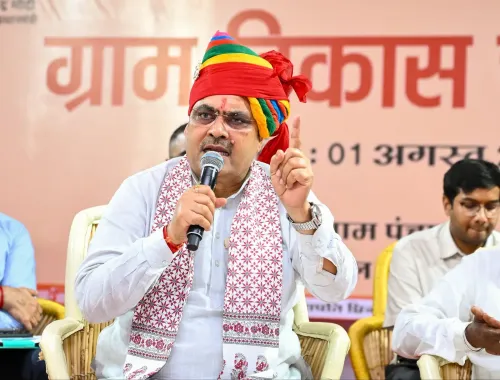
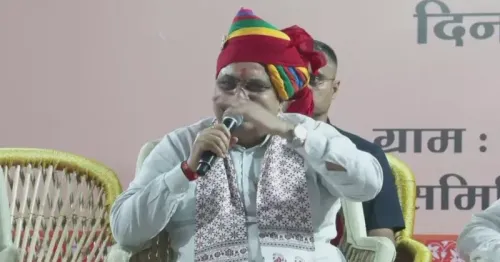
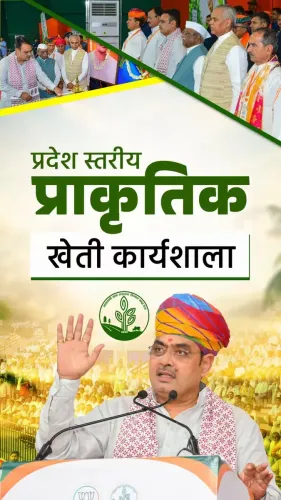
In a sun-drenched village clearing in Bida, Jhadol, Udaipur, Chief Minister Bhajanlal Sharma stood before farmers on Sunday, August 2, 2026, and delivered a message that cut to the root — literally. Rajasthan's top elected official called on the state's agricultural communities to turn away from chemical fertilizers and embrace natural farming, invoking the stewardship of past generations as both moral compass and practical guide.
Speaking at the Gram Vikas Chaupal — the state government's village-level outreach initiative — Sharma said, 'Humein krishi ko aadhunik banana hai aur aadhunik tarikhon ke saath prakritik kheti ki or badhna hai' ('We must modernise agriculture and, alongside modern methods, move towards natural farming'). He framed the shift not as a retreat from progress but as its logical destination: technology in service of the soil, not against it.
Ancestors, Soil, and a Warning to the Future
The Chief Minister's address leaned hard on intergenerational responsibility. 'Our ancestors always protected Mother Earth and farming,' he said, before turning the lens forward: the rising use of chemical inputs, he argued, is a debt being silently passed on to the next generation. The call to reduce that dependency was direct — protect the land now, or watch its productivity erode later.
The setting amplified the message. Jhadol tehsil in southern Rajasthan sits in a region with significant tribal and farming populations, communities that have historically maintained close ties to land-based livelihoods. A chaupal — a traditional community gathering — was a deliberate choice of venue: governance coming to the village, not the other way around.
Where Rajasthan's Push Fits the National Picture
The remarks align with a policy current running well beyond Rajasthan's borders. The central government's Paramparagat Krishi Vikas Yojana (PKVY), launched in 2015, has been channelling support toward organic and natural farming across states, including Rajasthan, with the explicit goal of reducing chemical input dependency and improving soil health over time.
Since the BJP's return to power in Rajasthan after the December 2023 assembly elections, the state government has made sustainable agriculture a recurring theme — blending references to traditional knowledge with modernization goals in ways that resonate with both rural voters and national party messaging. Multiple states have run parallel campaigns on similar lines, but Rajasthan's Gram Vikas Chaupal model — taking the conversation directly into villages — gives the outreach a visible, ground-level texture.
What the Chaupal Circuit Could Unlock
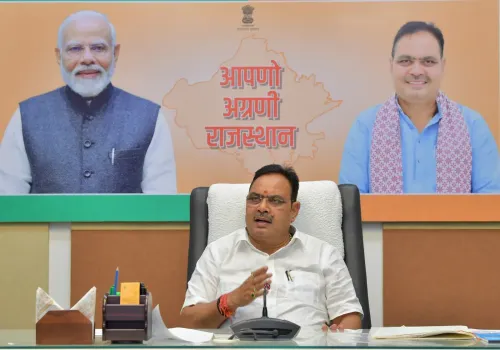
The Jhadol event is one node in what the government intends as a broader district-by-district rollout of Gram Vikas Chaupals. Whether these gatherings translate into concrete budget provisions — pilot projects for natural farming inputs, soil-health card expansion, or subsidies for bio-fertilizers — will be the real measure of intent. The hashtag #आपणो_अग्रणी_राजस्थान ('Our Leading Rajasthan') signals the government's effort to brand this outreach as part of a larger developmental identity.
For now, the signal from Bida village is clear: Rajasthan's government wants natural farming on the agenda — and it wants farmers to hear it directly from the top.
Point of View
Keeping rural Rajasthan engaged between election cycles. The natural farming pitch dovetails neatly with the BJP's national agrarian narrative, giving the state government ideological coherence with New Delhi while addressing a real and growing concern about soil degradation. The test, however, is institutional follow-through: past state campaigns on organic farming have often stalled at the rhetoric stage without dedicated budget lines or extension support. Whether Rajasthan's chaupal circuit becomes a policy delivery mechanism or remains a mobilisation exercise will define its lasting impact.
NationPress
2 Aug 2026
Frequently Asked Questions
What did CM Bhajanlal Sharma say about natural farming at the Udaipur chaupal?
Sharma called on farmers to modernise agriculture while simultaneously moving toward natural farming, and urged a reduction in chemical fertilizer use to protect soil health for future generations.
What is a Gram Vikas Chaupal in Rajasthan?
Gram Vikas Chaupal is a village-level outreach programme organised by the Rajasthan government where officials, including senior leaders, engage directly with rural communities on development and welfare issues.
Where was the Gram Vikas Chaupal event held on August 2, 2026?
The event was held at Bida village in Jhadol tehsil, Udaipur district, in southern Rajasthan.
What is the Paramparagat Krishi Vikas Yojana and how does it relate to Rajasthan?
The Paramparagat Krishi Vikas Yojana (PKVY) is a central government scheme launched in 2015 to promote organic and natural farming and reduce chemical inputs; Rajasthan is among the states implementing it.
Is Rajasthan's natural farming push a new policy or part of an existing trend?
It is part of a broader trend: since the BJP government came to power in Rajasthan after the December 2023 elections, sustainable agriculture has been a recurring policy theme, aligned with national efforts on soil health and fertilizer dependency.