CM Bhajanlal Sharma Reviews Gramin Seva Shivir in Pali's Sumerpur
Synopsis
Chief Minister Bhajanlal Sharma visited a Gramin Seva Shivir in Sumerpur, Pali district, on 20 June 2026, personally distributing land pattas to denotified and nomadic community members and collecting beneficiary feedback.
Key Takeaways
CM Bhajanlal Sharma visited the Gramin Seva Shivir at Rajkiya Uchch Madhyamik Vidyalaya, Netra, in Sumerpur, Pali district , on 20 June 2026 .
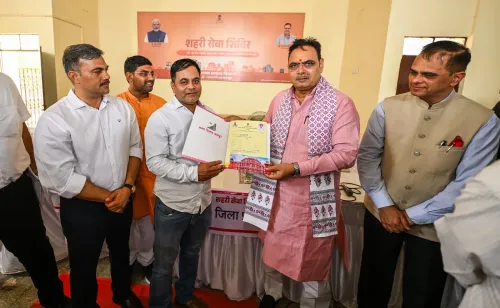
Hazaram, Bhairaram, and Mangilal received land patta certificates under the Vimukt, Ghumantu evam Ardh-Ghumantu (denotified and nomadic) category.
Aju Devi was granted regularisation of her existing dwelling under state revenue rules.
Kapuraram received a patta allotment at a concessional rate.
The CM inspected departmental stalls and collected direct feedback from beneficiaries on service delivery.
The Gramin Seva Shivir model is part of a broader Rajasthan government effort to deliver land and welfare documents on-the-spot to rural and marginalised communities.
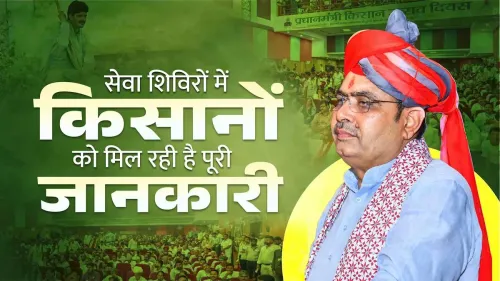
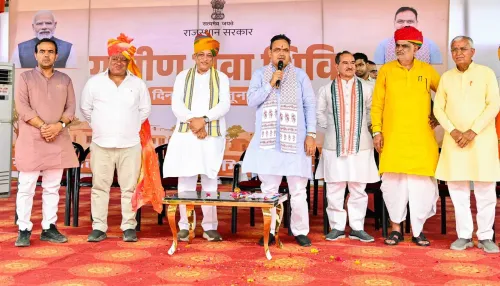
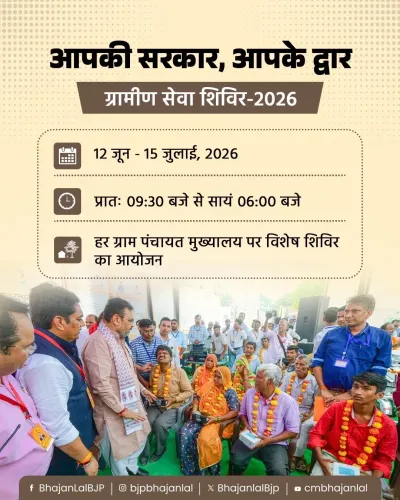
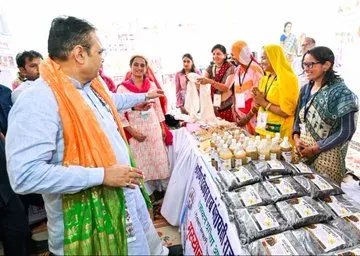
Chief Minister Bhajanlal Sharma visited the Gramin Seva Shivir (Rural Service Camp) organised at Rajkiya Uchch Madhyamik Vidyalaya, Netra, in Sumerpur, Pali district, on Saturday, 20 June 2026, inspecting departmental stalls, interacting with beneficiaries, and collecting on-the-ground feedback on service delivery.
What Happened at the Camp
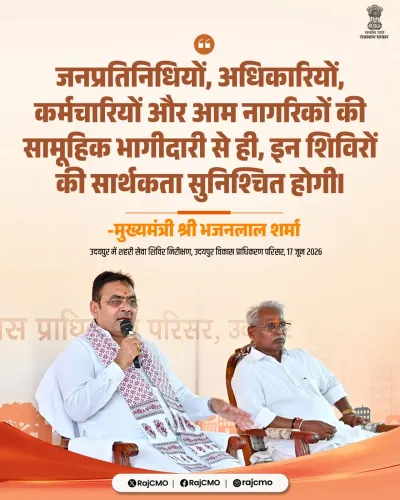
The Chief Minister's Office of Rajasthan announced that CM Sharma walked through stalls set up by various state departments, speaking directly with residents who had come to avail services. He also gathered feedback on the camp's effectiveness — a step officials describe as central to the Gramin Seva Shivir model.
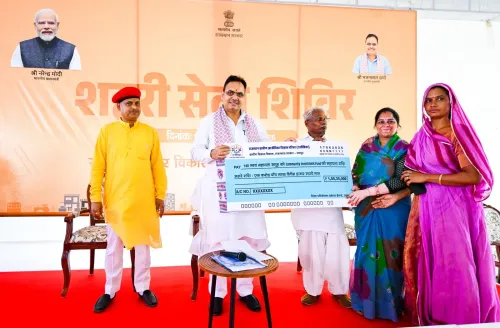
At the event, CM Sharma personally handed over land and housing documents to several beneficiaries. Hazaram, Bhairaram, and Mangilal received patta (land title) certificates under the Vimukt, Ghumantu evam Ardh-Ghumantu (Denotified, Nomadic and Semi-Nomadic) category. Aju Devi was granted regularisation of her old dwelling (purane ghar ka viniyamitikaran), and Kapuraram received a patta allotment at a concessional rate.
Context
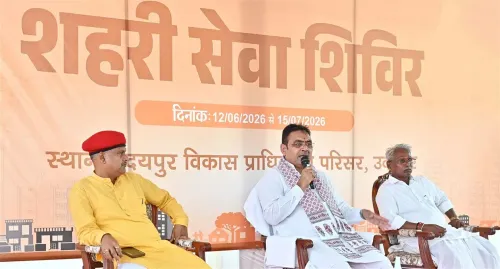
The Gramin Seva Shivir format brings multiple government departments under one roof in rural areas, allowing villagers to access revenue, welfare, and housing services without travelling to district headquarters. The model has been used by successive Rajasthan governments since at least the early 2010s as a mechanism for on-the-spot document delivery.
Sumerpur is a tehsil town in Pali district, a predominantly rural part of western Rajasthan with a significant population of communities historically classified as denotified or nomadic tribes — groups that have long struggled to access formal land records.
Policy Backdrop
The Vimukt, Ghumantu evam Ardh-Ghumantu classification is a state-level revenue category created to extend land rights to communities that were criminalised under colonial-era laws and subsequently excluded from settlement records. Issuing pattas under this category is considered a significant step toward formalising their tenure and enabling access to broader government schemes.
Housing regularisation — as in the case of Aju Devi — addresses a parallel problem: residents who have occupied land for decades without formal title. State revenue rules allow such occupations to be regularised under defined conditions, converting informal possession into documented ownership.
The BJP government led by CM Sharma, which took office in December 2023, has emphasised rural outreach as a governance priority, positioning camps like this as a visible delivery mechanism for welfare commitments.
Stakeholders and Impact
The immediate beneficiaries are members of denotified, nomadic, and semi-nomadic communities — among the most land-insecure populations in rural Rajasthan. A formal patta unlocks access to bank credit, government housing schemes, and legal protection against eviction.
Beyond individual recipients, the camp model signals to rural voters that the administration is physically present in their localities rather than confined to urban offices — a political optic that carries weight in a state where land disputes and welfare access are perennial concerns.
What's Next
The state government is expected to expand similar Gramin Seva Shivirs to remaining districts, with attention likely to focus on pending patta cases and housing regularisation applications that were not resolved at this camp. Any follow-up orders on unresolved cases from Pali district will be a marker of whether the camp's feedback loop translates into administrative action.
Point of View
And formalising their land rights carries both administrative and electoral weight. The feedback-collection component, if systematically processed, could distinguish this iteration of the camp model from earlier versions that critics dismissed as ceremonial. Whether pending cases from this camp receive follow-up action will be the real test of institutional intent.
NationPress
21 Jun 2026
Frequently Asked Questions
What is a Gramin Seva Shivir in Rajasthan?
A Gramin Seva Shivir is a state-organised rural service camp where multiple government departments set up stalls in a single location, allowing villagers to access land documents, welfare certificates, and other services without visiting district offices.
Who are Vimukt and Ghumantu communities in Rajasthan?
Vimukt (denotified), Ghumantu (nomadic), and Ardh-Ghumantu (semi-nomadic) communities are groups historically criminalised under British colonial laws. Rajasthan uses this classification to extend land pattas and housing regularisation to these populations.
What is a patta in the context of Rajasthan land rights?
A patta is an official land title document issued by the state government that formally recognises a person's right to occupy or own a piece of land, enabling access to bank loans, government schemes, and legal protection.
Where was the Gramin Seva Shivir held that CM Bhajanlal Sharma visited?
The camp was held at Rajkiya Uchch Madhyamik Vidyalaya, Netra, in Sumerpur tehsil, Pali district, Rajasthan, on 20 June 2026.
What documents did CM Bhajanlal Sharma distribute at the Pali camp?
CM Sharma distributed land patta certificates to Hazaram, Bhairaram, and Mangilal under the denotified and nomadic category, a housing regularisation certificate to Aju Devi, and a concessional-rate patta allotment certificate to Kapuraram.