CM Bhupendra Patel Backs Natural Farming, Water Schemes at Village Meet
Synopsis
Chief Minister Bhupendra Patel joined villagers in Mahundra for an informal dialogue on 18 July 2026, championing natural farming as the antidote to chemical fertiliser harm and announcing that Gujarat's Sujalam Sufalam scheme has extended its lake-filling radius from 3 km to 7 km to combat water scarcity.
Key Takeaways
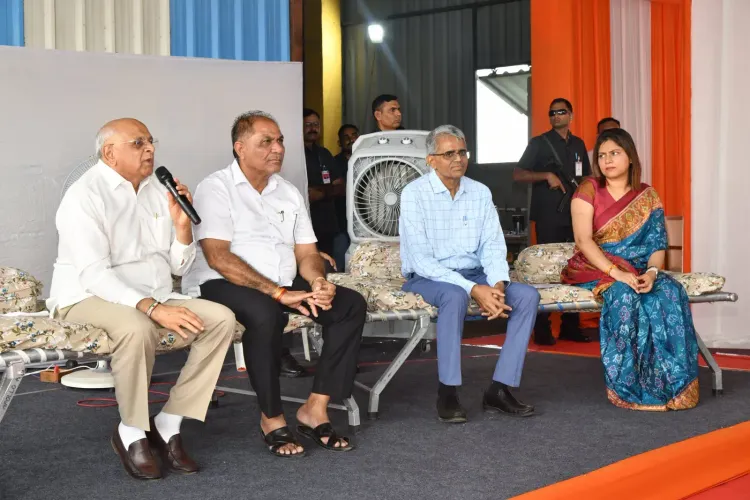
CM Bhupendra Patel held a village-level dialogue at Mahundra on 18 July 2026 , sitting informally with residents on a traditional cot.
He declared natural farming ( prakrutik kheti ) the only true solution to diseases and soil degradation caused by excessive chemical fertilisers.
The Sujalam Sufalam scheme's lake-filling coverage has been expanded from 3 km to 7 km , widening water recharge reach for rural areas.
National missions Amrit Sarovar and Khet Talavadi , inspired by PM Narendra Modi , were cited as long-term answers to water scarcity and erratic rainfall.
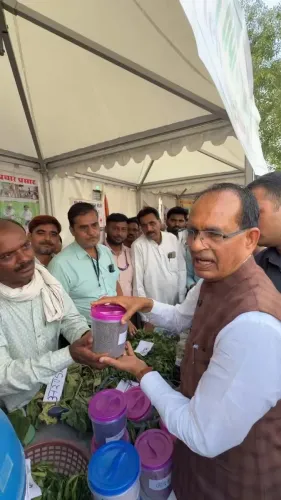
Progressive farmers at the event shared first-hand accounts of switching to chemical-free cultivation, encouraging peers to follow suit.
CM Patel appealed to villagers to adopt environment-friendly changes in their daily lifestyles , beyond agricultural practices.
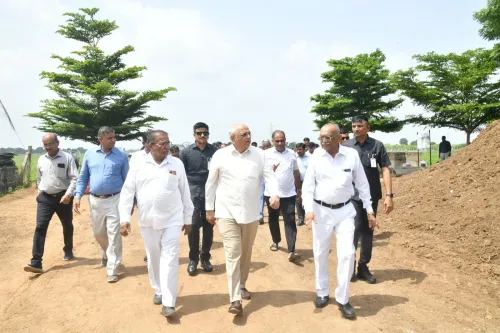
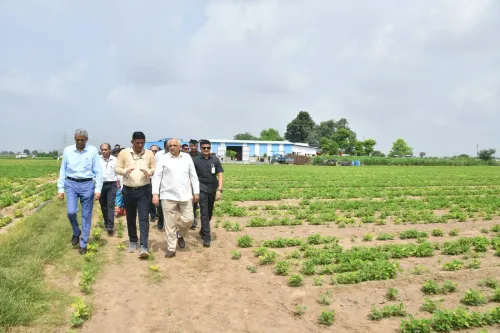
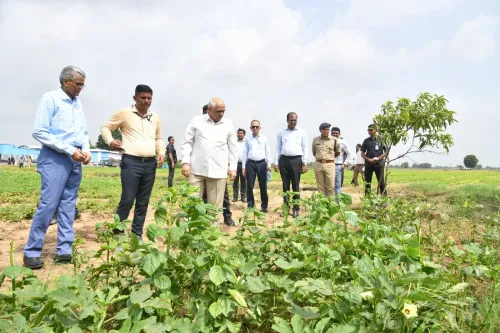
The Chief Minister's Office of Gujarat shared on Saturday, 18 July 2026 that Chief Minister Bhupendra Patel held an informal grassroots dialogue with villagers of Mahundra, sitting on a traditional khatlo (cot) among residents to discuss natural farming and water conservation.
Context
Addressing villagers in a setting deliberately stripped of formality, CM Patel argued that prakrutik kheti (natural farming) is the only credible answer to the serious diseases afflicting human beings and soil health caused by excessive chemical fertiliser use. Progressive farmers who have already adopted chemical-free cultivation shared their personal experiences at the event, encouraging peers to make the transition.
Agricultural scientists and state government officials present at the dialogue were acknowledged by participating farmers for their continuous guidance on natural farming practices.
Policy Backdrop
The Chief Minister cited two nationally prominent water-conservation drives — Amrit Sarovar and Khet Talavadi — both inspired by Prime Minister Narendra Modi, as permanent solutions to water scarcity and irregular rainfall. The Amrit Sarovar mission was launched nationally in April 2022 with a target of constructing or rejuvenating 75,000 ponds across India.
On the state front, CM Patel announced an expansion under the Sujalam Sufalam scheme: the permissible distance for filling lakes has been increased from 3 kilometres to 7 kilometres, widening the reach of water recharge infrastructure to more villages. The Sujalam Sufalam Abhiyan has been active in Gujarat since 2018, focusing on large-scale desilting and water-body rejuvenation.
Gujarat's push toward natural farming builds on organic and reduced-chemical-input policy initiatives that the state has pursued since the mid-2010s, making it one of the early movers on institutionalising prakrutik kheti at scale.
Stakeholders and Impact
Small and marginal farmers in rain-dependent districts stand to benefit most directly from expanded lake-filling coverage under Sujalam Sufalam, as a wider operational radius means more farm ponds and village tanks can be recharged in a single season. Reduced dependence on chemical fertilisers, if adopted broadly, could lower input costs and decrease documented incidences of soil degradation across Gujarat's agricultural belt.
Rural communities also heard a direct appeal from CM Patel to incorporate environment-friendly changes into everyday lifestyles — signalling that the outreach extends beyond agriculture to broader behavioural shifts toward sustainability.
What's Next
The progress of Amrit Sarovar and Khet Talavadi pond works across Gujarat's districts will be closely watched during the ongoing monsoon season, when water harvesting interventions yield the most measurable results. State budget allocations for natural farming training programmes and any further expansion of the Sujalam Sufalam operational limits will indicate how quickly the policy commitments made at the village dialogue translate into on-ground action.
Point of View
Measurable policy change that signals the state is not merely endorsing central missions but actively extending their operational scope. The emphasis on natural farming as a public-health imperative, not just an agronomic choice, broadens the political appeal of the initiative beyond farmer communities to health-conscious rural households. Taken together, the outreach represents a calculated effort to build grassroots ownership of sustainability goals ahead of what is likely to be a scrutinised monsoon season for water management outcomes.
NationPress
18 Jul 2026
Frequently Asked Questions
What is the Sujalam Sufalam scheme in Gujarat?
The Sujalam Sufalam Abhiyan is a Gujarat government water-conservation programme launched in 2018 that focuses on desilting rivers and recharging water bodies. CM Patel announced in July 2026 that the permissible lake-filling radius under the scheme has been expanded from 3 km to 7 km.
What is natural farming or prakrutik kheti?
Natural farming, known in Gujarat as prakrutik kheti , is an approach to agriculture that eliminates or sharply reduces chemical fertilisers and pesticides, relying instead on organic inputs to protect soil health and reduce disease risks. Gujarat has promoted it through state policy since the mid-2010s.
What is the Amrit Sarovar mission?
Amrit Sarovar is a national mission launched by Prime Minister Narendra Modi in April 2022 to construct or rejuvenate 75,000 ponds across India to improve water security. CM Patel referenced it alongside Gujarat's Khet Talavadi programme as a solution to water scarcity.
What did CM Bhupendra Patel say about chemical fertilisers?
CM Patel stated that excessive use of chemical fertilisers causes serious diseases in human beings and degrades soil health, and that natural farming is the only true alternative to address these problems.
What is the Khet Talavadi scheme?
Khet Talavadi is a farm-pond initiative that encourages individual farmers to create small water storage structures on their land for irrigation, reducing dependence on erratic rainfall. CM Patel cited it alongside Amrit Sarovar as part of a permanent solution to water scarcity in Gujarat.