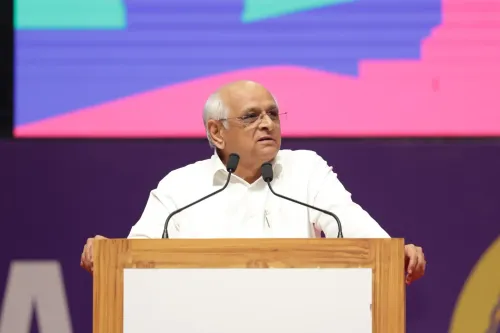
CM Bhupendra Patel Champions 5 Farm Schemes Reshaping Rural India
Synopsis
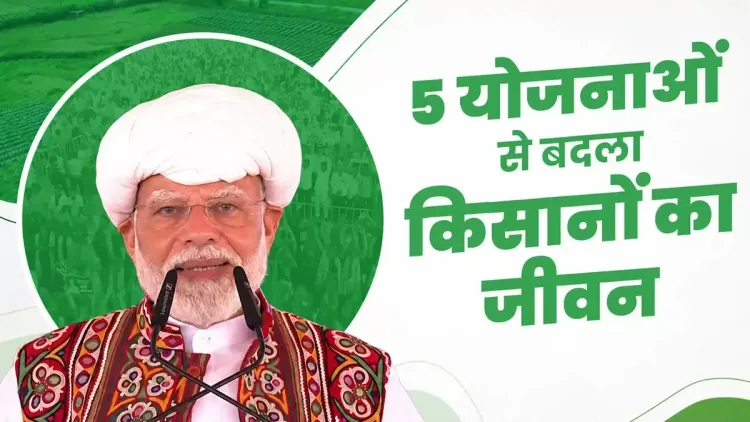
Gujarat CM Bhupendra Patel spotlighted five Central farm welfare schemes — PM-KISAN, fertiliser subsidies, MSP, PMFBY, and PM-KUSUM — as pillars of rural transformation, tagging PM Modi and framing farmer empowerment as the foundation of a Developed India.
Key Takeaways
Gujarat CM Bhupendra Patel posted on 30 October 2026 backing five Central agricultural welfare schemes.
PM-KISAN provides ₹6,000 per year in direct cash transfers to eligible farmer families since February 2019 .
PM-KUSUM , approved in 2019 , installs solar pumps and grid-connected solar plants to cut farm power costs.
PMFBY crop insurance, launched in 2016 , replaced older schemes with broader coverage for small farmers.
The post claims more than 85% of small farmers have benefited — a figure drawn from government communications that has not been independently verified.
The hashtag #KisanKalyanSeRashtraKalyan frames farmer prosperity as inseparable from national development in BJP's political messaging.
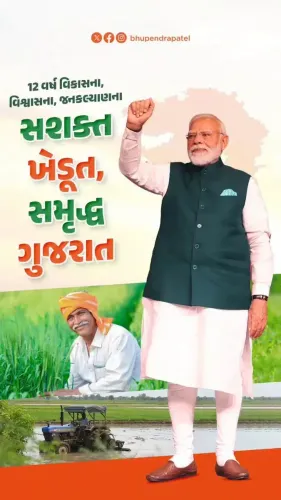
Five policy levers — and a government's claim that they are rewriting the fate of India's smallest farmers. Gujarat Chief Minister Bhupendra Patel took to X on Friday, 30 October 2026, to amplify the Modi government's agricultural welfare agenda, spotlighting five flagship schemes as the foundation of a Viksit Bharat (Developed India).
In his post, CM Patel wrote: 'Prosperity of farmers through policies... honouring and empowering the annadata (provider of food) is the cornerstone of a developed India.' He cited PM-KISAN, fertiliser subsidies, MSP payments, crop insurance under PMFBY, and the PM-KUSUM solar scheme as five transformative steps that have, in the government's framing, changed the fortunes of more than 85% of the country's small farmers. The post carried the hashtag #KisanKalyanSeRashtraKalyan — 'From farmer welfare, national welfare' — and tagged Prime Minister Narendra Modi.
What the five schemes actually do
Each of the five pillars targets a distinct pressure point in a small farmer's life. PM-KISAN, launched in February 2019, delivers ₹6,000 per year in direct cash transfers to eligible farm families — no intermediary, straight to the bank account. PM-KUSUM, approved by the Cabinet in 2019, brings solar pumps and grid-connected solar plants to agricultural fields, cutting power costs and generating income from surplus energy.
Pradhan Mantri Fasal Bima Yojana (PMFBY), launched in 2016, replaced older crop insurance frameworks with broader coverage, shielding farmers from the devastating financial spiral that follows a bad monsoon or pest attack. Fertiliser subsidies keep input costs manageable for those working small landholdings, while enhanced Minimum Support Price (MSP) procurement — repeatedly cited as record-level in successive Union Budgets since 2014 — is meant to guarantee a floor price when markets turn hostile.
Why a Gujarat CM is amplifying a Central government message
This is a deliberate pattern, not a coincidence. BJP state leaders routinely echo Central welfare narratives to demonstrate seamless policy convergence between Gandhinagar and New Delhi — a show of unified governance that the party has leaned on heavily since 2014. For CM Patel, amplifying farm welfare schemes also carries local weight: Gujarat's agricultural sector, from cotton belts in Saurashtra to groundnut farms in North Gujarat, is home to millions of small and marginal cultivators who are core BJP constituencies.
Small and marginal farmers — those holding less than two hectares — make up the overwhelming majority of India's agricultural workforce, making them the most politically consequential rural bloc. Schemes like PM-KISAN and PMFBY are designed precisely for this segment, and their visibility in state-level political communication signals that rural welfare remains the ruling party's most durable electoral narrative heading into the budget cycle.
The number to watch — and the caveat
The claim that these five schemes have transformed the lives of 'more than 85% of small farmers' is a striking figure. It echoes government communications but cannot be independently verified from current public data. What is documented: PM-KISAN has consistently been one of India's largest direct benefit transfer programmes by volume of transactions, and PMFBY enrollments expanded significantly after the scheme's restructuring. The next Union Budget's farm allocations will be the real stress-test — whether funding keeps pace with the ambition these posts project.
Point of View
Input cost relief, risk mitigation and energy transition, covering nearly every vulnerability a small farmer faces; framing them together as a single transformative package is a deliberate communications strategy. The 'Viksit Bharat' hook ties agricultural welfare explicitly to the government's long-term development branding, signalling that rural welfare will remain a central plank of BJP political identity. Whether scheme allocations in the next Union Budget match the rhetorical scale of these claims will be the sharper political test.
NationPress
30 Oct 2026
Frequently Asked Questions
What is PM-KISAN and how much money do farmers get?
PM-KISAN (Pradhan Mantri Kisan Samman Nidhi) is a Central government scheme launched in February 2019 that provides ₹6,000 per year in direct cash transfers to eligible farmer families, paid in three instalments of ₹2,000 each.
What is the PM-KUSUM scheme for farmers?
PM-KUSUM (Pradhan Mantri Kisan Urja Suraksha evam Utthaan Mahabhiyan) was approved in 2019 to install solar pumps and grid-connected solar power plants on agricultural land, reducing electricity costs for farmers and enabling them to earn from surplus solar power.
What is PMFBY crop insurance for farmers?
Pradhan Mantri Fasal Bima Yojana (PMFBY) is India's main crop insurance scheme, launched in 2016. It replaced earlier schemes with broader coverage, compensating farmers for crop losses caused by natural disasters, pests, or adverse weather.
Why did Gujarat CM Bhupendra Patel post about Central farm schemes?
CM Patel posted to highlight the Modi government's agricultural welfare agenda, tagging PM Narendra Modi and using the hashtag #KisanKalyanSeRashtraKalyan. BJP state leaders regularly amplify Central schemes to demonstrate policy alignment between state and Central governments.
What does Kisan Kalyan Se Rashtra Kalyan mean?
'Kisan Kalyan Se Rashtra Kalyan' translates to 'From farmer welfare, national welfare.' It is a BJP political slogan used to frame agricultural development as central to India's broader national progress.