CM Bhupendra Patel hails 12 years of farm reforms under Modi

Synopsis
Gujarat Chief Minister Bhupendra Patel on June 11 credited PM Narendra Modi's 12-year tenure with transforming Indian agriculture through PM-KISAN direct transfers, e-NAM digital mandis, Soil Health Cards, and PM-KUSUM solar energy — framing today's farmer as modern, self-reliant, and globally competitive.
Key Takeaways
CM Bhupendra Patel posted on June 11, 2026 marking 12 years of the Modi government's agricultural reforms.
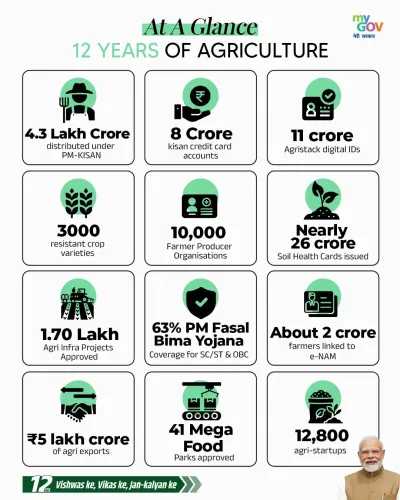
PM-KISAN , launched February 2019 , transfers ₹6,000 annually directly to landholding farmer families via DBT. e-NAM , introduced April 2016 , links state mandis digitally to reduce middlemen and improve price discovery for farmers.
The Soil Health Card scheme (from 2015 ) and PM-KUSUM (approved 2019 ) target lower input costs and renewable energy adoption on farms.
The post is part of a broader BJP communication drive under the hashtag #12YearsOfKisanSamriddhi .
State-level APMC integration and PM-KUSUM installation progress remain key metrics to watch.
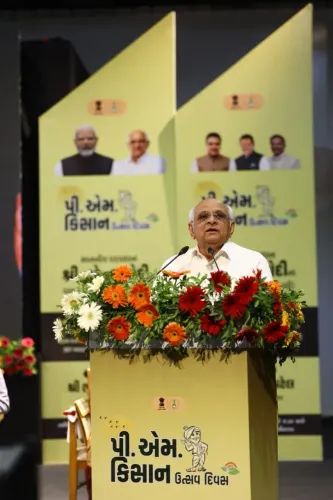
Gujarat Chief Minister Bhupendra Patel on Thursday, June 11, 2026, credited Prime Minister Narendra Modi's decade-plus tenure with a wholesale transformation of Indian agriculture, citing flagship welfare schemes and digital market reforms as evidence of a 'seed to market' revolution for the country's farming households.
Context
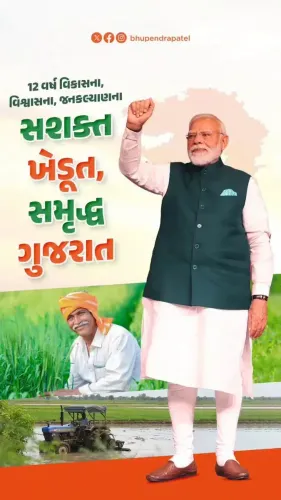
Posting under the hashtag #12YearsOfKisanSamriddhi (12 years of farmer prosperity), CM Patel argued that the Modi government's policy record since 2014 has repositioned annadata (the provider of food) at the centre of India's economic progress. He wrote that schemes such as PM-KISAN have delivered direct cash support into farmers' bank accounts as a mark of respect and empowerment. The post is part of a coordinated BJP communication drive marking 12 years of the party in power at the Centre.
Policy Backdrop
The schemes cited by CM Patel span the full tenure he references. PM-KISAN, launched in February 2019, provides ₹6,000 per year in three equal instalments directly to landholding farmer families through the Direct Benefit Transfer mechanism, bypassing intermediaries. The e-NAM (Electronic National Agriculture Market) platform, introduced in April 2016, links mandis across states to enable online price discovery and trading, with CM Patel specifically crediting it with ending the role of middlemen — bichauli — in the supply chain.
Two further initiatives round out his account. The Soil Health Card scheme, rolled out from 2015, issues nutrient-status reports to farmers to promote balanced fertiliser use and improve yields. PM-KUSUM (Pradhan Mantri Kisan Urja Suraksha evam Utthaan Mahabhiyan), approved in 2019, promotes solar pumps and decentralised renewable energy infrastructure on farms, reducing dependence on grid power and cutting input costs.
Stakeholders and Impact
The primary beneficiaries of the programmes highlighted are small and marginal farming households, who account for the bulk of India's agricultural workforce. Direct bank transfers under PM-KISAN reduce reliance on informal credit at harvest time, while e-NAM's digital mandi network is intended to give sellers access to a wider pool of buyers beyond local commission agents. CM Patel's framing — that today's Indian farmer is 'modern, self-reliant and globally competitive' — reflects the government's narrative of agriculture as a driver of the Viksit Bharat (Developed India) vision, though independent assessments of on-ground impact vary.
State governments, including Gujarat, have run parallel irrigation and procurement programmes that interact with these central schemes. Constitutional division of powers keeps agriculture a state subject, meaning the effectiveness of central initiatives depends significantly on state-level implementation and integration with existing APMC frameworks.
What's Next
Attention will now turn to the Union Agriculture Ministry's forthcoming progress reports on PM-KUSUM solar pump installations and the pace of e-NAM integration with state APMC reforms — metrics that will test whether the policy narrative CM Patel articulates translates into measurable gains for farming households across India's diverse agrarian regions.
Point of View
Designed to consolidate the party's farmer-welfare credentials ahead of electoral cycles. By anchoring the narrative to verifiable scheme names — PM-KISAN, e-NAM, PM-KUSUM — rather than contested outcome statistics, the communication sidesteps scrutiny while reinforcing the 'Viksit Bharat' brand. The 'seed to market' framing is politically significant: it attempts to own the entire agricultural value chain as a government achievement, countering opposition arguments about agrarian distress. Whether state-level implementation gaps, particularly in APMC reform and solar pump deployment, dilute this narrative will depend on the data that emerges in the months ahead.
NationPress
19 Sept 2026
Frequently Asked Questions
What is PM-KISAN and who benefits from it?
PM-KISAN is a central government scheme launched in February 2019 that provides ₹6,000 per year in three instalments directly to landholding farmer families through Direct Benefit Transfer, bypassing intermediaries.
What is e-NAM and how does it help farmers?
e-NAM, or the Electronic National Agriculture Market, is a digital trading platform introduced in April 2016 that links agricultural mandis across India, enabling online price discovery and reducing the role of middlemen in crop sales.
What is PM-KUSUM scheme for farmers?
PM-KUSUM (Pradhan Mantri Kisan Urja Suraksha evam Utthaan Mahabhiyan), approved in 2019, supports installation of solar pumps and decentralised renewable energy infrastructure on farms to cut electricity costs and reduce dependence on the grid.
Why did CM Bhupendra Patel post about 12 years of farm reforms?
CM Patel's post is part of a BJP communication drive under the hashtag #12YearsOfKisanSamriddhi, marking 12 years of the Modi government at the Centre and highlighting agricultural welfare schemes introduced since 2014.
What is the Soil Health Card scheme in India?
The Soil Health Card scheme, rolled out from 2015, issues nutrient-status reports to farmers to guide balanced fertiliser use, with the aim of improving crop yields while reducing unnecessary input expenditure.