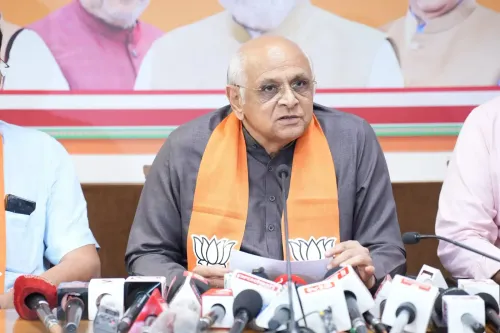
CM Bhupendra Patel defends Gujarat SIR process, hits Congress
Synopsis
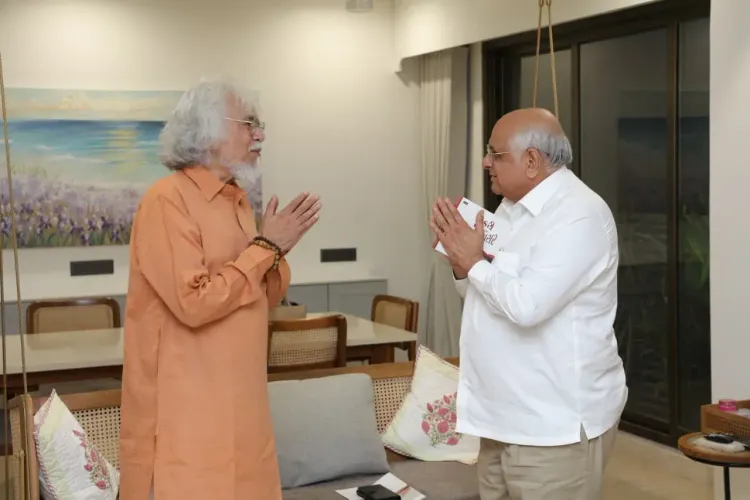
Gujarat CM Bhupendra Patel launched the BJP's 'Save Democracy, Remove Anarchy' outreach on October 29, visiting litterateur Padma Shri Tushar Shukla in Ahmedabad to discuss the SIR process and counter what he called Congress's nationwide misleading propaganda campaign.
Key Takeaways
Gujarat CM Bhupendra Patel met Padma Shri Tushar Shukla at his Ahmedabad residence on October 29, 2026 to discuss the SIR process.
Patel accused Congress of running misleading propaganda nationally about the Special Investment Region (SIR) process.
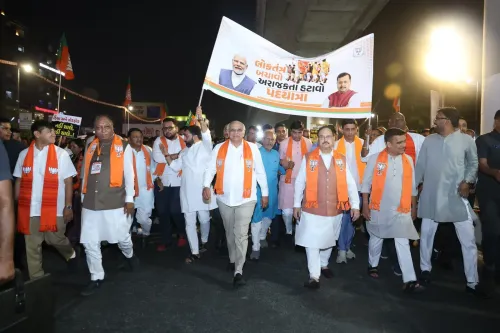
The BJP has launched a named campaign — 'Loktantra Bachavo, Arajaktata Hatavo' (Save Democracy, Remove Anarchy) — as its structured counter-offensive.
BJP workers have been directed to reach every section of society to expose what the party calls Congress's 'politics of anarchy.' The SIR framework traces back to the Gujarat Special Investment Region Act, 2009 , and has been a recurring flashpoint between the two parties.
Patel framed the defence within PM Narendra Modi 's Viksit Bharat vision, casting the row as a threat to the country's development trajectory.
Gujarat Chief Minister Bhupendra Patel took the political battle over the state's Special Investment Region (SIR) process directly to a Padma Shri laureate's doorstep on Thursday, October 29, 2026 — a deliberate signal that the BJP intends to fight the Congress narrative not just in assembly halls, but in living rooms across Ahmedabad.
Writing in Gujarati, Chief Minister Patel charged that Congress is running 'bhramak prachar' — misleading propaganda — across the country about the SIR process, which he described as having been conducted with complete transparency. He framed the BJP's counter-offensive under the campaign banner 'Loktantra Bachavo, Arajaktata Hatavo' ('Save Democracy, Remove Anarchy'), positioning the party's outreach as a civic duty rather than a political exercise.
The Patel–Tushar Shukla meeting in Ahmedabad
At the heart of the day's optics was the CM's visit to the residence of Padma Shri Tushar Shukla, a distinguished Gujarati litterateur, in Ahmedabad. The choice of interlocutor was deliberate: by sitting down with a culturally revered figure rather than a party functionary, Patel sought to project the SIR defence as a conversation with civil society, not a party rally. The two discussed the SIR issue in detail, the CM said.
Patel added that BJP workers are now fanning out to reach every section of society — explicitly to 'expose Congress's politics of anarchy.' The campaign framing is unambiguous: the SIR dispute is being elevated from a land-policy disagreement to a referendum on democratic order itself.
What Gujarat's Special Investment Regions actually are
The Gujarat Special Investment Region Act, 2009, created the legal scaffolding for large, integrated industrial zones — think dedicated infrastructure, utilities, and governance — designed to attract major domestic and foreign capital. The policy has been central to Gujarat's industrial identity for over a decade and a half, but it has also generated persistent friction over land acquisition, displacement of local communities, and the opacity of decision-making at various stages.
Industrial investors and local landowners sit on opposite ends of the SIR story — the former see streamlined zones as growth engines, while the latter have at times questioned the terms of land transfer. Congress has repeatedly used these fault lines to challenge BJP governance in Gujarat, and the current campaign marks the latest round of that durable rivalry.
The 'Viksit Bharat' frame and the Congress counter-charge
Patel anchored his defence firmly within Prime Minister Narendra Modi's 'Viksit Bharat' ('Developed India') vision, arguing that the nation is moving steadily toward that goal under Modi's leadership — and that Congress's campaign is an attempt to derail that trajectory. 'The country's people will never accept Congress's designs to spread anarchy,' he wrote, closing with the hashtag #SaveDemocracyRemoveAnarchy.
The Congress has not been silent: the party has run what the CM describes as a nationwide campaign questioning the SIR process, though the specific claims in that campaign cannot be independently verified from the post alone. What is clear is that both sides have decided this is a fight worth having publicly — and the BJP has now formalised its response into a named, structured outreach drive.
When a ruling CM takes a campaign about an industrial land policy to the home of a poet, you know the battle has moved well beyond zoning maps. The real contest is over who controls the story — and Gujarat's voters will be the final editors.
Point of View
The BJP is attempting to reframe the SIR dispute as a values contest — democracy versus anarchy — rather than a technical land-policy argument, where Congress may hold more public sympathy. The 'Viksit Bharat' overlay connects a state-level controversy to the national BJP narrative, making it harder for opponents to isolate the issue. The move also signals that ahead of any forthcoming Gujarat assembly or national campaign cycle, the party is choosing offence over defence on industrial policy. How successfully the Congress can keep the focus on specific land and transparency grievances, rather than being cast as 'anarchists,' may determine which frame sticks with voters.
NationPress
29 Oct 2026
Frequently Asked Questions
What is the Special Investment Region (SIR) in Gujarat?
A Special Investment Region (SIR) in Gujarat is a large, integrated industrial development zone established under the Gujarat Special Investment Region Act, 2009 , designed to provide dedicated infrastructure and governance to attract major investment. The SIR framework has been central to Gujarat's industrial policy for over a decade.
Why is Congress criticising the SIR process in Gujarat?
Congress has challenged the SIR process on grounds that include concerns over land acquisition, displacement of local communities, and alleged opacity in decision-making. Gujarat CM Bhupendra Patel has called this criticism 'misleading propaganda,' and the BJP has launched a formal outreach campaign to counter it.
Who is Tushar Shukla and why did CM Patel visit him?
Tushar Shukla is a prominent Gujarati litterateur and Padma Shri recipient. CM Patel visited him at his Ahmedabad residence on October 29, 2026, as part of the BJP's 'Save Democracy, Remove Anarchy' campaign, choosing a civil-society figure to project the SIR defence beyond party ranks.
What is the BJP's 'Save Democracy, Remove Anarchy' campaign?
The 'Loktantra Bachavo, Arajaktata Hatavo' (Save Democracy, Remove Anarchy) campaign is a BJP outreach drive in Gujarat in which party workers reach all sections of society to counter what the BJP describes as Congress's misleading narrative on the SIR process and what it calls 'politics of anarchy.'
What is Viksit Bharat and how does it relate to the Gujarat SIR row?
Viksit Bharat ('Developed India') is Prime Minister Narendra Modi's long-term national development vision. CM Patel invoked it to argue that Congress's campaign against the SIR process undermines India's broader development trajectory, framing a state industrial-policy dispute within a national political narrative.