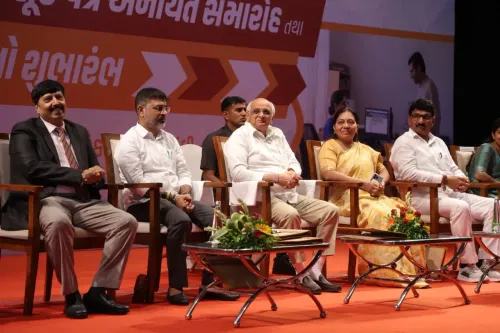
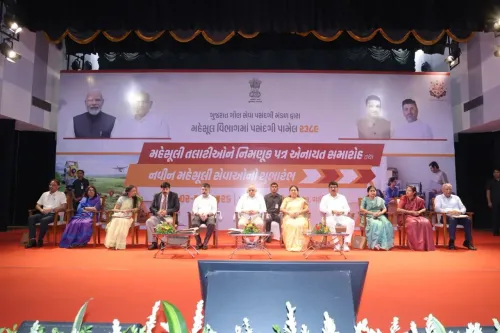
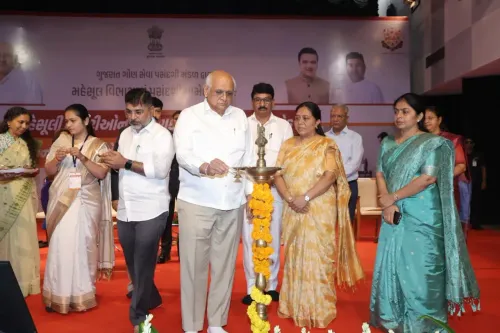
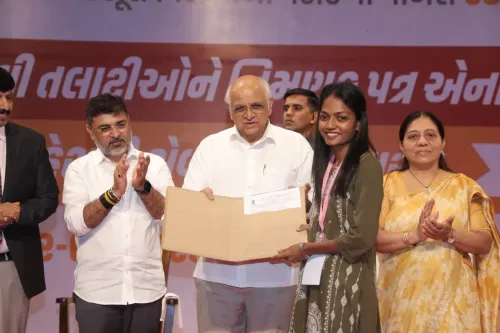
CM Bhupendra Patel hands appointment letters to 2,389 Revenue Talatis in Gujarat
Synopsis
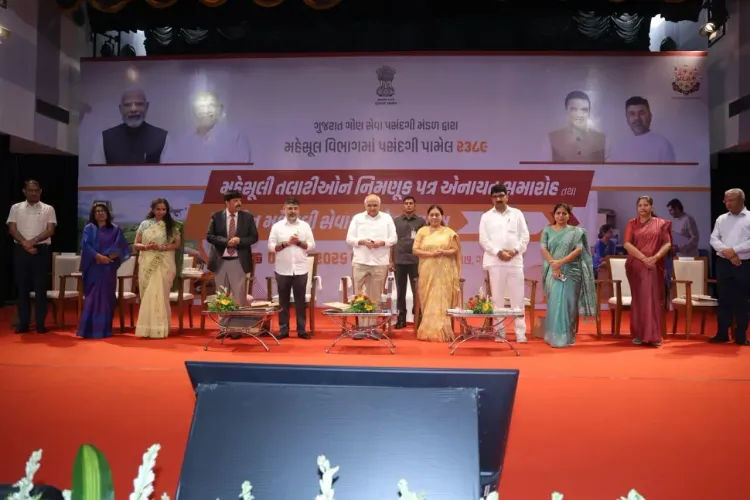
Gujarat CM Bhupendra Patel handed appointment letters to 2,389 Revenue Talati Class-3 recruits at Gandhinagar on 2 July 2026, and launched the iRCMS e-filing portal, the REVA QR-based citizen feedback system, and signed an MoU with Survey of India to modernise land administration.
Key Takeaways
2,389 Revenue Talati Class-3 officers received appointment letters at Gandhinagar Town Hall on 2 July 2026 .
The iRCMS e-filing facility now allows citizens to file revenue cases online from home, reducing the need for office visits.
REVA (Revenue Voice and Assistance) , a QR code-based centralised feedback system, was launched to capture direct citizen input on revenue services.
New Sub-Registrar offices at Vadgam and Sidhpur and a Residential Additional Collector Quarter at Navsari were inaugurated.
An MoU with Survey of India was signed to improve land survey accuracy and reduce boundary disputes.
The initiatives build on Gujarat's two-decade digital land records programme, dating to the e-Dhara project of 2004 .
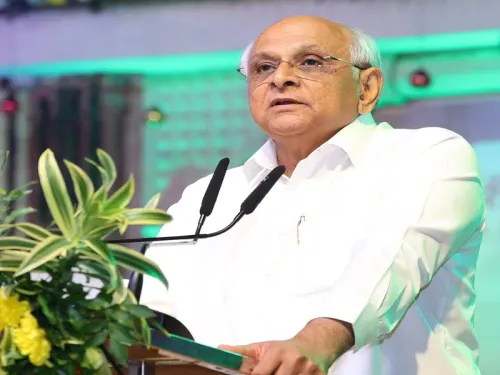
Gujarat Chief Minister Bhupendra Patel on Thursday, 2 July 2026, distributed appointment letters to 2,389 newly recruited Revenue Talati Class-3 cadre officers at a ceremony held at Gandhinagar Town Hall. The event also saw the launch of two major digital governance tools and the inauguration of new revenue infrastructure across the state.
Context
Posting on X, CM Patel announced that the 2,389 newly appointed candidates would join Gujarat's Revenue Administration Department as Mahesuli Talatis (Revenue Talatis) — village-level officers responsible for maintaining land records, processing mutations, and handling local revenue functions. He extended 'heartfelt congratulations to all the bright young appointees and their families.' The appointments represent one of the larger single-batch recruitments in the state's revenue cadre in recent years.
Policy Backdrop
At the same event, CM Patel launched two technology platforms aimed at modernising revenue service delivery. The first is an e-filing facility on the iRCMS portal — the Integrated Revenue Case Management System — enabling applicants to file revenue cases from home without visiting a government office. The second is REVA (Revenue Voice and Assistance), a QR code-based centralised feedback system designed to capture citizen responses on revenue services directly.
Gujarat's digital push in land administration dates to the e-Dhara project of 2004, which computerised land records and mutation processes. The Central government's Digital India Land Records Modernization Programme (DILRMP), launched in 2008, further supported state-level digitisation. The iRCMS and REVA platforms build on this two-decade lineage of process automation in the revenue department.
Separately, a Memorandum of Understanding (MoU) was signed with the Survey of India — the national mapping agency under the Ministry of Science and Technology — to improve accuracy in land administration through updated cadastral surveys. This continues earlier state-level efforts to reduce land boundary disputes through geospatial modernisation.
Infrastructure and Stakeholder Impact
CM Patel also inaugurated newly constructed, upgraded Sub-Registrar offices at Vadgam and Sidhpur, along with a Residential Additional Collector Quarter at Navsari. These physical infrastructure additions complement the digital initiatives by improving working conditions and service delivery capacity at the district and sub-district level.
The primary beneficiaries span multiple groups: the 2,389 recruits and their families gaining government employment; land owners and revenue applicants across Gujarat who can now file cases online through iRCMS; and citizens who can provide feedback on revenue services through the REVA system without approaching offices in person. Revenue Talatis serve as the first point of contact for millions of rural residents on land-related matters.
What's Next
The key metrics to watch in the coming months will be district-wise adoption rates for the iRCMS e-filing facility and uptake of the REVA feedback system across Gujarat's revenue offices during 2026-27. Deliverables under the MoU with Survey of India — particularly timelines for updated land survey accuracy — will determine how quickly the state can reduce cadastral disputes. If the digital tools achieve wide adoption, Gujarat's model could inform similar reforms in other states pursuing revenue administration modernisation under DILRMP.
Point of View
Digital tools, physical infrastructure, and an inter-agency MoU signals a deliberate effort by the Gujarat government to present revenue administration reform as a bundled package rather than piecemeal updates. Launching REVA alongside iRCMS e-filing addresses both the supply side — faster case processing — and the demand side — citizen accountability — of service delivery in a single event. The MoU with Survey of India is particularly significant: cadastral inaccuracies are among the leading drivers of land litigation in India, and a state-level partnership with the national survey body could yield long-term reductions in revenue court backlogs. Taken together, these moves position Gujarat's revenue department as a test bed for the kind of integrated governance reform that the Centre's DILRMP has long encouraged but states have adopted unevenly.
NationPress
2 Jul 2026
Frequently Asked Questions
What is the Revenue Talati post in Gujarat?
A Revenue Talati is a Class-3 government officer in Gujarat's revenue administration responsible for maintaining village-level land records, processing land mutations, and handling local revenue functions. The post is a key entry point into the state's revenue cadre.
What is the iRCMS portal launched by Gujarat?
iRCMS stands for Integrated Revenue Case Management System. It is a Gujarat government portal that now includes an e-filing facility allowing citizens to submit revenue-related cases online from home, without visiting a revenue office in person.
What is REVA in Gujarat revenue department?
REVA stands for Revenue Voice and Assistance. It is a QR code-based centralised feedback system launched by the Gujarat government to collect direct citizen responses on the quality and delivery of revenue services across the state.
Why did Gujarat sign an MoU with Survey of India?
The MoU with Survey of India was signed to improve accuracy in land administration by updating cadastral maps and land boundary surveys. This is aimed at reducing disputes over land boundaries, which are a common source of revenue litigation in Gujarat and across India.
How many Revenue Talatis were appointed in Gujarat in 2026?
Gujarat Chief Minister Bhupendra Patel distributed appointment letters to 2,389 newly recruited Revenue Talati Class-3 cadre officers at Gandhinagar Town Hall on 2 July 2026 .