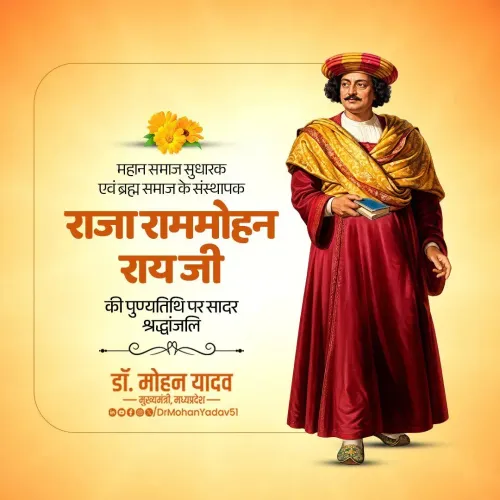
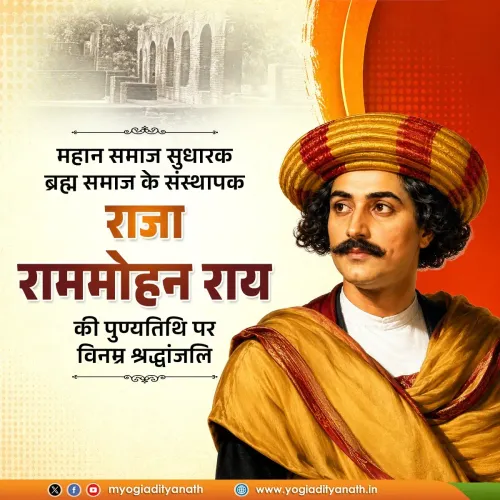
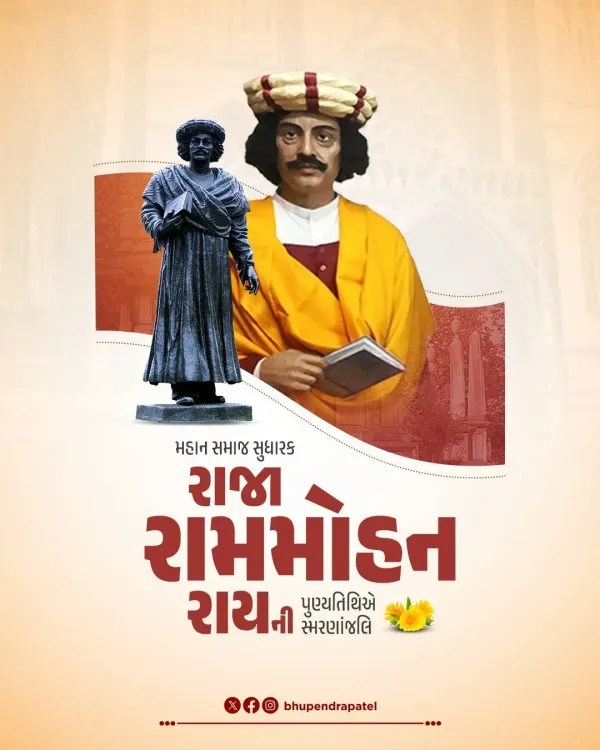
CM Bhupendra Patel Pays Tribute to Raja Ram Mohan Roy
Synopsis
Gujarat Chief Minister Bhupendra Patel paid tribute to Raja Ram Mohan Roy on his death anniversary, calling the 19th-century reformer the torchbearer of India's renaissance and honouring his landmark campaigns against sati and for women's education.
Key Takeaways
Gujarat CM Bhupendra Patel posted a tribute on September 27, 2026 , marking Raja Ram Mohan Roy's death anniversary.
CM Patel described Roy as the 'torchbearer of India's renaissance' and praised his role in abolishing sati and promoting women's education.
Raja Ram Mohan Roy (1772–1833) founded the Brahmo Samaj and successfully campaigned for the British colonial ban on sati in 1829 .
Roy died on September 27, 1833 , in Bristol, England , aged 61 .
Annual tributes to 19th-century social reformers are a consistent feature of Indian political communication across party lines.
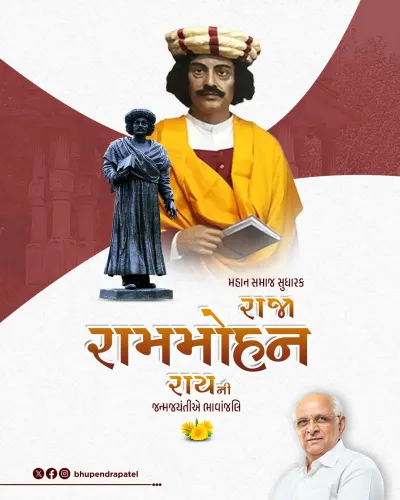
On the death anniversary of one of India's most transformative social architects, Gujarat Chief Minister Bhupendra Patel paid tribute to Raja Ram Mohan Roy on Sunday, September 27, 2026, honouring the 19th-century reformer who dismantled one of colonial India's most brutal customs and opened the door to women's education.
Writing in Gujarati, CM Patel described Roy as 'ભારતીય પુનર્જાગરણના જ્યોતિર્ધર' — 'the torchbearer of India's renaissance' — and saluted him as the pioneer of the abolition of the sati practice and of women's education. The message closed with a conviction: that the path of public awakening Roy charted through progressive thought 'will forever serve as a guiding light.'
The Reformer Who Changed What India Allowed
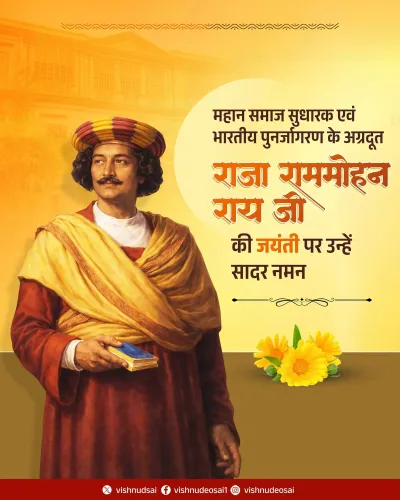
Raja Ram Mohan Roy, born in 1772 in Bengal, founded the Brahmo Samaj and is widely regarded as the father of the Bengal Renaissance. His most consequential victory came in 1829, when he successfully lobbied the British colonial administration under Governor-General Lord William Bentinck to ban sati — the practice of widows being burned alive on their husbands' funeral pyres. It was not just a legal win; it was a civilisational rupture.
Roy did not stop at abolition. He founded schools that admitted women, championed the study of English and modern sciences alongside Sanskrit, and argued — decades before it was fashionable — that reason and religious reform were not enemies of tradition but its cure. He died in Bristol, England, on September 27, 1833, at the age of 61.
Why State Leaders Keep Returning to Roy's Anniversary
Tribute posts on Roy's death anniversary have become a fixture in Indian political calendars, cutting across party lines and state boundaries. The pattern reflects something deliberate: leaders connecting the social-reform legacy of the 19th century to contemporary commitments on gender equity and education. For Gujarat's BJP government, invoking Roy aligns with a broader narrative of celebrating India's internal reformers — figures who modernised society from within, rather than waiting for external pressure.
The tribute is ceremonial, but its subject is anything but light. Roy's campaigns remind every generation that legal and social change, when pursued with persistence and reason, can outlast the conditions that made them radical. That is the kicker every anniversary quietly delivers.
Point of View
But its symbolic positioning is deliberate and consistent.
NationPress
27 Sept 2026
Frequently Asked Questions
Who was Raja Ram Mohan Roy?
Raja Ram Mohan Roy (1772–1833) was a Bengali social reformer who founded the Brahmo Samaj, campaigned successfully for the abolition of sati in 1829, and advocated for women's education and modern learning. He is widely regarded as the father of the Bengal Renaissance.
When did Raja Ram Mohan Roy die?
Raja Ram Mohan Roy died on September 27, 1833, in Bristol, England, at the age of 61.
Why did Bhupendra Patel pay tribute to Raja Ram Mohan Roy?
Gujarat CM Bhupendra Patel marked Roy's death anniversary on September 27, 2026, honouring his contributions to abolishing sati and promoting women's education as enduring pillars of social reform in India.
What was Raja Ram Mohan Roy's role in abolishing sati?
Roy lobbied the British colonial administration under Governor-General Lord William Bentinck to legally ban sati — the practice of widows being burned on their husbands' funeral pyres. The ban was enacted in 1829 and was one of the most significant social reforms of the colonial era.
What is the Brahmo Samaj?
The Brahmo Samaj is a social and religious reform movement founded by Raja Ram Mohan Roy in 1828 in Bengal. It rejected idol worship and caste discrimination, promoted monotheism, and advocated for women's rights and modern education.