CM Bhupendra Patel to spend 72 hours in Dahod tribal villages
Synopsis
Gujarat Chief Minister Bhupendra Patel will undertake a 72-hour Jan Sampark Yatra to remote tribal villages in Dahod's Garbada and Dhanpur talukas from 18-20 November 2026, eating and sleeping in Adivasi homes to hear local grievances firsthand.
Key Takeaways
Gujarat CM Bhupendra Patel will travel to remote tribal villages in Garbada and Dhanpur talukas, Dahod district from 18 to 20 November 2026 .
The 72-hour Jan Sampark Yatra involves staying overnight in village homes, eating simple meals on the floor with Adivasi families, and participating in bhajan sessions.
The yatra begins with a tribute to Bhagwan Birsa Munda , the revered 19th-century Adivasi freedom fighter known as 'Dharti Aaba'.
The stated aim is grassroots grievance redressal and direct dialogue with Dahod's youth and children .
Dahod has one of Gujarat's highest Scheduled Tribe population concentrations, making it a consistent focus of state development programmes.
Tribal communities constitute approximately 15 percent of Gujarat's total population, underscoring the political and policy weight of eastern-district outreach.
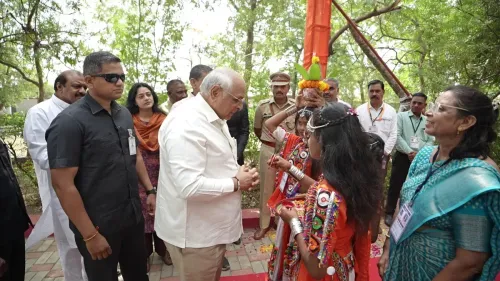
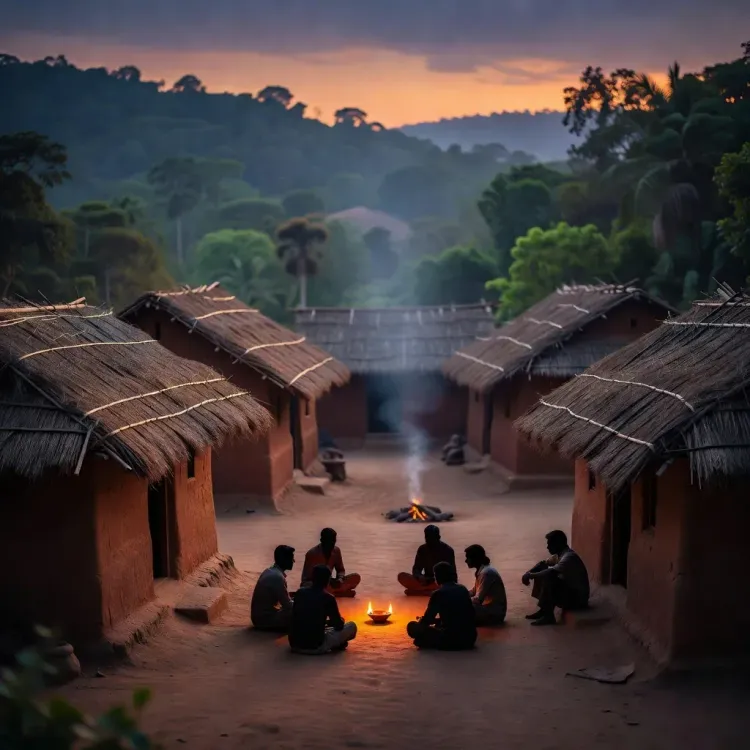
Eating on the floor with Adivasi families, joining bhajan mandalis under the night sky, and sleeping in village homes — Gujarat Chief Minister Bhupendra Patel has announced a 72-hour grassroots outreach into the remote tribal heartland of Dahod district, beginning 18 November 2026. It is a deliberate departure from the motorcade-and-dais style of political visits.
Posting in Gujarati on 17 November, Patel described his upcoming journey to the interior Adivasi villages of Garbada and Dhanpur talukas as one of life's rare privileges — 'jeevanno aa ek adbhut lhavo chhe' (this is a wonderful experience of life). He said he would launch the Jan Sampark Yatra by paying tribute to Bhagwan Birsa Munda, the 19th-century tribal leader and freedom fighter revered across India's Adivasi communities as 'Dharti Aaba', or Father of the Earth.
No guest room, no entourage — just a family member's chair on the floor
The itinerary Patel described strips away the usual trappings of a Chief Ministerial tour. He will eat simple meals at tribal homes, sit on the ground for conversations, and spend nights in villages rather than returning to a circuit house. 'Not as a guest, but as a member of the family,' he wrote — a framing that sets the stated purpose as genuine dialogue, not a ceremonial drop-in.
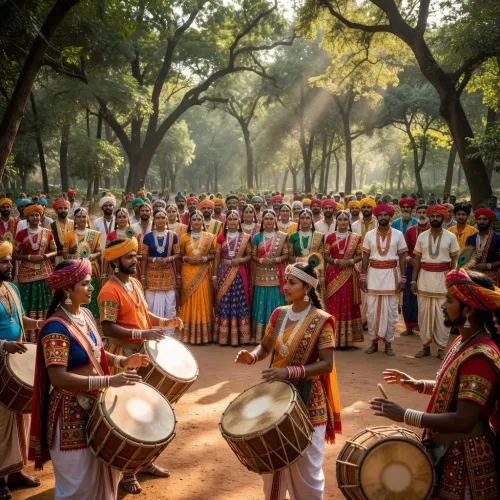
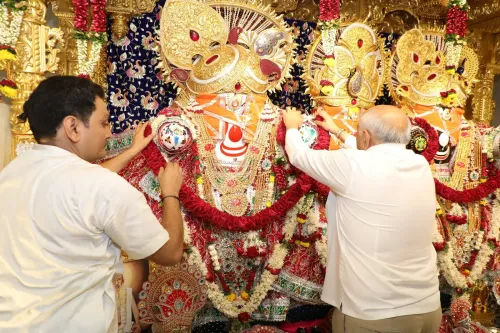
Evenings, he said, will be spent in devotional sessions with local bhajan groups, and he will seek blessings at Baba Dhodaja Dev, a revered local deity, praying for the welfare of all. The cultural immersion is deliberate: in Dahod's tribal belt, religious and community life are inseparable from daily governance concerns.
Why Dahod, and why now
Dahod is one of Gujarat's easternmost districts and carries one of the state's highest concentrations of Scheduled Tribe populations. The district has been a consistent focus of both state and central schemes targeting infrastructure, education, and livelihood in tribal areas. Garbada and Dhanpur, the two talukas named in the visit, contain some of the most geographically isolated villages in the region — precisely the communities that rarely receive a direct hearing from the state's top executive.
Gujarat's BJP administrations have a documented pattern of high-level tribal-belt visits that combine cultural participation with grievance redressal. The Jan Sampark Yatra format — direct public contact tours — has been used periodically to surface local problems that district bureaucracies may not escalate upward. Patel specifically said he was eager to understand 'small and large problems of villagers up close and find solutions', and to hold dialogues with Dahod's youth and children.
Tribal outreach as both governance and politics
Gujarat's tribal population accounts for roughly 15 percent of the state's total. That is a substantial electoral and policy constituency, and successive state governments have invested in consolidating ties with Adivasi communities across the eastern districts. Tours like this one serve a dual function: they generate ground-level intelligence on unresolved grievances, and they reinforce the image of a government that is accessible rather than distant.
Patel closed his post with warmth rather than a policy announcement: 'Your love and trust are what give me the energy for uninterrupted public service. See you in Garbada's courtyard!' The absence of a formal scheme unveiling or infrastructure ribbon-cutting is itself the message — the visit is framed entirely as listening, not announcing.
What comes after the 72 hours will matter most: whether specific grievances heard in Garbada and Dhanpur translate into district-level project sanctions or administrative action will determine whether this yatra is remembered as a turning point or a photo opportunity.
Point of View
No scheme launches — reflects a mature understanding that visible accessibility can itself be a governance tool, especially in constituencies that feel administratively remote. The invocation of Birsa Munda at the start of the yatra is politically deliberate: it positions the BJP's tribal outreach within a pan-India civilisational narrative that the party has increasingly adopted since the Centre designated Munda's birth anniversary as Janjatiya Gaurav Diwas. Whether the visit produces measurable follow-through — sanctioned projects, resolved grievances — will test whether Jan Sampark Yatras in Gujarat are substantive or symbolic. The 15-percent tribal electorate in Gujarat is not monolithic, but sustained direct engagement from a sitting Chief Minister at this granular a level is unusual and signals the party sees consolidation here as a long-term priority.
NationPress
17 Nov 2026
Frequently Asked Questions
Where is Gujarat CM Bhupendra Patel going on his tribal visit?
CM Bhupendra Patel is visiting remote Adivasi villages in Garbada and Dhanpur talukas of Dahod district in eastern Gujarat from 18 to 20 November 2026.
What is a Jan Sampark Yatra?
A Jan Sampark Yatra is a direct public-contact tour in which senior government leaders visit communities — often in rural or tribal areas — to hear local grievances firsthand without the filter of district bureaucracy.
Who is Birsa Munda and why is he significant?
Birsa Munda was a 19th-century tribal leader and freedom fighter from the Munda community, widely revered across India's Adivasi communities as 'Dharti Aaba' or Father of the Earth. He symbolises Adivasi identity and resistance.
What is the tribal population of Dahod district?
Dahod is one of Gujarat's easternmost districts and has one of the state's highest concentrations of Scheduled Tribe communities, within a state where tribal people account for roughly 15 percent of the total population.
What will CM Bhupendra Patel do during the 72-hour visit?
Patel has said he will eat simple meals with Adivasi families in their homes, sit on the floor for conversations, attend bhajan sessions in the evenings, offer prayers at a local deity's shrine, and sleep overnight in villages — focusing on understanding and resolving local grievances.