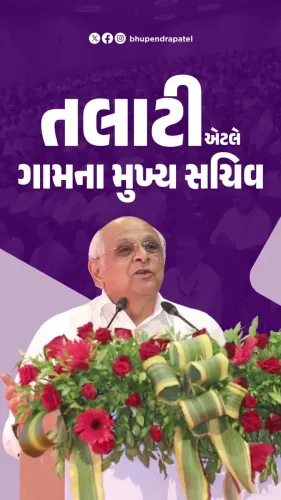
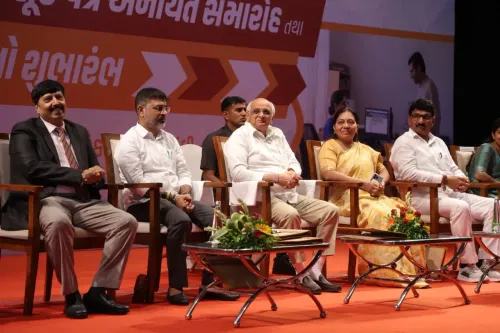
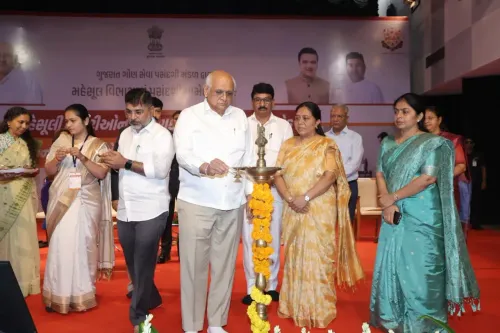
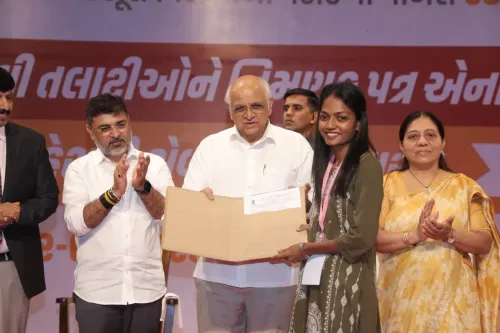
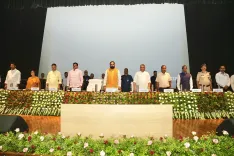
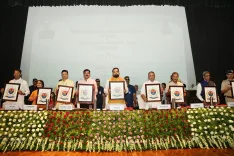
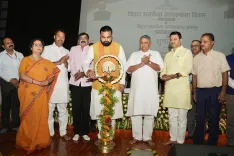
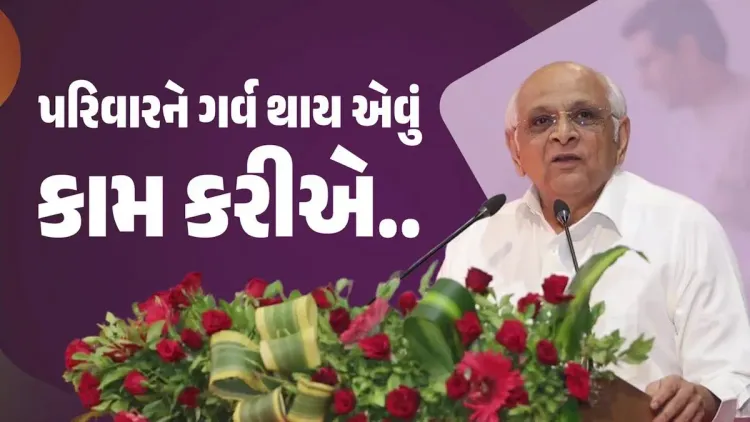
CM Bhupendra Patel urges Talatis to be true guides for farmers
Synopsis
Gujarat Chief Minister Bhupendra Patel on 2 July 2026 called on village-level revenue Talatis to be genuine guides for farmers and rural communities, saying public service must earn family pride and the blessings of the people — underscoring the state's emphasis on ethical, accountable last-mile governance.
Key Takeaways
CM Bhupendra Patel on 2 July 2026 publicly addressed village-level revenue officers, known as Talatis, urging them to act as true guides for farmers.
He stressed that a government servant's work must make their family proud and earn the blessings of the people they serve.
The Revenue Talati is Gujarat's primary rural functionary, handling land records, mutation entries and farmer-facing government services across roughly 18,000 villages.
Gujarat modernised its revenue system with the computerised Bhulekh portal in the 2000s , but the human accountability dimension of the Talati role remains critical.
The statement may signal upcoming policy action such as training programmes or performance incentives for the state's revenue officer cadre.
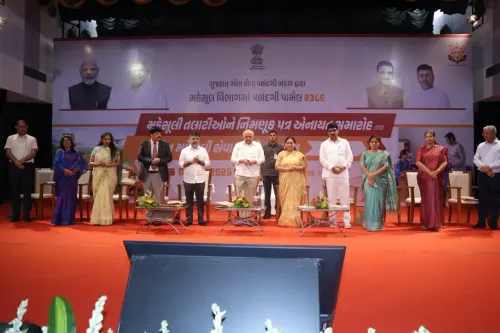
Gujarat Chief Minister Bhupendra Patel on Thursday, 2 July 2026, called on village-level revenue officers — known as Talatis — to serve as genuine guides for farmers and rural communities, stressing that public service must be conducted in a manner that earns both family pride and the blessings of the people.
Posting in Gujarati on X, CM Patel said: 'ગ્રામ્ય સ્તરે મહેસૂલી તલાટીની ભૂમિકા ખૂબ મહત્ત્વની છે' ['The role of the revenue Talati at the village level is very important']. He added that Talatis must become 'true guides' for villagers and farmers, and that their work should be such that 'our family feels proud of us and we receive the blessings of the people.'
Context
The Revenue Talati is the frontline government functionary in Gujarat's rural administrative structure, responsible for maintaining land records, processing mutation entries, and acting as the primary interface between the state and its farming communities. Given that a large share of Gujarat's rural population depends on agriculture, the Talati's role in delivering accurate, timely and corruption-free service carries direct economic consequences for farmers.
CM Patel's remarks come as the state continues to place emphasis on last-mile governance — the idea that administrative quality is ultimately determined not in secretariats but in villages. His message signals an expectation of ethical conduct and community accountability from revenue officers across Gujarat's roughly 18,000 villages.
Policy Backdrop
Gujarat has historically been at the forefront of modernising its revenue machinery. The state computerised land records and launched the online Bhulekh portal in the 2000s, significantly reducing the scope for discretionary delays in Talati-level work. These digital reforms were designed to make land-record access transparent and reduce the dependence of farmers on individual officers.
Despite these structural improvements, the human element of the Talati's role — counselling farmers on rights, entitlements and procedures — remains irreplaceable. CM Patel's statement reinforces the expectation that technology and integrity must work in tandem at the village level.
Stakeholders and Impact
Farmers and rural landowners stand to benefit most directly from a motivated and accountable Talati cadre. Accurate mutation entries, timely crop-damage assessments, and proper maintenance of 7/12 land records — all Talati responsibilities — have a direct bearing on farmers' access to credit, compensation and government welfare schemes.
For village revenue officers themselves, the Chief Minister's public address carries the weight of a performance expectation. It positions community trust, rather than mere procedural compliance, as the benchmark of their service. Civil society groups working on rural land rights have long advocated for exactly this shift in administrative culture.
What's Next
The statement could precede a formal policy initiative — such as refresher training programmes, performance-linked incentives, or the integration of new digital tools — within the revenue department's annual action plan. Gujarat's administration has in the past paired such public messaging from senior leadership with structured capacity-building exercises for field-level officers.
If the government follows through with institutional reinforcement, the Chief Minister's appeal could translate into a measurable improvement in rural service delivery — particularly for the farming communities of Gujarat who interact with the revenue system most frequently.
Point of View
A governance tactic that carries more weight when delivered by the head of government publicly. The statement fits a broader BJP pattern of framing civil servants as 'sevaks' (servants) of the people, aligning bureaucratic culture with the party's political messaging on grassroots governance. Whether it is followed by institutional action will determine whether it shapes Talati behaviour or remains an aspirational appeal.
NationPress
2 Jul 2026
Frequently Asked Questions
Who is a Revenue Talati in Gujarat?
A Revenue Talati is a village-level government officer in Gujarat responsible for maintaining land records, processing mutation entries, collecting land revenue and serving as the first point of contact between the state administration and rural citizens, especially farmers.
What did Gujarat CM Bhupendra Patel say about Talatis?
On 2 July 2026, CM Bhupendra Patel said the role of the revenue Talati at the village level is very important and that they must become true guides for villagers and farmers, adding that their work should make their families proud and earn the blessings of the people.
What is the Bhulekh portal in Gujarat?
The Bhulekh portal is Gujarat's online land-records system, launched in the 2000s as part of the state's computerisation of revenue data, allowing farmers and landowners to access their 7/12 and other land documents digitally and reducing dependence on manual Talati processes.
Why are Talatis important for farmers in Gujarat?
Talatis maintain the 7/12 land records and mutation entries that farmers need to access bank loans, government compensation for crop damage and welfare schemes. Their accuracy and integrity directly affect farmers' economic security and access to state benefits.
Will Gujarat launch new training for Talatis after CM Patel's statement?
No official announcement of a new training programme has been made, but CM Patel's public address is consistent with past practice in Gujarat where senior leadership messaging has preceded structured capacity-building or performance-incentive initiatives for field-level revenue officers.