CM Chandrababu Holds 32,000-Strong Telecon on Cyclone Arnab Response
Synopsis
Chief Minister Chandrababu Naidu addressed 32,000 Andhra Pradesh officials via teleconference on Cyclone Arnab's impact, praised overnight efforts by field staff, and credited advance government action for preventing any loss of life.
Key Takeaways
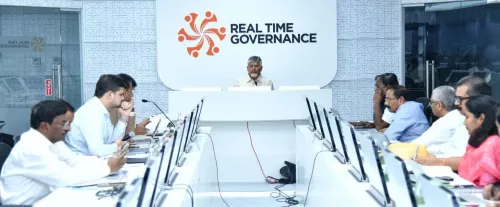
Chief Minister Nara Chandrababu Naidu held a teleconference with 32,000 officials — from district collectors to field staff — on Cyclone Arnab response.
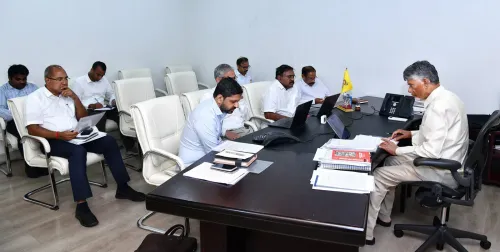
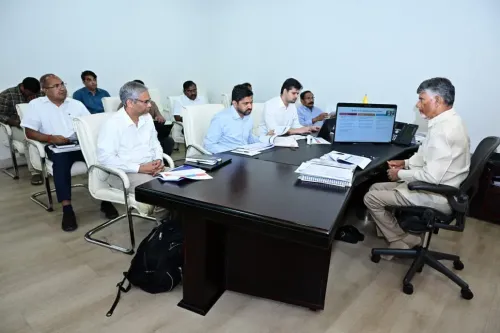
A separate, focused meeting was held with senior officers from Electricity, Irrigation, R&B, Agriculture, Urban Development, and Panchayati Raj departments.
Naidu credited proactive advance measures by the administration for achieving zero fatalities during the cyclone.
Officials who worked through the night were formally commended by the Chief Minister.
Post-cyclone focus now shifts to power restoration, infrastructure damage assessment, and potential central government relief requests.
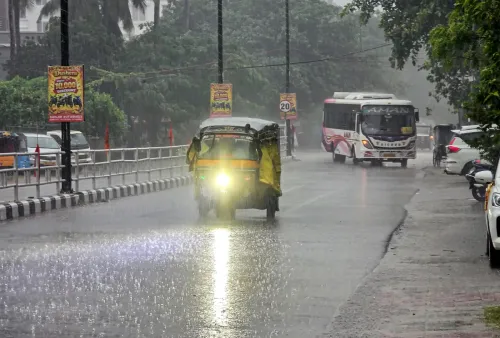
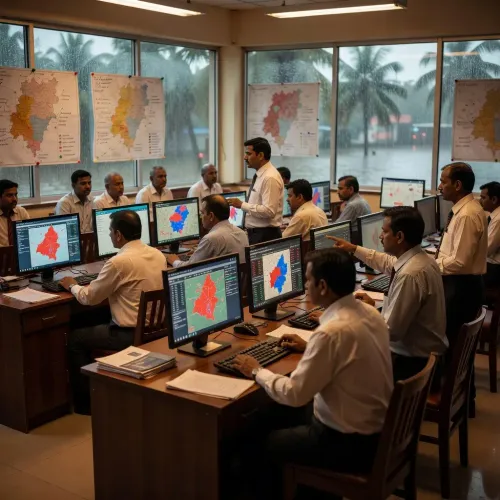
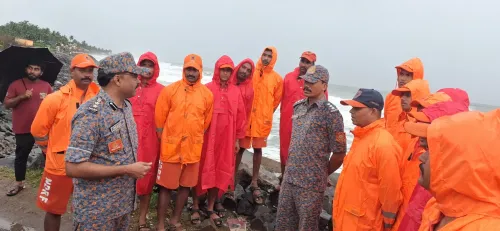
Zero lives lost — and a Chief Minister who wanted every official on the line to hear it. Chief Minister Nara Chandrababu Naidu of Andhra Pradesh on Wednesday, 28 October 2026, convened a sweeping teleconference with 32,000 personnel — from district collectors down to frontline field staff — to review the state's response to Cyclone Arnab and commend the machinery that kept the casualty count at zero.
A teleconference that touched every layer of government
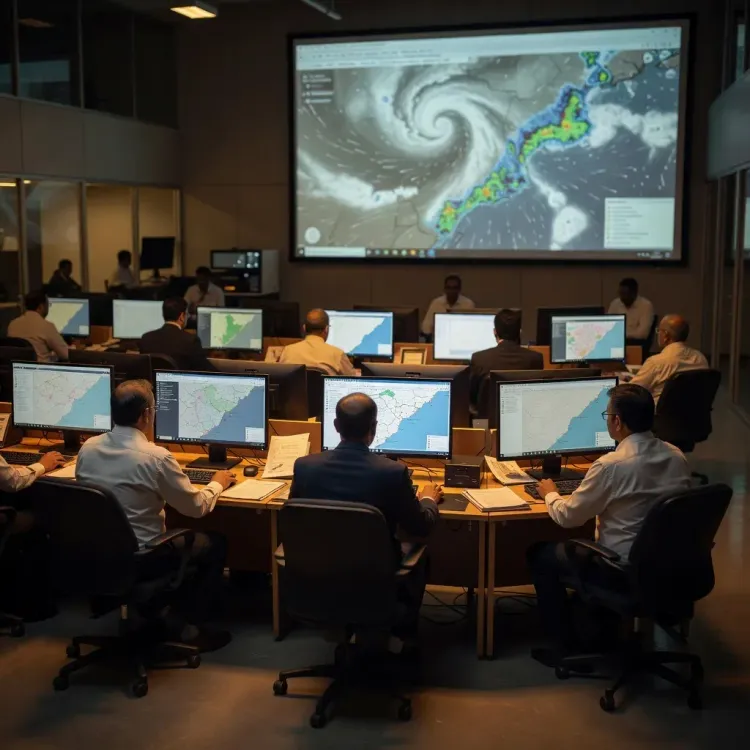
The scale of the call was deliberate. By pulling in all 32,000 officials simultaneously, Naidu ensured that the message — that proactive action saved lives — landed not just with bureaucrats in air-conditioned offices but with the revenue inspector in a coastal mandal and the lineman restoring power in a flooded village. The Chief Minister then convened a separate, focused meeting with senior officers from the Electricity, Irrigation, Roads and Buildings (R&B), Agriculture, Urban Development, and Panchayati Raj departments to drill into department-specific damage and restoration priorities.
Naidu explicitly praised officials who worked through the night, stating that it was the administration's advance preparedness that prevented any loss of life. The post read: 'అధికార యంత్రాంగం ముందస్తుగా తీసుకున్న చర్యల వల్లే ప్రాణనష్టం జరగకుండా చూడగలిగామని సంతోషం వ్యక్తం చేశారు' — 'He expressed satisfaction that the proactive measures taken by the official machinery ensured there was no loss of life.'
Why Andhra Pradesh runs this playbook every cyclone season
Andhra Pradesh sits squarely on the Bay of Bengal coast, one of the world's most cyclone-active water bodies, and the state has absorbed hard lessons from past storms. Multi-department teleconferences from the Chief Minister's office — scaling from hundreds to tens of thousands of participants depending on severity — have become the state's standard operating procedure for cyclone coordination. The format compresses the command chain: a single session replaces dozens of siloed departmental calls and forces real-time accountability at every administrative tier.
Chandrababu Naidu, who has led the state through multiple cyclone seasons across his tenures, has consistently used mass-coordination calls as a visible signal of executive control — and as a morale lever for field staff operating under extreme conditions.
What the administration is focused on now
With the storm's immediate impact assessed, the critical work shifts to restoration. The six departments singled out for the special meeting map directly onto the most visible post-cyclone problems: power outages in coastal districts, breaches or stress on irrigation infrastructure, damaged rural and urban roads, crop losses affecting farmers, and the functioning of local governance bodies in affected panchayats. Officials are expected to submit damage assessments that could inform any request for central government assistance under the National Disaster Response Fund.
The government has not yet released a formal damage report. Restoration timelines for electricity supply — typically the first metric the public watches after a cyclone — remain the immediate benchmark.
For a coastal state that has learned, storm by storm, that preparedness is the only insurance that actually pays out, a zero-casualty outcome is not a lucky accident — it is the only acceptable result, and the administration is being held to exactly that standard.
Point of View
The Chief Minister's office is pre-empting any opposition critique of the administration's handling of Cyclone Arnab. The six-department special review also signals that restoration speed — not just survival — will define the government's post-storm report card. For a CM with a technocratic brand built on administrative efficiency, the 32,000-person call is both crisis management and political messaging, compressed into a single move.
NationPress
28 Oct 2026
Frequently Asked Questions
What is Cyclone Arnab and which areas did it affect in Andhra Pradesh?
Cyclone Arnab is a Bay of Bengal cyclonic storm that made an impact on Andhra Pradesh around 28 October 2026 . Specific districts affected have not yet been officially detailed in the government's initial statement.
How many officials were part of CM Chandrababu Naidu's teleconference on Cyclone Arnab?
32,000 officials participated in the teleconference convened by Chief Minister Nara Chandrababu Naidu , ranging from district collectors to frontline field staff.
Were there any deaths reported due to Cyclone Arnab in Andhra Pradesh?
Chief Minister Naidu stated that no loss of life occurred, attributing this outcome to proactive advance measures taken by the state administration.
Which departments held a special review meeting with CM Naidu after Cyclone Arnab?
Senior officers from Electricity, Irrigation, Roads and Buildings (R&B), Agriculture, Urban Development, and Panchayati Raj departments attended a special post-cyclone review meeting with the Chief Minister.
What is Andhra Pradesh's standard procedure for cyclone disaster management?
The state routinely activates district collectors and key departments ahead of cyclones, with the Chief Minister's office conducting large-scale teleconferences to coordinate field action and review preparedness in real time.