CM Conrad Sangma Celebrates Meghalaya ECD Fellows
Synopsis
Meghalaya Chief Minister Conrad Sangma attended the 'Advancing Care Economy through ECD Fellowship' event on November 3, 2026, celebrating ECD Fellows and Anganwadi Workers under the state's Early Childhood Development Mission, framing it as a foundational investment aligned with PM Modi's Viksit Bharat 2047 vision.
Key Takeaways
Conrad Sangma attended the Advancing Care Economy through ECD Fellowship event on November 3, 2026 under the Meghalaya Early Childhood Development Mission (MECDM) .
ECD Fellows and Anganwadi Workers were recognised as the core workforce driving the mission's ground-level impact.
The MECDM builds on India's Integrated Child Development Services network launched in 1975 , adding a trained fellowship layer for stimulation and parenting support.
Sangma explicitly linked the mission to PM Narendra Modi's Viksit Bharat 2047 vision, framing early childhood investment as critical human-capital spending.
The National Education Policy 2020 provided a national ECCE framework for children aged 3–6 that the state mission complements.
The care-economy focus also creates employment pathways for women, a dual dividend for Meghalaya's development goals.
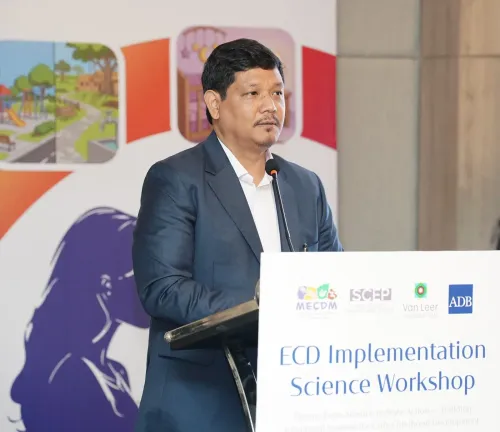
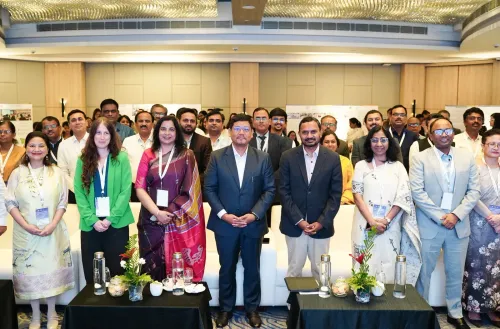
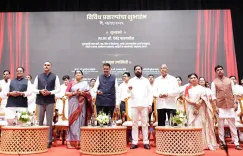
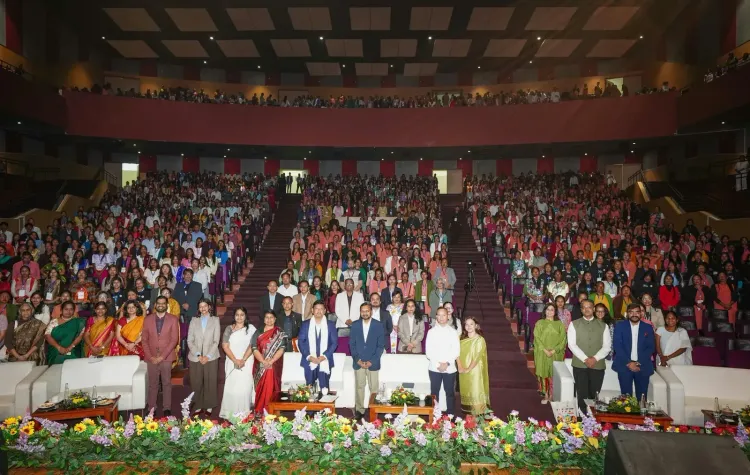
A fellowship program for early childhood development workers became a rallying call on Tuesday, November 3, 2026, as Meghalaya Chief Minister Conrad Sangma attended the 'Advancing Care Economy through ECD Fellowship' event under the Meghalaya Early Childhood Development Mission (MECDM) — saluting the frontline workers he called 'the heart of this mission.'
ECD Fellows and Anganwadi Workers in the Spotlight
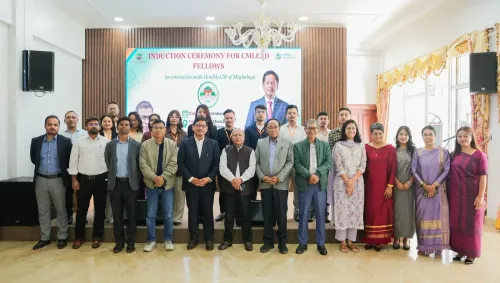
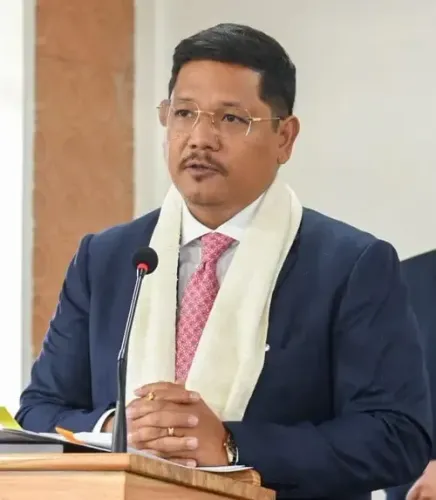
Sangma placed the ECD Fellows and Anganwadi Workers squarely at the centre of the state's child-development ambition. 'Their work on the ground in nurturing children, supporting parents and strengthening early childhood care will shape generations to come,' he said. The event marked a formal celebration of the Fellowship cohort, recognising their role in extending structured early-childhood support to families across Meghalaya.
Anganwadi Workers have been the backbone of India's early childhood ecosystem since the Integrated Child Development Services (ICDS) scheme was launched in 1975. The MECDM model layers a dedicated fellowship on top of that national infrastructure, training specialists who work alongside Anganwadi functionaries to address gaps in stimulation, parenting support and care-economy capacity.
MECDM's Place in the Viksit Bharat 2047 Frame
Sangma anchored the mission explicitly in Prime Minister Narendra Modi's Viksit Bharat 2047 vision, describing it as 'one of our most important investments in building a healthier, stronger and more capable future generation.' The framing is deliberate: early childhood development is increasingly treated not merely as welfare spending but as foundational human-capital investment — a logic that runs through the National Education Policy 2020, which introduced a dedicated framework for Early Childhood Care and Education (ECCE) targeting children aged 3–6.
Indian states have moved progressively to complement the central ICDS network with state-level missions that go beyond nutrition delivery into cognitive stimulation and parent-counselling. Meghalaya's fellowship model is part of that broader pattern, and it also carries a second policy dividend: expanding the care economy workforce, which opens employment pathways predominantly for women in a state where female participation in formal work remains a development priority.
Sangma's Call to Fellows: Passion, Ownership, Initiative
The Chief Minister closed his address with a direct charge to the assembled Fellows — urged them to 'work with passion, ownership and initiative.' The language of ownership signals a push for decentralised accountability rather than top-down compliance, a tone consistent with fellowship-based models that depend on motivated ground-level actors rather than bureaucratic chains of command.
'Together, we are laying the foundations for a brighter future for Meghalaya and the country,' Sangma said, tagging the Prime Minister's Office in his post — a visible signal of alignment between the state government and the Centre's development agenda.
The Fellows celebrated today are the first real test of whether a state-designed care-economy workforce can meaningfully close the gap between a child's earliest years and the promises written into national policy. Their next few years on the ground will tell that story.
Point of View
Positioning Meghalaya — a small northeastern state — at the forefront of a national human-capital agenda. The fellowship model reflects a wider shift in Indian social policy: moving beyond input-delivery (food, vaccines) toward outcome-focused workforce models that address cognitive stimulation and parenting quality. By spotlighting the care economy angle, the state is also making a subtler argument that child-development spending is simultaneously women's employment policy. Whether the fellowship cohort can demonstrate measurable outcomes will determine if this becomes a replicable model for other states or remains a well-intentioned ceremony.
NationPress
3 Nov 2026
Frequently Asked Questions
What is the Meghalaya Early Childhood Development Mission (MECDM)?
The Meghalaya Early Childhood Development Mission (MECDM) is a state-level initiative designed to strengthen early childhood care, support parenting and build a trained care-economy workforce through ECD Fellows working alongside Anganwadi Workers.
Who are ECD Fellows in Meghalaya?
ECD Fellows are trained specialists appointed under MECDM who work on the ground alongside Anganwadi Workers to provide child stimulation, parenting support and early childhood care services across Meghalaya.
How does MECDM connect to Viksit Bharat 2047?
Chief Minister Conrad Sangma has framed MECDM as an investment in human capital directly inspired by Prime Minister Narendra Modi's Viksit Bharat 2047 vision, treating early childhood development as foundational to building a capable future workforce.
What is the role of Anganwadi Workers in early childhood development in India?
Anganwadi Workers are frontline functionaries under the national Integrated Child Development Services scheme, launched in 1975, providing nutrition, health checks and preschool education to young children across India.
What did Conrad Sangma say at the ECD Fellowship event in 2026?
Conrad Sangma said ECD Fellows and Anganwadi Workers are 'at the heart of this mission,' urged them to work with 'passion, ownership and initiative,' and described the MECDM as one of Meghalaya's most important investments in a healthier future generation.