Meghalaya CM Conrad Sangma: Better implementation beats new policies
Synopsis
Meghalaya CM Conrad Sangma used a national ECD workshop to make an unfashionable argument: governments don't need more policies, they need the will to implement the ones they have. With a threefold MGNREGA uptick and a ₹12,000 crore project portfolio as proof points, Sangma's case is grounded in outcomes — not rhetoric.
Key Takeaways
Meghalaya CM Conrad K.
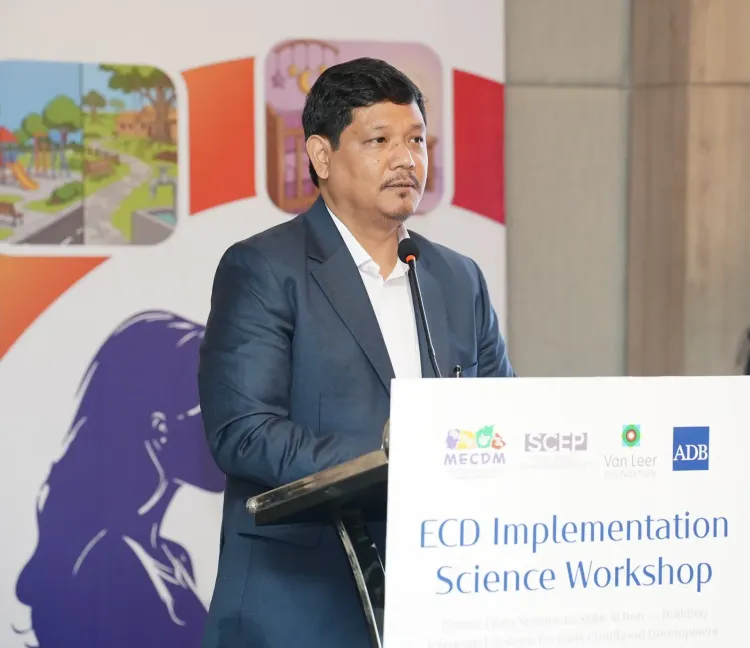
Sangma addressed the ECD Implementation Science Workshop in Shillong on 1 June 2025 .
Sangma argued that meaningful change requires better execution of existing programmes, not new policies — a position he has held since taking office in 2018 .
Improved MGNREGA implementation in Meghalaya produced a nearly threefold increase in utilisation; the state now manages externally aided projects worth nearly ₹12,000 crore .
The state shifted its maternal health strategy from ambulance investment to community-based transport and Safe Motherhood Homes after identifying economic barriers as the real bottleneck.
The MOTHER programme integrates health, education, nutrition, rural development, and social welfare around maternal and child outcomes.
Self-Help Groups in Meghalaya grew from around 4,500 to nearly 60,000 over eight years, contributing to broader developmental gains.
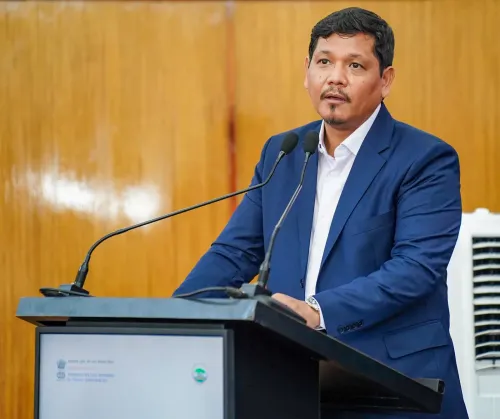
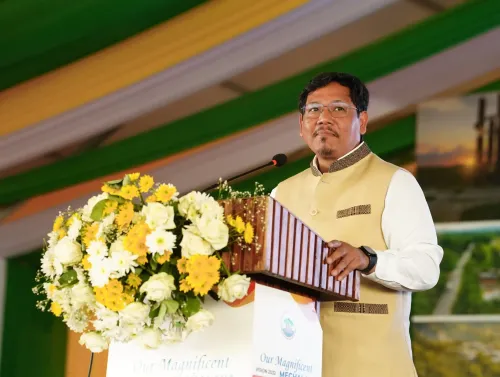
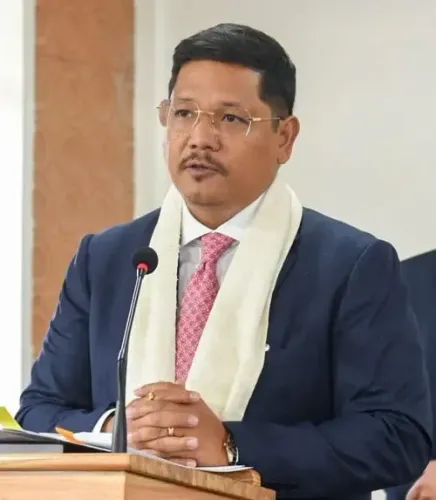
Meghalaya Chief Minister Conrad K. Sangma on Monday, 1 June called for stronger implementation systems and integrated governance over new policy creation, arguing that most governments already possess the science, data, and policy tools needed to address developmental challenges — what is missing is the will and execution capacity to use them effectively.
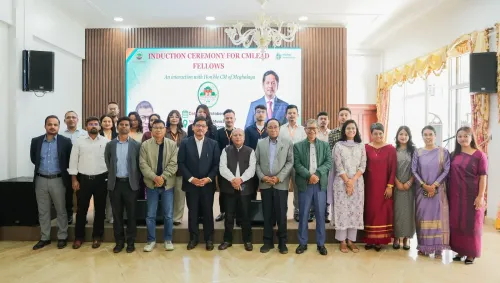
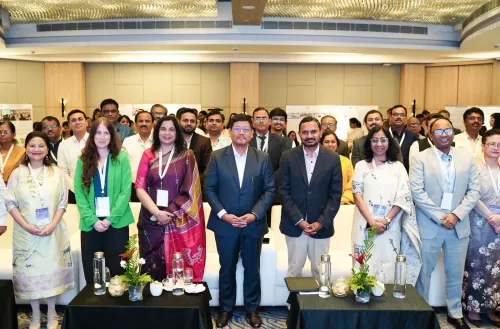
Sangma was speaking at the inaugural session of the three-day Early Childhood Development (ECD) Implementation Science Workshop held at Vivanta, Shillong, which has brought together policymakers, development practitioners, and government officials from across India to deliberate on early childhood development, behavioural science, systems strengthening, and adaptive leadership.
The Core Argument: Do Things Differently
Recalling his first days in office in 2018, Sangma said he had consistently maintained that meaningful change does not require new schemes or policies — it requires better execution of existing ones. Quoting an author, he said he had once told the media that he 'would not do anything different, but would do things differently.'
'The point I am trying to make is that we often know the problems. We understand the science, the data and the analysis behind them. But ultimately, there has to be a will to make a difference,' Sangma said.
Meghalaya's Implementation Gains
Sangma cited measurable outcomes to back his argument. Improved execution of MGNREGA in Meghalaya, he said, had resulted in nearly a threefold increase in utilisation and absorption capacity. The state is currently implementing externally aided projects worth nearly ₹12,000 crore — a portfolio that exceeds those of several comparable small states, according to the Chief Minister.
He added that stronger implementation mechanisms had significantly improved the utilisation of centrally sponsored schemes, pointing to these figures as evidence that administrative reform, rather than policy invention, drives outcomes.
Rethinking Maternal Health: A Local Solution
On maternal mortality, Sangma acknowledged that the government had initially assumed increasing institutional deliveries alone would resolve the problem. It later recognised that economic and logistical barriers were the actual bottlenecks. 'We were encouraging institutional deliveries without recognising the economic realities these mothers faced,' he said.
Rather than investing heavily in ambulances, the state designed a locally adapted transport support mechanism involving community vehicle owners and established Safe Motherhood Homes for expectant mothers from remote areas. 'The lesson here is that we must identify where the actual problem lies and then design solutions that are practical, affordable and tailored to local realities,' Sangma added.
The MOTHER Programme and Integrated Governance
Sangma said this philosophy of integration eventually led to the creation of the MOTHER programme — Meghalaya's Outcome and Transformation in Health, Education, Rural Development and Social Benefit — which links health, education, nutrition, rural development, and social welfare departments around maternal and child welfare outcomes. 'We are no longer looking at departments or schemes in isolation. We are looking at a human life and asking how government can support that life at every stage,' he said.
He also highlighted the expansion of Self-Help Groups in Meghalaya from around 4,500 to nearly 60,000 over the past eight years as a contributor to broader social and developmental gains, linking economic empowerment directly to maternal and child health outcomes.
Cooperative Federalism and What Comes Next
Emphasising cooperative federalism, Sangma called on states to learn from one another through platforms that encourage innovation and knowledge exchange. 'There are no small states or big states when it comes to innovation and good governance,' he said. He also referenced a ₹160-crore indoor stadium built ahead of the upcoming National Games, noting that the true measure of such investments would be improvements in the lives and achievements of young athletes. The workshop continues over two more days.
Point of View
Not just rhetoric. What is harder to assess is whether the MOTHER programme's integration model has produced measurable reductions in maternal mortality — the Chief Minister referenced the design shift but stopped short of citing outcome data. That gap between system reform and verified results is precisely the accountability question his own framework demands.
NationPress
16 Oct 2026
Frequently Asked Questions
What did Meghalaya CM Conrad Sangma say at the ECD workshop in Shillong?
Sangma argued that governments already have the science, data, and policy tools to address developmental challenges — the real gap is in implementation and political will. He said meaningful change does not require new schemes but better execution of existing ones, a position he has held since assuming office in 2018.
What is the MOTHER programme launched by Meghalaya?
MOTHER stands for Meghalaya's Outcome and Transformation in Health, Education, Rural Development and Social Benefit. It is an integrated governance programme that links multiple departments around maternal and child welfare outcomes, moving away from siloed departmental functioning.
How has Meghalaya improved MGNREGA implementation?
According to Chief Minister Sangma, stronger execution mechanisms produced a nearly threefold increase in MGNREGA utilisation and absorption capacity in Meghalaya. The state is also implementing externally aided projects worth nearly ₹12,000 crore, exceeding the portfolios of several comparable small states.
How did Meghalaya change its approach to maternal health?
The state initially focused on increasing institutional deliveries but later recognised that economic and logistical barriers were the primary obstacles. It responded by creating a community-based transport support mechanism involving local vehicle owners and establishing Safe Motherhood Homes for mothers from remote areas.
What is the ECD Implementation Science Workshop in Shillong?
It is a three-day workshop held at Vivanta, Shillong, bringing together policymakers, development practitioners, experts, and government officials from across India. The workshop focuses on early childhood development, behavioural science, systems strengthening, and adaptive leadership.