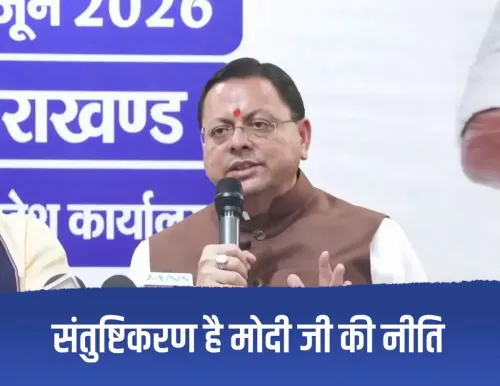
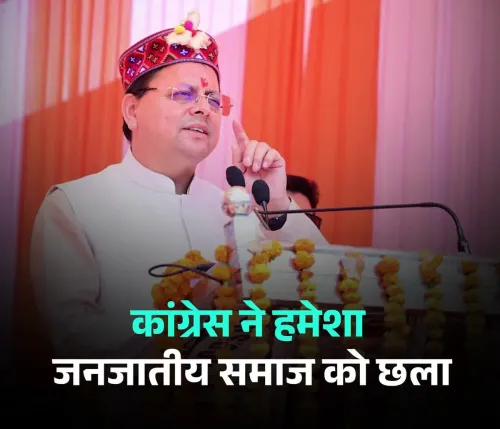
CM Dhami accuses Congress of spreading anarchy to grab power
Synopsis
Uttarakhand CM Pushkar Singh Dhami, citing PM Modi, accused Congress of spreading anarchy to seize power it could not win democratically, calling such politics contrary to national interest.
Key Takeaways
Uttarakhand CM Pushkar Singh Dhami posted on October 16, 2026 attributing a sharp attack on Congress directly to PM Narendra Modi .
The post accuses Congress of 'spreading anarchy' to seize power after failing to win through democratic means.
The charge targets three areas: disrupting national peace, violating constitutional norms, and obstructing development.
BJP leaders have used the 'failed at the ballot box' framing consistently since the 2014 general elections .
By amplifying Modi's words, Dhami signals coordinated top-down BJP political messaging across state and national levels.
Congress has not yet formally responded to the October 2026 post.
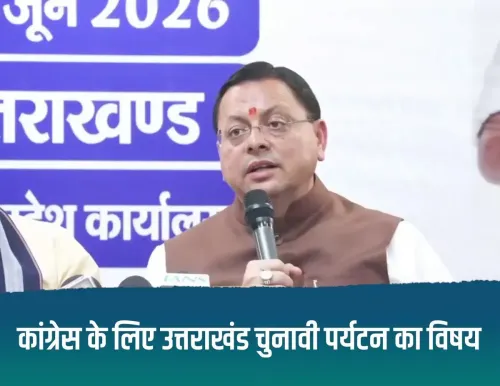
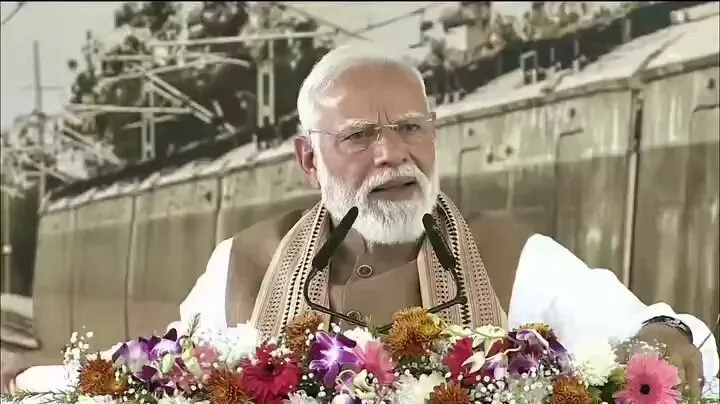
Uttarakhand Chief Minister Pushkar Singh Dhami launched a sharp broadside at the Indian National Congress on Friday, October 16, 2026, accusing the opposition party of engineering chaos to seize power it has failed to win at the ballot box — and attributing the charge directly to Prime Minister Narendra Modi.
Posting on X in Hindi, Dhami quoted PM Modi: 'लोकतांत्रिक तरीके से सत्ता प्राप्त करने में विफल कांग्रेस अब देश में अराजकता फैलाकर सत्ता हथियाने का प्रयास कर रही है' — 'Having failed to win power through democratic means, Congress is now attempting to seize it by spreading anarchy in the country.' The post went further, calling Congress's politics of disrupting peace, constitutional propriety, and development 'contrary to national interest.'
The 'failed at the ballot box' argument — its roots and reach
This is not a one-off flash of campaign rhetoric. BJP leaders have used a consistent line since the 2014 general elections: that Congress, having lost successive national mandates, has resorted to destabilisation rather than constructive opposition. The framing — democratic legitimacy versus manufactured disruption — has become a recurring pillar of BJP political messaging at both national and state levels.
By anchoring the attack in PM Modi's words, Dhami elevates it beyond a state-level jibe. The move signals party discipline and top-down message coordination: when the Prime Minister sets a political frame, chief ministers amplify it into every media market in the country. Uttarakhand, a BJP-governed state Dhami has led since 2021, becomes one more loudspeaker in that network.
Congress in the crosshairs — what the charge actually claims
The accusation carries three specific prongs: disrupting national peace, violating constitutional boundaries, and obstructing development. That three-part construction is deliberate — it conflates street agitation, legislative obstruction, and economic harm into a single indictment. It is the kind of charge that is very easy to make and very hard to disprove in a 280-character news cycle.
Congress has not yet formally responded to this particular post. The opposition's standard counter-argument — that dissent and protest are themselves constitutionally protected — is the predictable next move in this well-worn exchange.
With state and national election cycles perpetually on the horizon in India's federal system, the BJP-Congress war of political characterisation is unlikely to cool. The only question is which specific flashpoint sharpens the next round.
Point of View
Dhami performs loyalty and party discipline simultaneously — useful optics ahead of any upcoming electoral cycle. The 'anarchy versus development' binary has proven durable in Indian political messaging because it collapses complex opposition activity into a single delegitimising label. Congress's challenge remains that responding energetically risks validating the charge, while silence cedes the narrative.
NationPress
16 Oct 2026
Frequently Asked Questions
What did CM Dhami say about Congress on October 16 2026?
CM Dhami quoted PM Modi accusing Congress of trying to seize power by spreading anarchy in the country after failing to win through democratic means, calling it contrary to national interest.
Why is BJP accusing Congress of spreading anarchy?
BJP leaders, including PM Modi and CM Dhami, argue that Congress, having lost successive electoral mandates since 2014, has turned to disrupting peace, constitutional norms, and development rather than engaging in legitimate democratic opposition.
What is the history of BJP's 'failed at the ballot box' argument against Congress?
Since the 2014 general elections, BJP leaders have routinely used this framing to argue that Congress rejects electoral mandates and resorts to agitation and obstruction instead of constructive opposition.
Has Congress responded to Dhami's October 2026 post?
No formal response from Congress to this specific post has been reported.
Who is Pushkar Singh Dhami?
Pushkar Singh Dhami is the Chief Minister of Uttarakhand and a senior BJP leader, serving as CM since 2021.