CM Dhami announces welfare package for Uttarakhand employees, women, youth, farmers
Synopsis
Chief Minister Pushkar Singh Dhami delivered a bundled welfare package for Uttarakhand state employees, women, youth, and farmers on November 10, 2026, continuing his administration's pattern of multi-group benefit announcements. Scheme specifics are yet to be detailed publicly.
Key Takeaways
CM Pushkar Singh Dhami announced a welfare package on November 10, 2026 targeting four groups: state employees, women, youth, and farmers.
The announcement was made via the official Chief Minister's Office of Uttarakhand X account with four accompanying images.
Specific scheme names, eligibility criteria, and budget allocations have not yet been publicly disclosed.
Dhami has led Uttarakhand's BJP government since 2021 and has previously aligned welfare announcements with budget cycles and festival seasons.
The four beneficiary groups represent key constituencies spanning Uttarakhand's organised workforce, rural economy, and demographic base.
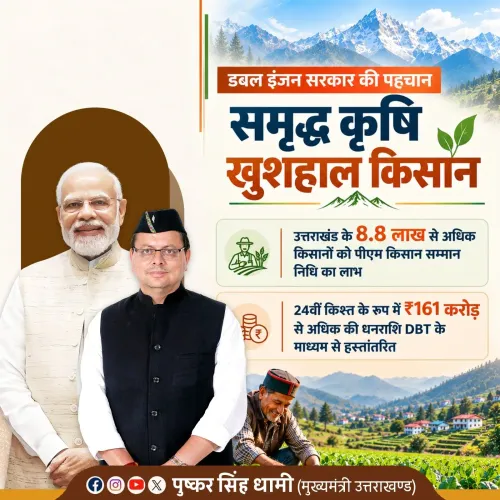
Four pillars of Uttarakhand society — state employees, women, youth, and farmers — received a fresh set of benefits on Tuesday, November 10, 2026, as the Chief Minister's Office of Uttarakhand announced that Chief Minister Pushkar Singh Dhami had delivered what his office called a saugat (gift) to each of these groups.
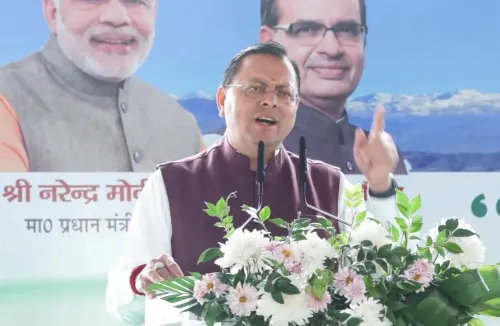
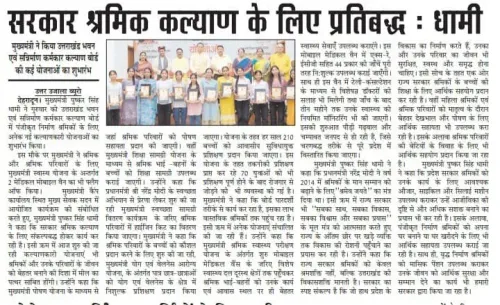
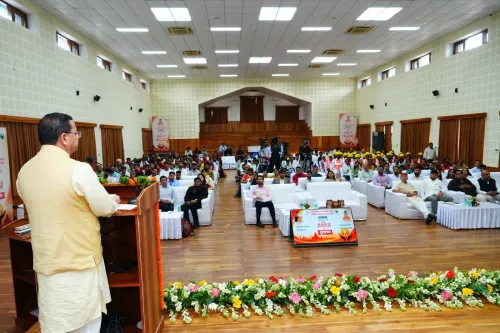
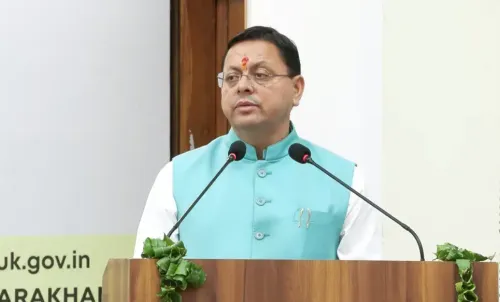
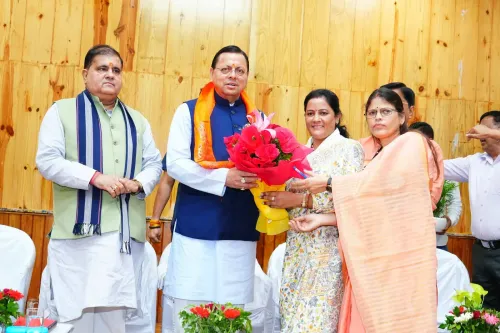
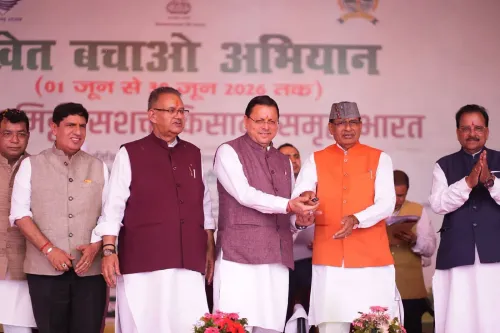
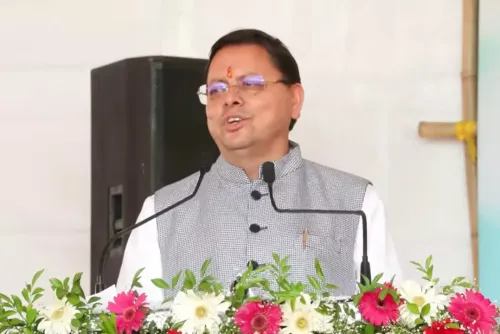
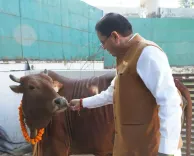
The announcement, shared on the official CMO account, described the move as a bundled welfare gesture, though specific scheme names, eligibility criteria, and budget allocations were not detailed in the post itself. The imagery — four photographs accompanying the message — signals that distinct measures were rolled out for each constituency simultaneously.
Dhami's signature bundled-welfare approach
Pushkar Singh Dhami, who has led Uttarakhand's BJP government since 2021, has made multi-group welfare packages a recurring feature of his administration. His government has periodically aligned such announcements with budget cycles or festival seasons, targeting the state's core voting blocs in a single political moment. By addressing employees, women, youth, and farmers together, the administration signals breadth of reach rather than a narrow sectoral nudge.
Uttarakhand's welfare architecture has historically leaned on subsidies, pension enhancements, and incentive schemes — tools the state has deployed across multiple governments. What distinguishes the current administration's style is the deliberate bundling and simultaneous public communication of these measures, projecting a 'government-delivers' narrative.
Who stands to benefit
The four named groups cut across the state's economic landscape. State government employees represent an organised and vocal constituency with long-standing demands around pay revision and service conditions. Women have been a consistent policy focus, with schemes spanning self-help group financing to maternal health support. Youth in a state marked by significant out-migration are frequently targeted with employment-linked or skill-development incentives. Farmers in Uttarakhand's hilly terrain face distinct challenges — input costs, connectivity, and market access — that welfare packages have attempted to address through subsidies and procurement support.
The specifics of what each group receives under this round will determine the real weight of the announcement. Details on scheme eligibility, financial outlay, and rollout timelines are yet to emerge from official government channels.
Point of View
Addressing employees, women, youth, and farmers in a single announcement reinforces a broad-based governance image ahead of any potential electoral cycle. The pattern also reflects a wider BJP-governed state tendency to frame welfare delivery as a periodic 'gift' rather than an entitlement, shaping the political narrative around largesse. The real test will come when scheme details land — their depth and reach will determine whether this is structural welfare or seasonal optics.
NationPress
10 Nov 2026
Frequently Asked Questions
What welfare benefits did CM Dhami announce for Uttarakhand employees, women, youth and farmers?
On November 10, 2026, CM Pushkar Singh Dhami announced a bundled welfare package for state employees, women, youth, and farmers. However, specific scheme names, eligibility criteria, and financial details had not been publicly disclosed at the time of the announcement.
Who is Pushkar Singh Dhami?
Pushkar Singh Dhami is the Chief Minister of Uttarakhand, leading the BJP government in the state since 2021. He has periodically announced welfare measures targeting farmers, women, youth, and state employees.
What does 'saugat' mean in CM Dhami's welfare announcement?
'Saugat' is a Hindi word meaning 'gift' or 'present'. CM Dhami's office used the term to describe the welfare benefits announced for four groups — employees, women, youth, and farmers — on November 10, 2026.
Does Uttarakhand government regularly announce welfare packages?
Yes. Uttarakhand governments, including the current Dhami administration, have routinely issued bundled welfare announcements targeting farmers, women, youth, and employees, often timed around budget presentations or festival seasons.
Where can I find details of the Uttarakhand welfare schemes announced in November 2026?
Detailed eligibility criteria and financial allocations are expected to be released through official Government of Uttarakhand channels and the Chief Minister's Office. No granular scheme details were available at the time of the initial announcement.