CM Dhami Backs ₹1.86 Lakh Cr Green Energy Corridor Phase-III
Synopsis
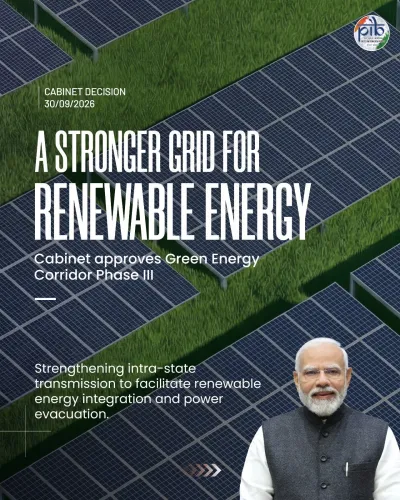
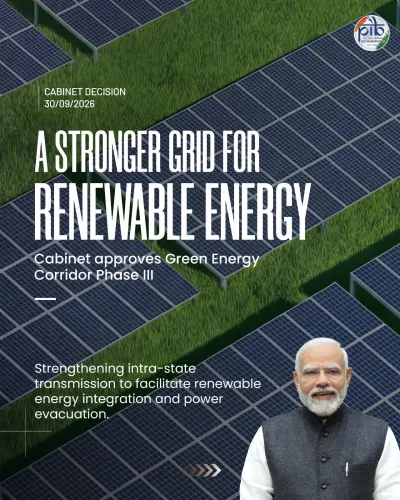
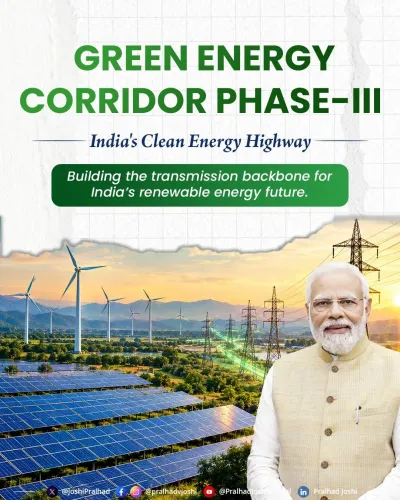
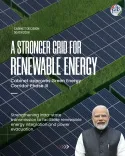
The Union Cabinet has approved the Green Energy Corridor Phase-III at ₹1.86 lakh crore, targeting 135 GW renewable integration and 50 GWh battery storage. Uttarakhand CM Pushkar Singh Dhami called it a decisive step toward India's 900 GW non-fossil energy goal by 2035 under PM Modi's Viksit Bharat roadmap.
Key Takeaways
The Union Cabinet approved Green Energy Corridor Phase-III with an outlay of ₹1.86 lakh crore .
The project targets integration of up to 135 GW of renewable energy into the national grid.
A 50 GWh battery storage capacity component addresses renewable intermittency and grid stability.
CM Dhami linked the decision to India's goal of 900 GW non-fossil energy capacity by 2035 .
Phase-III builds on Phase-I (2015) and Phase-II (2018–2020) , which established inter-state and intra-state green transmission lines.
State power utilities and private renewable developers are the primary beneficiaries of faster grid evacuation infrastructure.
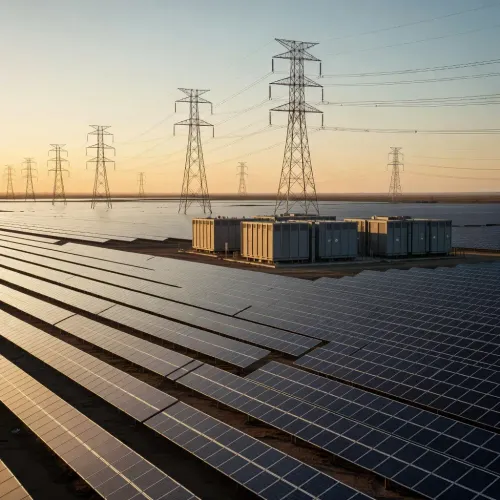
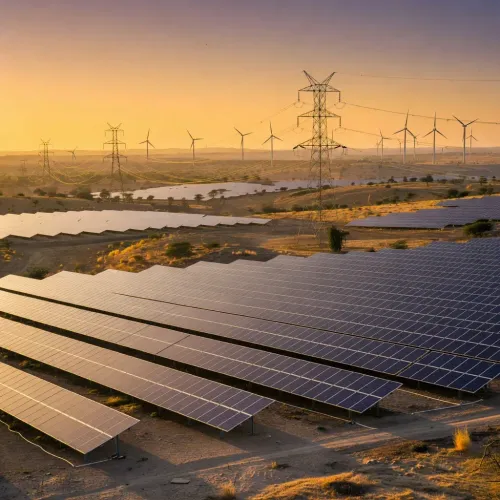
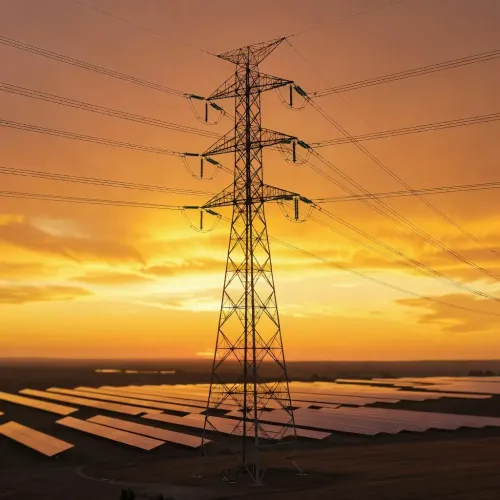
India's power grid just got a landmark green upgrade. Uttarakhand Chief Minister Pushkar Singh Dhami on Wednesday, 30 September 2026 welcomed the Union Cabinet's approval of the Green Energy Corridor Phase-III, a mammoth ₹1.86 lakh crore transmission infrastructure programme designed to carry renewable electricity from generation hubs to the national grid at unprecedented scale.
What Phase-III Promises: 135 GW Integration and 50 GWh Storage
The Cabinet decision, as cited by CM Dhami, targets the integration of up to 135 GW of renewable energy into the national grid — a figure that would dwarf anything attempted under the corridor's earlier phases. Equally significant is the addition of 50 GWh of battery storage capacity, which addresses the intermittency problem that has long been the Achilles heel of solar and wind power. Storage at this scale means surplus generation during peak sunshine or wind hours can be banked and dispatched when demand spikes after dark.
Dhami framed the approval as 'direct proof' — pratyaksh praman — of India's accelerating march toward energy self-reliance under Prime Minister Narendra Modi. The Chief Minister linked the decision explicitly to the national ambition of achieving 900 GW of non-fossil energy capacity by 2035, a target that sits well beyond India's earlier COP26 Panchamrit pledge of 500 GW non-fossil capacity by 2030.
Phase-I and Phase-II: The Foundation This Builds On
Green Energy Corridor is not a new idea — it has a decade-long lineage. Phase-I was approved in 2015 to build inter-state transmission lines evacuating power from renewable-rich states including Rajasthan, Gujarat, Himachal Pradesh, and Tamil Nadu. Phase-II followed between 2018 and 2020, deepening intra-state grid infrastructure. Phase-III now represents the programme's most ambitious leap, both in financial outlay and technical scope, scaling the architecture built over a decade to absorb a grid that is rapidly filling with solar parks and wind farms.
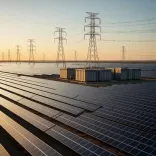
India's renewable capacity has grown sharply over this period, making transmission the critical bottleneck. A generator that cannot evacuate its power earns nothing and delivers nothing — which is precisely the problem a dedicated green corridor is designed to solve.
Viksit Bharat's Energy Spine
CM Dhami positioned the approval squarely within the Viksit Bharat ('Developed India') roadmap, the overarching policy framework the Modi government has used to anchor long-horizon targets across sectors. For energy, that roadmap demands not just more capacity but a grid resilient enough to carry it reliably. Battery storage at 50 GWh is the insurance policy: it buffers the grid against the volatility of weather-dependent generation and reduces dependence on coal-fired peaking plants that are typically fired up to cover evening demand surges.
State-level power utilities and private renewable energy developers are the two constituencies that will feel this decision most immediately. Faster evacuation infrastructure reduces the risk of renewable projects being stranded — a persistent concern that has at times slowed private investment in large solar and wind parks.
With the Cabinet's pen stroke, India has drawn the transmission backbone for a grid it is still building. Whether state utilities can execute at the pace the ambition demands will be the defining question of the next three years.
Point of View
The announcement serves a dual purpose: it advances a credible climate narrative ahead of international scrutiny while reinforcing the Viksit Bharat brand domestically. CM Dhami's enthusiastic endorsement signals that state leaders are being mobilised to amplify central policy wins, a pattern consistent with the party's top-down communication strategy. The 900 GW by 2035 target, if it holds, would represent a significant escalation beyond India's existing COP26 commitments and could reshape India's posture in future multilateral climate negotiations.
NationPress
30 Sept 2026
Frequently Asked Questions
What is Green Energy Corridor Phase-III?
Green Energy Corridor Phase-III is a Union Cabinet-approved programme worth ₹1.86 lakh crore to build dedicated transmission infrastructure that integrates up to 135 GW of renewable energy into India's national grid, along with 50 GWh of battery storage capacity.
What is India's non-fossil energy target by 2035?
According to CM Dhami's post citing the Cabinet decision, India has set a goal of achieving 900 GW of non-fossil energy capacity by 2035 , which goes beyond the earlier COP26 Panchamrit commitment of 500 GW by 2030.
What were Green Energy Corridor Phase-I and Phase-II?
Phase-I was approved in 2015 to create inter-state transmission lines evacuating renewable power from high-potential states. Phase-II followed between 2018 and 2020 to strengthen intra-state grid infrastructure in renewable-rich regions.
Why is battery storage important in the Green Energy Corridor?
Battery storage — set at 50 GWh under Phase-III — allows surplus solar and wind power generated during peak hours to be stored and dispatched during evening demand surges, reducing grid volatility and dependence on coal-fired peaking plants.
What did CM Pushkar Singh Dhami say about the Cabinet decision?
CM Dhami called the approval 'direct proof' of India's accelerating march toward energy self-reliance under PM Modi, and described it as a major step toward realising the Viksit Bharat vision and the 900 GW non-fossil energy target by 2035 .