Goyal Calls Opposition Rally 'Save Dynasty March'
Synopsis
Union Minister Piyush Goyal publicly rebranded an opposition 'Save Democracy March' as a 'Save Dynasty March' on X, sharpening the BJP's long-running anti-dynastic political messaging ahead of future electoral contests.
Key Takeaways
Piyush Goyal , Union Commerce and Industry Minister and Rajya Sabha Leader of the House, posted the 'Save Dynasty March' jibe on 30 September 2026 .
The post inverts the opposition's own slogan, replacing 'Democracy' with 'Dynasty' to redirect the political narrative.
The BJP has deployed anti-dynasty rhetoric consistently since 2014 as a core campaign and communication strategy.
Opposition 'Save Democracy' marches typically centre on institutional concerns — electoral fairness, press freedom, and judicial independence.
As a senior parliamentary leader, Goyal's post signals top-level BJP engagement in framing the opposition's street-level mobilisation.
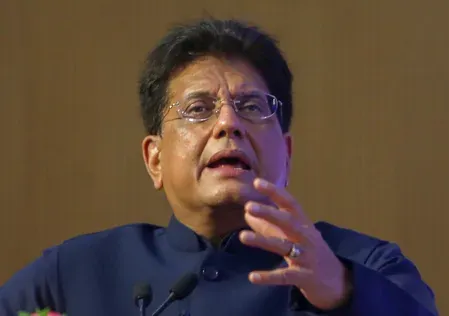
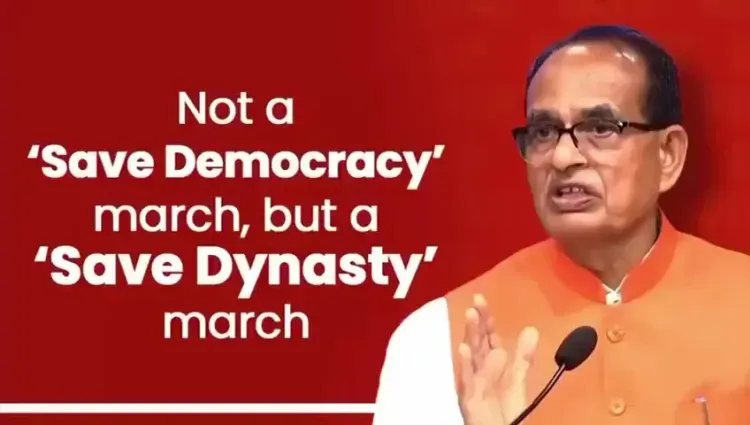
A four-word reframe. That is all it took for Union Commerce and Industry Minister Piyush Goyal to fire the latest salvo in Indian politics' most enduring rhetorical war — the battle over who truly owns the word 'democracy.' On Wednesday, 30 September 2026, Goyal took to X to deliver a pointed rebrand of an opposition march, posting in Hindi: 'ये Save Democracy March नहीं बल्कि SAVE DYNASTY MARCH है...' — 'This is not a Save Democracy March, but a Save Dynasty March.'
The Slogan War: Democracy vs. Dynasty
The post is short. The political charge it carries is not. By inverting the opposition's own framing — taking their banner phrase and replacing its core word — Goyal deploys one of the BJP's most practiced rhetorical weapons: the accusation of dynastic politics. The implication is direct: that the march is less about protecting democratic institutions and more about protecting political families and their inherited power.
This is not a new argument, but its application to a live protest event sharpens it. When a ruling-party minister publicly rechristens an opposition rally, it signals a coordinated effort to define the event's meaning before it can define itself.
BJP's Anti-Dynasty Playbook, Running Since 2014
The 'dynasty versus democracy' frame has been a cornerstone of BJP political messaging since 2014. The party has consistently positioned itself as a meritocratic, cadre-driven organisation against what it describes as hereditary entitlement embedded in rival parties — most pointedly aimed at the Gandhi family and the Indian National Congress, though the charge has been levelled at regional parties with strong family lineages as well.
Goyal, as Leader of the House in the Rajya Sabha, is among the party's most senior parliamentary voices. His amplification of this line on social media carries institutional weight beyond a routine backbencher post — it signals that the party's top leadership is actively engaged in framing the opposition's street politics.
Opposition Marches and the Institutional-Safeguards Argument
Opposition-led 'Save Democracy' mobilisations in India typically rally around concerns over electoral fairness, press freedom, judicial independence, and the use of investigative agencies. The BJP's counter-argument — that such marches are covers for protecting dynastic interests — attempts to shift the debate from institutional questions to personal ones, from systems to surnames.
Whether that reframe lands with voters is the real test. In a political environment where both sides claim the mantle of democratic legitimacy, the side that controls the vocabulary often controls the narrative heading into the next electoral cycle.
The march has been renamed in one post. Now the opposition has to decide whether to fight the label — or let it stick.
Point of View
It attempts to delegitimise the march's stated purpose by linking it to dynastic self-interest. This tactic has proven durable across multiple election cycles since 2014, consistently forcing opposition parties to defend their family structures rather than press their institutional arguments. The fact that a minister of Goyal's seniority — Leader of the House in the Rajya Sabha — is personally amplifying this line suggests the party views the opposition's democratic-legitimacy pitch as a genuine threat worth neutralising early. The coming months will reveal whether the 'dynasty' label sticks or whether the opposition successfully recentres the conversation on governance.
NationPress
30 Sept 2026
Frequently Asked Questions
What did Piyush Goyal say about the Save Democracy March?
Piyush Goyal posted on X that the opposition's 'Save Democracy March' is actually a 'Save Dynasty March,' accusing the rally of being driven by dynastic political interests rather than genuine democratic concerns.
What is the Save Democracy March in India?
Opposition-led 'Save Democracy' marches in India typically protest what participants describe as threats to democratic institutions, including concerns over electoral processes, press freedom, and the use of investigative agencies against political rivals.
Why does the BJP use the 'dynasty' argument against the opposition?
Since 2014, the BJP has consistently accused major opposition parties — especially the Congress — of practising dynastic politics, positioning itself as a meritocratic alternative to hereditary political power as a key electoral message.
Who is Piyush Goyal in Indian politics?
Piyush Goyal is the Union Minister of Commerce and Industry, a senior BJP leader, and the Leader of the House in the Rajya Sabha, making him one of the party's most prominent parliamentary voices.
How does the dynasty versus democracy debate affect Indian elections?
The 'dynasty vs. democracy' framing is a recurring electoral battleground in India — the BJP uses it to question opposition legitimacy, while opposition parties argue it distracts from institutional and governance concerns. Whichever side controls the narrative often gains a rhetorical advantage heading into polls.