Rajnath Singh hails Cabinet nod for Green Energy Corridor Phase-III
Synopsis
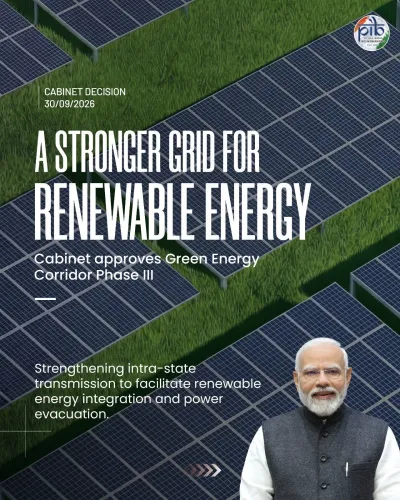
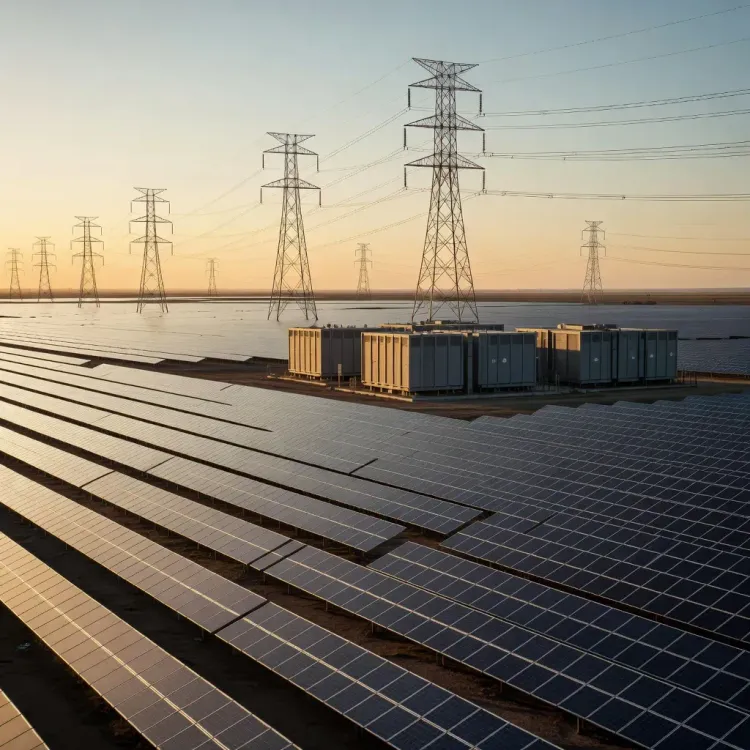
The Union Cabinet has approved the Green Energy Corridor Phase-III scheme, enabling evacuation of up to 135 GW of renewable energy and deploying 50 GWh of battery storage to strengthen India's grid — a major step toward the country's 500 GW clean-energy target by 2030.
Key Takeaways
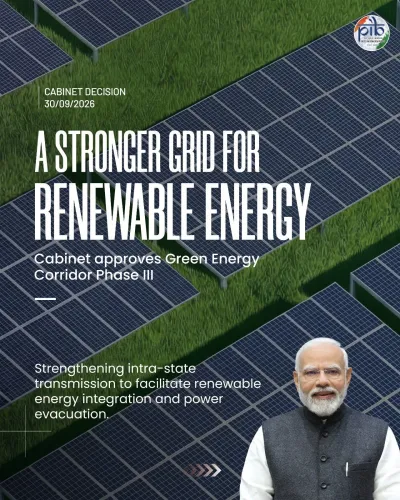
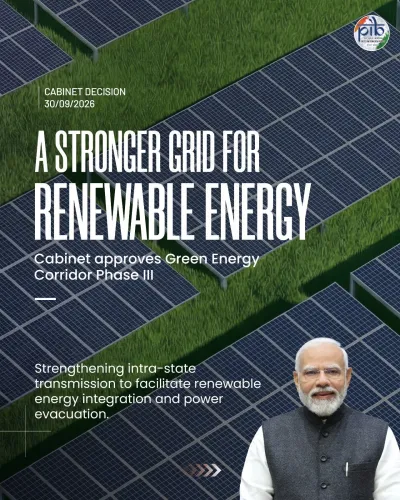
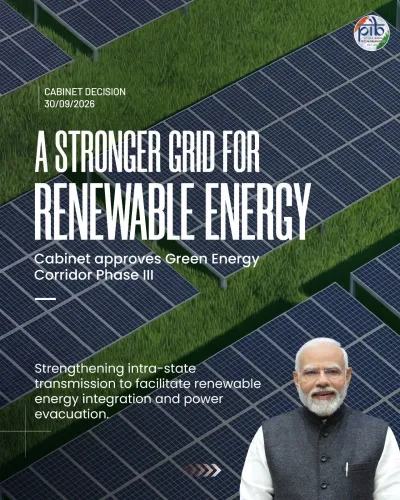
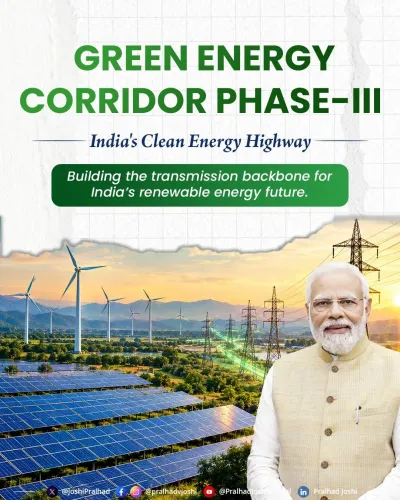
Union Cabinet chaired by PM Narendra Modi has approved the Green Energy Corridor Phase-III (GEC-III) scheme.
The scheme will enable evacuation of up to 135 GW of renewable energy across states and Union Territories through strengthened intra-state transmission networks.
50 GWh of Battery Energy Storage Systems will be deployed to improve grid flexibility and support higher renewable integration.
GEC-III builds on Phase-I (approved 2015 ), which targeted renewable-rich states like Rajasthan, Gujarat and Tamil Nadu .
The scheme is expected to generate employment and boost India's domestic energy-storage manufacturing sector .
Detailed sanction orders, fund allocations and state-wise project lists from the Ministry of Power are the next milestones to watch.
India's power grid just got a transformative mandate. The Union Cabinet, chaired by Prime Minister Narendra Modi, has approved the Green Energy Corridor Phase-III (GEC-III) scheme — a central initiative designed to strengthen intra-state power transmission networks and enable the evacuation of up to 135 GW of renewable energy across states and Union Territories. Union Defence Minister Rajnath Singh announced the Cabinet decision on Wednesday, 30 September 2026, calling it 'a landmark step towards a stronger, greener and more energy-secure India.'
135 GW evacuation target and 50 GWh storage at the heart of GEC-III
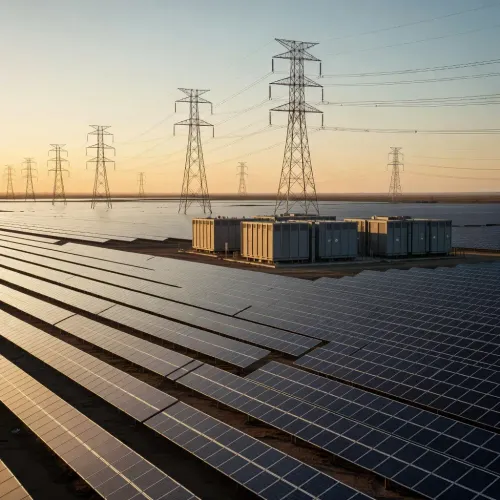
The scheme's centrepiece is the deployment of 50 GWh of Battery Energy Storage Systems (BESS) — a significant scale-up that signals India's shift from purely building transmission lines to building a flexible, storage-backed grid. Grid flexibility matters enormously when solar and wind — both variable by nature — are the dominant new sources of power. Without storage, surplus generation at peak solar hours gets wasted; without upgraded transmission, renewable-rich states cannot share their surplus with power-hungry ones.
GEC-III is designed to solve both problems simultaneously, targeting intra-state transmission corridors that connect renewable generation clusters directly to state grids. The 135 GW evacuation capacity unlocked by the scheme would represent a major stride toward India's 500 GW non-fossil fuel electricity capacity target by 2030 — a commitment Prime Minister Modi made at COP26 in Glasgow in 2021 as part of India's Panchamrit climate pledges.
A decade of corridor-building — and what changed in Phase-III
India's Green Energy Corridor programme dates to 2015, when Phase-I was approved to build dedicated transmission infrastructure for renewable-rich states including Rajasthan, Gujarat and Tamil Nadu. Successive phases expanded the network as India's installed renewable capacity grew rapidly. What distinguishes GEC-III is the explicit integration of large-scale battery storage alongside transmission augmentation — reflecting a maturing grid strategy that earlier phases did not require at this scale.
The domestic energy-storage manufacturing sector stands to benefit directly. Singh specifically noted the scheme will 'create new opportunities for employment, manufacturing and the domestic energy-storage sector' — an alignment with India's broader push to build indigenous battery supply chains and reduce import dependence for clean-energy components.
Jobs, manufacturing and the next steps to watch
Beyond the grid, GEC-III carries an industrial-policy dimension. A 50 GWh BESS deployment at this scale would require substantial domestic manufacturing capacity — or accelerate its creation. State utilities and private renewable developers will be the immediate beneficiaries once transmission bottlenecks ease, as stranded renewable capacity can finally reach consumers.
The Ministry of Power is expected to follow up with detailed sanction orders, fund allocations and state-wise project lists. Bidding processes for new transmission lines and the storage capacity will be the concrete milestones to track. Singh closed his post with a direct note of thanks to the Prime Minister — underscoring the political weight the ruling dispensation attaches to this approval ahead of India's 2030 clean-energy deadline.
India's energy transition has been building corridor by corridor for a decade. GEC-III is the phase where the grid finally learns to store what the sun and wind provide — and that changes the calculus of every renewable project waiting to connect.
Point of View
Signalling that the government now treats grid flexibility — not just transmission capacity — as the binding constraint on renewable scale-up. The 50 GWh BESS mandate doubles as an industrial policy lever, potentially anchoring a domestic battery supply chain that India has long sought to develop. Politically, the announcement reinforces the BJP's clean-energy narrative ahead of India's 2030 Panchamrit deadline, giving the party a concrete infrastructure milestone to campaign on. The real test will be execution speed: previous corridor phases faced delays in state-level coordination, and GEC-III's ambition is considerably larger.
NationPress
30 Sept 2026
Frequently Asked Questions
What is the Green Energy Corridor Phase-III scheme?
Green Energy Corridor Phase-III (GEC-III) is a central government scheme approved by the Union Cabinet to strengthen intra-state power transmission networks so that up to 135 GW of renewable energy can be evacuated across Indian states and Union Territories, supported by 50 GWh of Battery Energy Storage Systems.
How much battery storage will GEC-III deploy?
GEC-III includes the deployment of 50 GWh of Battery Energy Storage Systems (BESS) to improve grid flexibility and enable greater integration of variable renewable energy sources like solar and wind.
How does GEC-III relate to India's 2030 renewable energy target?
India committed to achieving 500 GW of non-fossil fuel electricity capacity by 2030 at COP26 in 2021. GEC-III directly supports this goal by removing transmission bottlenecks that currently prevent renewable power from reaching consumers.
What were the earlier phases of the Green Energy Corridor?
Green Energy Corridor Phase-I was approved in 2015 to build dedicated transmission infrastructure for renewable-rich states such as Rajasthan, Gujarat and Tamil Nadu. Successive phases expanded the network as India's renewable capacity grew.
What are the employment and manufacturing benefits of GEC-III?
The scheme is expected to create new jobs and boost India's domestic energy-storage manufacturing sector, as a 50 GWh BESS deployment at this scale requires significant manufacturing capacity, potentially reducing India's dependence on imported battery components.