CM Dhami: No Tribal Child Should Miss School Due to Poverty
Synopsis
Chief Minister Pushkar Singh Dhami has reaffirmed Uttarakhand's commitment to tribal education, stating that Eklavya Model Residential Schools are providing world-class, free residential schooling to Scheduled Tribe students so that no child is left out due to financial hardship.
Key Takeaways
CM Pushkar Singh Dhami stated on 8 June 2026 that the Uttarakhand government is ensuring no tribal child is denied education due to poverty.
The Eklavya Model Residential Schools (EMRS) scheme provides free residential education from Class VI to XII to Scheduled Tribe students in remote areas.
The scheme was launched in 1997–98 and revamped in 2018–19 , targeting one school per block with over 50% tribal population .
Nationally, sanctioned EMRS have grown from fewer than 300 to over 700 schools since the 2018–19 revamp.
Uttarakhand's tribal communities include the Jaunsari, Tharu, Bhotia and Raji peoples, all potential beneficiaries of the scheme.
Future scrutiny will focus on state budget allocations and enrollment outcomes reported by the National Education Society for Tribal Students .
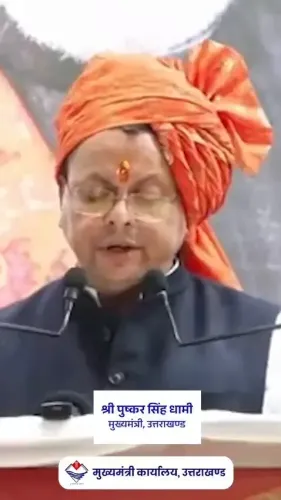
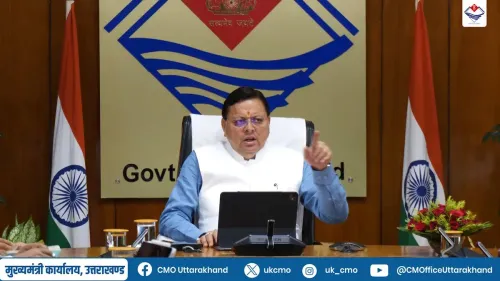
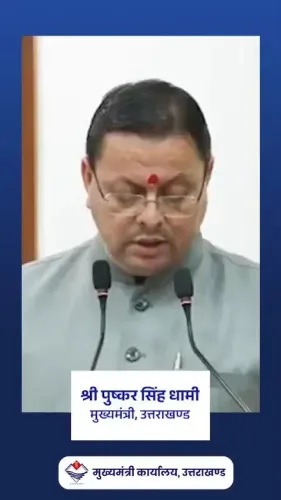
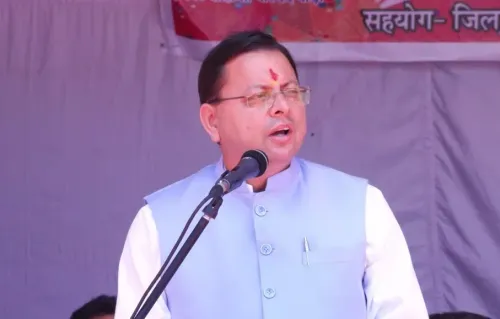
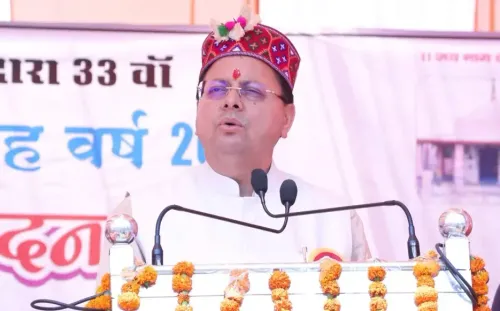
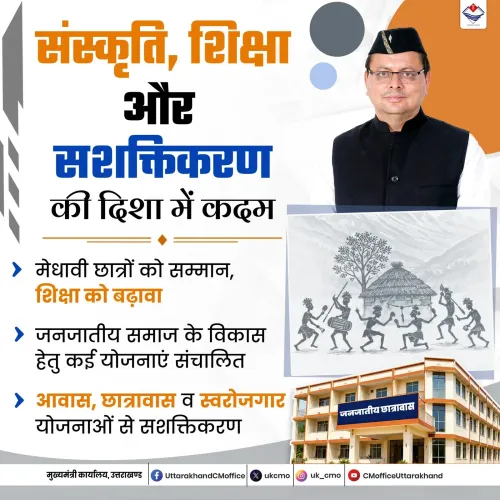
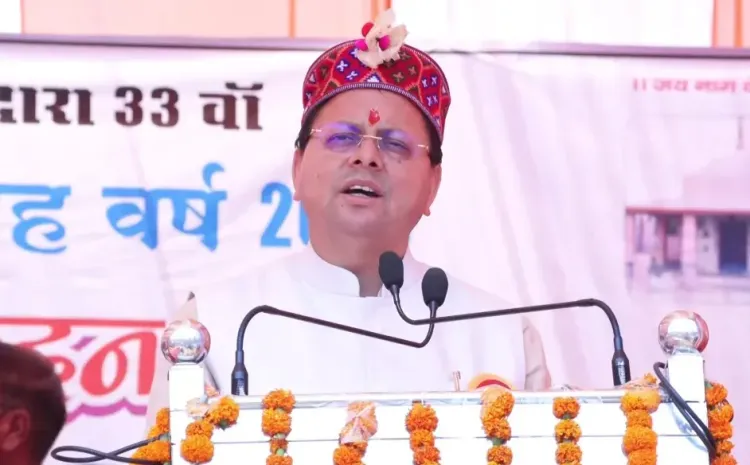
The Chief Minister's Office of Uttarakhand on Monday, 8 June 2026 shared a statement from Chief Minister Pushkar Singh Dhami affirming the state government's commitment to ensuring that no child from a tribal community is denied education due to financial constraints, citing the Eklavya Model Residential Schools (EMRS) as the primary instrument of this pledge.
Quoting the Chief Minister directly, the post read: 'हमारी सरकार यह सुनिश्चित कर रही है कि हमारे जनजातीय समाज का कोई भी बच्चा धन के अभाव में शिक्षा से वंचित न रहे' — ('Our government is ensuring that no child from our tribal society is deprived of education due to lack of funds'). CM Dhami added that world-class education is being delivered to tribal students through these residential schools.
Context
The statement comes as part of the Uttarakhand government's sustained outreach on tribal welfare, a constituency that includes communities such as the Jaunsari, Tharu, Bhotia and Raji peoples spread across the state's hill and forest districts. Tribal children in remote areas have historically faced barriers including distance from schools, poverty, and lack of hostel facilities — gaps that the EMRS framework is specifically designed to bridge. The Chief Minister's remarks reinforce the state's alignment with centrally sponsored welfare goals.Policy Backdrop
The Eklavya Model Residential Schools scheme was first launched in 1997–98 by the Ministry of Tribal Affairs to provide free, quality residential education from Class VI to Class XII to students belonging to Scheduled Tribes in remote and tribal blocks. The scheme was significantly revamped in 2018–19, with a target to establish at least one school in every administrative block where the tribal population exceeds 50 per cent. Nationally, the number of sanctioned EMRS has grown from fewer than 300 schools before 2018 to over 700, reflecting the constitutional mandate under Articles 46 and 335 for the educational advancement of Scheduled Tribes. Uttarakhand implements the scheme across districts with significant ST populations, channelling central funds into local infrastructure and staffing.Stakeholders and Impact
The primary beneficiaries are students from Scheduled Tribe communities in Uttarakhand, who gain access to boarding facilities, trained faculty, and a curriculum aligned with national standards — all free of cost. For Adivasi families in remote hamlets, the schools remove the twin burdens of travel and tuition fees that have historically kept children, particularly girls, out of secondary education. The scheme also carries employment implications for local educators and support staff hired at each campus. State-level statements of this nature, analysts note, serve both a policy communication and a political mobilisation function ahead of periodic local and state electoral cycles.What's Next
Attention will now turn to Uttarakhand's state budget allocations for EMRS infrastructure expansion and to periodic performance reports from the National Education Society for Tribal Students (NESTS), the apex body overseeing EMRS outcomes nationally. Enrollment figures, teacher vacancy rates, and hostel capacity utilisation in Uttarakhand's operational schools will be key indicators of whether the Chief Minister's stated commitment translates into measurable outcomes on the ground. The broader national push to scale EMRS to every eligible block means that state-level execution quality will increasingly determine how tribal children in Uttarakhand fare relative to their peers elsewhere.Point of View
Which matters in a state where Scheduled Tribe communities are concentrated in politically sensitive hill and border districts. The absence of state-specific data on operational schools or enrollment, however, leaves the commitment at the level of aspiration rather than accountability. Analysts will watch whether the rhetorical emphasis is followed by verifiable budget line items and independent outcome data in the next state financial year.
NationPress
23 Oct 2026
Frequently Asked Questions
What is the Eklavya Model Residential School scheme?
The Eklavya Model Residential School (EMRS) scheme is a central government programme under the Ministry of Tribal Affairs that provides free residential education from Class VI to Class XII to Scheduled Tribe students in remote and tribal areas of India. It was launched in 1997–98 and significantly expanded after 2018–19.
How many Eklavya schools are there in India?
As of the post-2018 expansion, over 700 Eklavya Model Residential Schools have been sanctioned across India, up from fewer than 300 before the 2018–19 revamp, with a target of one school per block having more than 50 per cent tribal population.
Which tribal communities in Uttarakhand benefit from EMRS?
Tribal communities in Uttarakhand that are potential beneficiaries of the EMRS scheme include the Jaunsari, Tharu, Bhotia, and Raji peoples, who live primarily in the state's hill and forest districts.
What did CM Pushkar Singh Dhami say about tribal education?
CM Dhami stated that his government is ensuring no child from the tribal community is deprived of education due to lack of funds, and that world-class education is being provided to tribal students through Eklavya Model Residential Schools.
Who oversees the Eklavya Model Residential Schools nationally?
The National Education Society for Tribal Students (NESTS), under the Ministry of Tribal Affairs, is the apex body responsible for overseeing the administration and outcomes of Eklavya Model Residential Schools across India.