CM Dhami Congratulates India's IPhO 2026 Gold-Medal Team
Synopsis
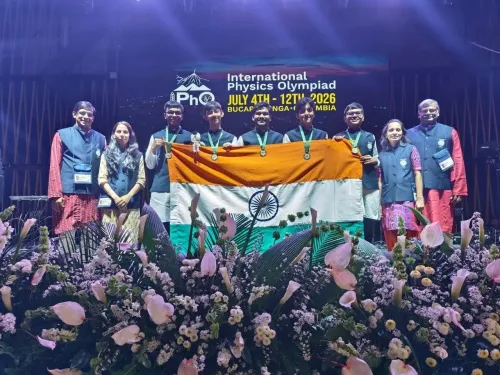
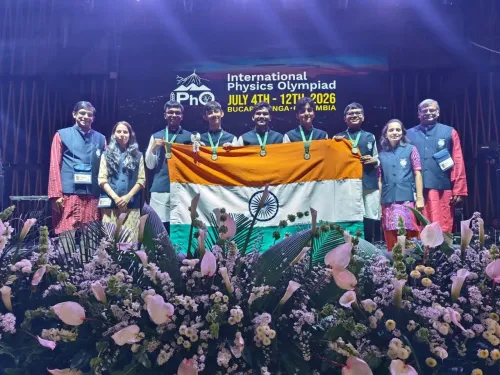
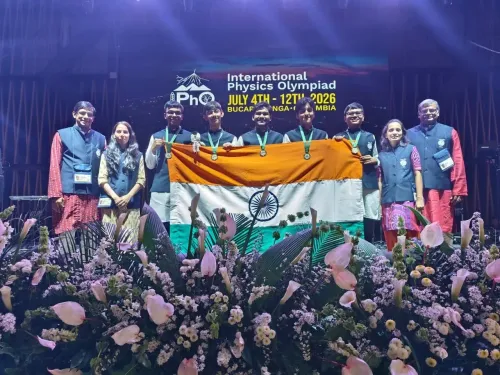
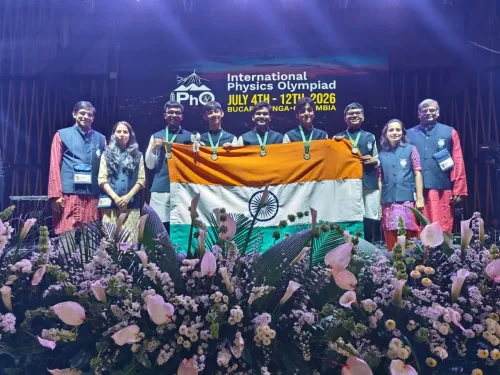
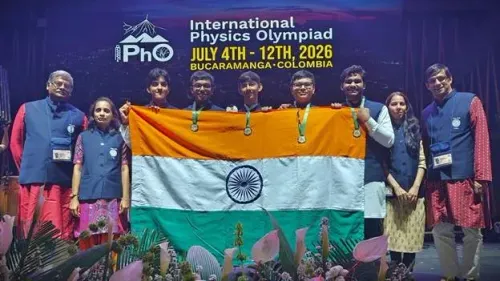
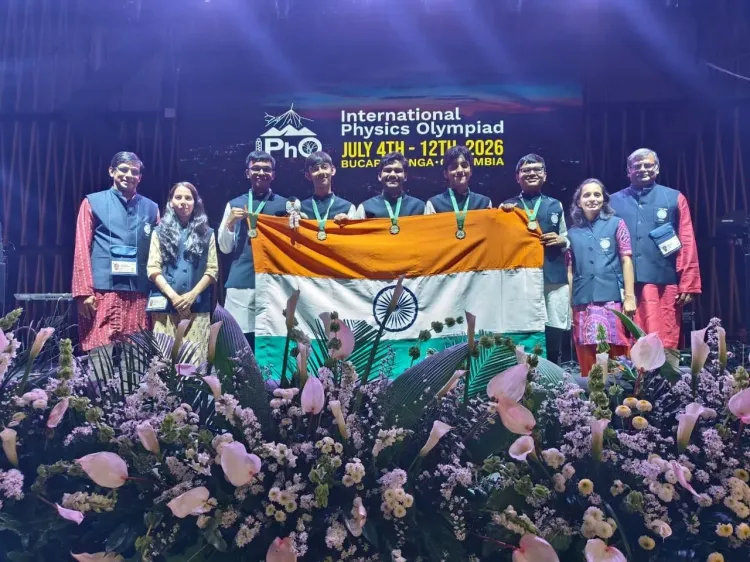
Uttarakhand CM Pushkar Singh Dhami congratulated Kanishk Jain, Riddhesh Anant Bendale, Rishit Garg, Shreshth Suraiya, and Swarit Joshi for winning all five gold medals at the 56th IPhO 2026, giving India a joint first-place finish globally.
Key Takeaways
All five members of India's team at the 56th International Physics Olympiad 2026 won gold medals.
India finished joint first in the world rankings at IPhO 2026.
The five medallists are Kanishk Jain , Riddhesh Anant Bendale , Rishit Garg , Shreshth Suraiya , and Swarit Joshi .
Uttarakhand CM Pushkar Singh Dhami publicly congratulated the team on 13 July 2026 .
India's IPhO participation and training is overseen by the Homi Bhabha Centre for Science Education (HBCSE) .
The National Education Policy 2020 has emphasised early talent identification and olympiad-level science training.
Uttarakhand Chief Minister Pushkar Singh Dhami on Monday, 13 July 2026, congratulated the five-member Indian team that swept all gold medals at the 56th International Physics Olympiad (IPhO) 2026, helping India secure joint first place in the world rankings. Dhami called the achievement a matter of pride for every citizen of the country.
Context
In a post on X, Dhami extended heartfelt congratulations to the five student-athletes: Kanishk Jain, Riddhesh Anant Bendale, Rishit Garg, Shreshth Suraiya, and Swarit Joshi. Writing in Hindi, he said their success — 'प्रत्येक देशवासी के लिए गर्व का विषय है' [a matter of pride for every citizen] — would inspire the youth of the nation to pursue excellence in science, research, and innovation. He added: 'समस्त राष्ट्र को आप सभी पर गर्व है' [the entire nation is proud of all of you].
The International Physics Olympiad is an annual global competition for high-school students, established in 1967. India has participated regularly since the late 1990s. A clean sweep of all five gold medals, combined with a joint first-place finish, marks an exceptional performance by any historical standard for the Indian contingent.
Policy Backdrop
India's participation and training for international science olympiads is coordinated by the Homi Bhabha Centre for Science Education (HBCSE), a unit of the Tata Institute of Fundamental Research. The centre runs a rigorous multi-stage national selection and training programme that identifies talent from across the country each year.
The National Education Policy (NEP) 2020 explicitly called for early identification of scientific talent and stronger institutional support for olympiad-level training. Successive governments have pointed to international olympiad results as a benchmark for progress in building India's STEM pipeline, linking top performers to broader research-capacity and innovation goals.
Stakeholders and Impact
The five medallists represent the apex of a national selection funnel that evaluates tens of thousands of students annually. Their achievement draws attention to the ecosystem of school-level science education, coaching infrastructure, and government-backed training programmes that support such outcomes.
For Uttarakhand, Dhami's congratulatory message also carries a regional dimension: the state government has consistently aligned itself with national narratives around youth achievement and science promotion, reflecting broader BJP-led efforts to brand educational success as a policy dividend.
What's Next
Attention will now turn to whether the central government or state administrations announce dedicated research fellowships, scholarships, or higher-education pathways for the five medallists — a step that past olympiad cycles have occasionally prompted. The HBCSE will also begin its selection cycle for the next edition of IPhO, with the 2026 result likely to intensify interest and competition at the national screening stage.
India's joint first-place finish sets a high bar and could accelerate policy conversations around expanding olympiad training infrastructure beyond metro cities to smaller towns and states — a gap that educators and policymakers have flagged in prior years.
Point of View
Including state chief ministers like Dhami, are quick to amplify such results as proof of a 'new India' narrative around scientific excellence. The real policy test, however, lies in what institutional support follows for these five students and whether their success translates into structural upgrades — fellowships, research access, decentralised training — rather than remaining a moment of ceremonial pride.
NationPress
13 Jul 2026
Frequently Asked Questions
Did India win the International Physics Olympiad 2026?
Yes, India's five-member team won all five gold medals at the 56th International Physics Olympiad (IPhO) 2026, securing a joint first-place finish in the global rankings.
Who are the five Indian students who won gold at IPhO 2026?
The five Indian gold medallists at IPhO 2026 are Kanishk Jain, Riddhesh Anant Bendale, Rishit Garg, Shreshth Suraiya, and Swarit Joshi.
Who selects and trains India's team for the International Physics Olympiad?
The Homi Bhabha Centre for Science Education (HBCSE), a unit of the Tata Institute of Fundamental Research, is responsible for selecting and training India's team for the IPhO and other international science olympiads.
What did Uttarakhand CM Pushkar Singh Dhami say about IPhO 2026?
CM Dhami congratulated all five gold medallists on 13 July 2026, calling the achievement a matter of pride for every Indian and saying their success would inspire the nation's youth to pursue excellence in science, research, and innovation.
How does NEP 2020 relate to India's science olympiad performance?
The National Education Policy 2020 called for early identification of scientific talent and stronger support for olympiad-level training, and successive governments have used international olympiad results as a measure of progress in building India's STEM pipeline.