CM Dhami credits 'double engine' govt for Uttarakhand's rise
Synopsis
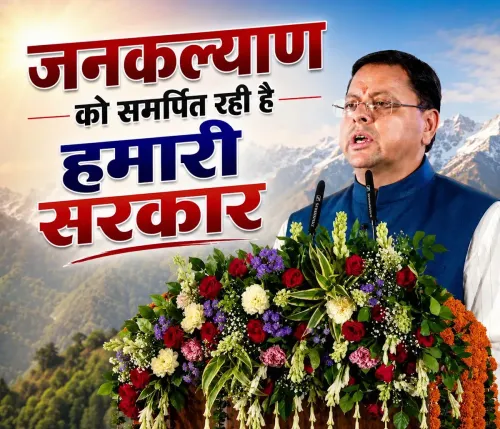
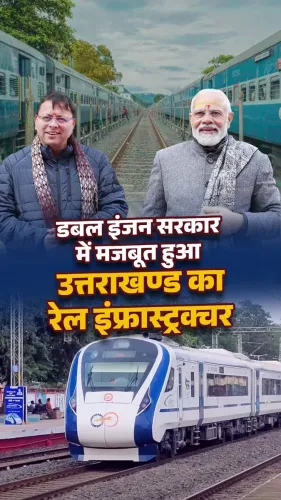
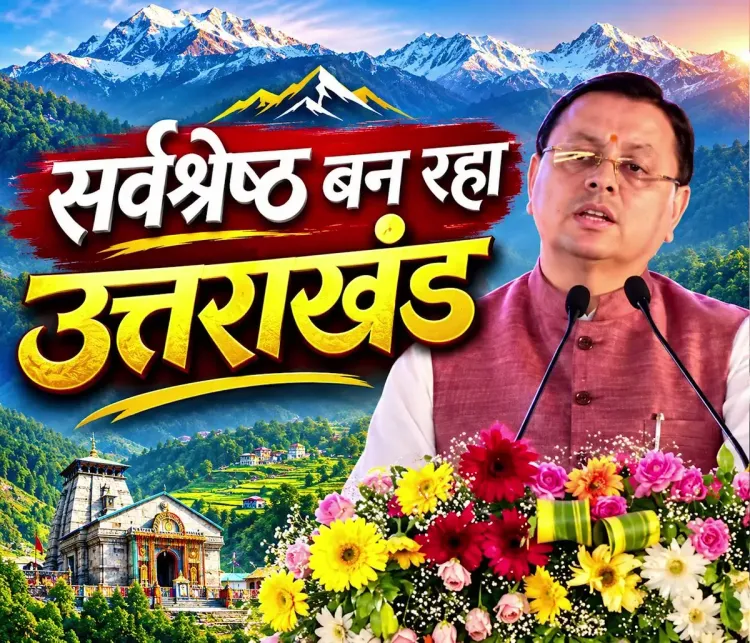
Uttarakhand CM Pushkar Singh Dhami praised PM Narendra Modi's leadership on 6 November 2026, crediting the BJP's 'double engine' central-state model for the state's progress in development, good governance, and public welfare.
Key Takeaways
CM Pushkar Singh Dhami posted on 6 November 2026 crediting PM Modi and the 'double engine' government for Uttarakhand's development.
The 'double engine' framework refers to BJP's argument that a state aligned with the Centre drives faster scheme delivery and governance outcomes.
Uttarakhand has been under BJP rule since 2017 ; Dhami has served as Chief Minister since 2021 .
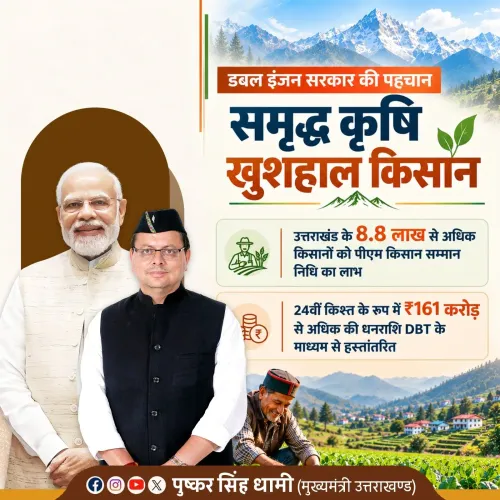
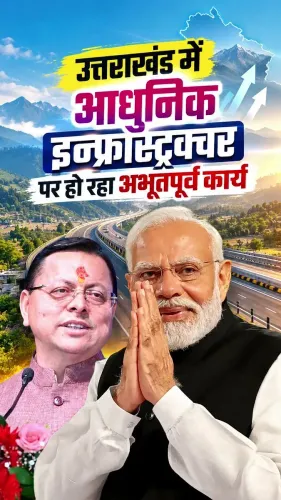
The state's development focus spans road connectivity, tourism infrastructure, and direct-benefit welfare programmes.
The post reflects a wider BJP messaging pattern seen across multiple party-ruled states ahead of budget and scheme rollout cycles.
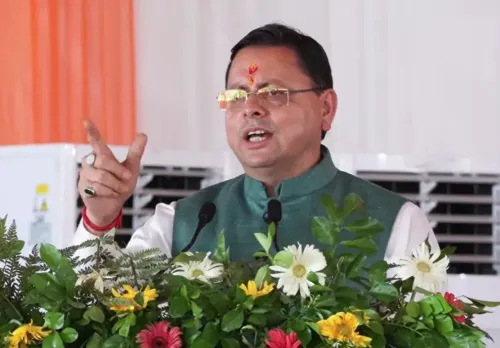
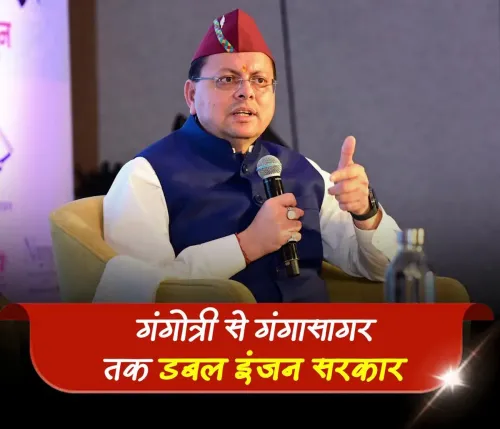
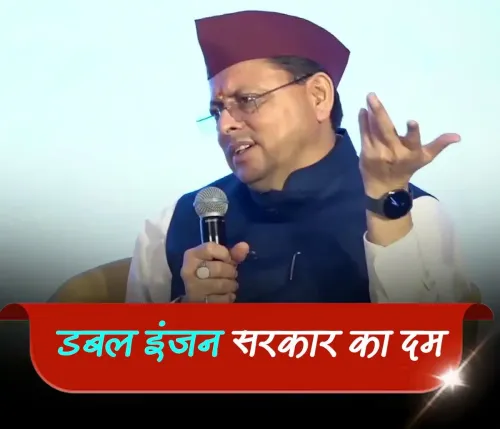
Uttarakhand is scripting a new chapter of development, and Chief Minister Pushkar Singh Dhami wants the country to know exactly who he credits for it. On Friday, 6 November 2026, Dhami took to X to attribute the state's momentum to the 'skilled and visionary leadership' of Prime Minister Narendra Modi and the sustained efforts of what the BJP calls the 'double engine government' — the alignment of state and central power under a single party.
Posting in Hindi, Dhami wrote that Uttarakhand is 'continuously setting new records in development, good governance and public welfare,' adding that Devbhoomi — the Land of the Gods, as the state is traditionally known — is 'touching new heights in every sector and writing a new saga of progress.'
What the 'double engine' argument actually means
The phrase is not rhetorical decoration — it is a deliberate political framework. Since 2014, the BJP has built its state-level campaigns around the proposition that a state government aligned with the Centre unlocks faster fund flows, scheme implementation, and bureaucratic coordination. In Uttarakhand, that argument crystallised after the party won the 2017 assembly elections, and it has been the spine of BJP governance messaging in the state ever since.
The logic is straightforward: when the same party runs both the state secretariat in Dehradun and the offices of key central ministries in New Delhi, flagship programmes — road connectivity to remote Himalayan villages, tourism infrastructure, welfare transfers — face fewer political bottlenecks. Dhami's post is a public reiteration of that compact.
Uttarakhand's development focus areas
The state's development pitch has increasingly centred on three pillars: mountain road and tunnel connectivity, tourism infrastructure around its network of religious and adventure sites, and direct-benefit welfare programmes. Pushkar Singh Dhami, who has held the Chief Minister's office since 2021, has consistently framed these as outcomes of coordinated central-state action rather than stand-alone state initiatives.
The broader BJP playbook has been visible across multiple party-ruled states — positioning central schemes not as entitlements but as dividends of voting the same party into power at both levels. Dhami's Friday post is a crisp, public-facing restatement of that playbook for Uttarakhand's audience.
With state budget cycles and infrastructure rollout timelines on the horizon, the messaging signals that the BJP intends to keep the 'double engine' frame front and centre — turning governance milestones, whenever they arrive, into electoral capital well in advance.
Point of View
Outside any immediate electoral window, suggests the BJP is engaged in sustained brand-building rather than reactive campaigning. Across BJP-ruled states, this messaging has proven durable precisely because it ties abstract policy outcomes to a simple, memorable metaphor. The question it leaves unanswered — and which opposition parties in Uttarakhand are likely to press — is whether specific, verifiable development metrics actually back the claim.
NationPress
6 Nov 2026
Frequently Asked Questions
What is the 'double engine government' the BJP talks about in Uttarakhand?
The 'double engine government' refers to the BJP's argument that having the same party in power at both the state level in Uttarakhand and the central government in New Delhi enables faster fund flows, smoother scheme implementation, and better coordination on infrastructure and welfare projects.
Who is Pushkar Singh Dhami and when did he become CM of Uttarakhand?
Pushkar Singh Dhami is the Chief Minister of Uttarakhand and a BJP leader. He first assumed the office in 2021 and has continued to lead the state government since then.
What development areas is Uttarakhand focused on under the BJP government?
Uttarakhand's development priorities under the BJP include mountain road and tunnel connectivity, tourism infrastructure around religious and adventure sites, and direct-benefit welfare programmes for residents.
Why does CM Dhami call Uttarakhand 'Devbhoomi'?
Devbhoomi , meaning 'Land of the Gods,' is a traditional and widely used name for Uttarakhand, referencing the state's dense network of Hindu pilgrimage sites, temples, and its place in religious geography. It is commonly used in both official and cultural references to the state.
Since when has BJP been in power in Uttarakhand?
The BJP has governed Uttarakhand since the 2017 assembly elections , and the party retained power in subsequent elections, with Pushkar Singh Dhami serving as Chief Minister since 2021 .