CM Dhami: Delhi-Dehradun Corridor to Fuel Uttarakhand Tourism Boom
Synopsis
Chief Minister Pushkar Singh Dhami has outlined a sweeping connectivity and tourism plan for Uttarakhand, anchored by the Delhi-Dehradun Economic Corridor, the Rishikesh-Karnprayag rail line, and a Kainchi Dham spiritual circuit, as over 65 lakh pilgrims completed Char Dham Yatra this year.
Key Takeaways
The Delhi-Dehradun Economic Corridor is expected to ease travel between the two cities and stimulate tourism, trade, and industry.
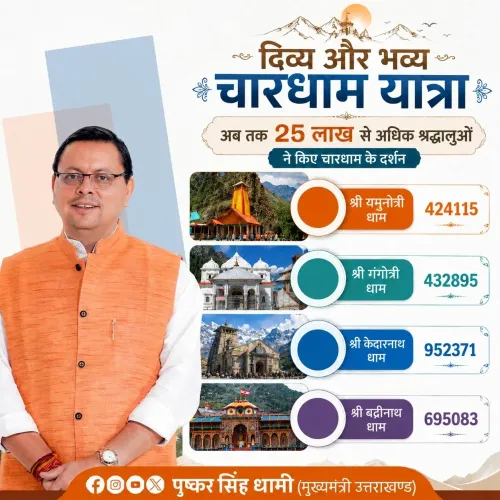
Over 65 lakh devotees visited Char Dham shrines this year; Hemkund Sahib received more than 3.90 lakh pilgrims.
The Rishikesh-Karnprayag Railway Project and multiple ropeway schemes are central to Uttarakhand's multi-modal connectivity push.
A dedicated spiritual tourism circuit linking Baba Neem Karoli Maharaj sites, including Kainchi Dham , is being developed.
The state is actively promoting winter pilgrimage to generate year-round tourism revenue and employment.
Eco-tourism, adventure tourism, homestays, and village tourism are being promoted to spread economic gains to remote mountain villages .
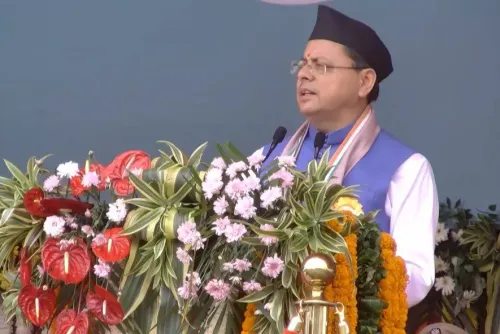
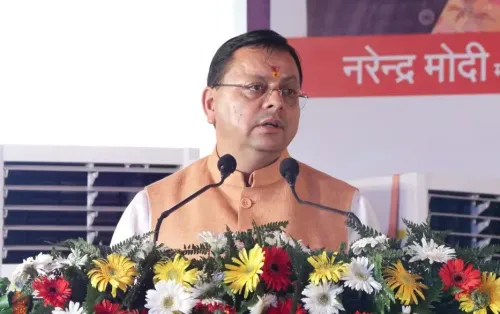
Sixty-five lakh pilgrims walked the Char Dham circuit this year — and Uttarakhand Chief Minister Pushkar Singh Dhami wants that number to be just the beginning. Speaking at a public event on Tuesday, 17 November 2026, the Chief Minister's Office of Uttarakhand outlined an ambitious multi-modal connectivity and spiritual tourism agenda anchored by the forthcoming Delhi-Dehradun Economic Corridor.
The Chief Minister said that once the economic corridor becomes operational, movement between Delhi and Dehradun will become significantly smoother, directly energising tourism, trade, industry, and the local economy. The corridor is part of a wider bet: that cutting travel friction to Uttarakhand's mountain heartland can unlock economic growth for communities far beyond the state's well-known pilgrimage hubs.
Four corridors of movement — road, rail, air, and rope
The Chief Minister mapped out a four-pronged connectivity push. The Rishikesh-Karnprayag Railway Project — a broad-gauge line pushing into the Garhwal Himalayas — is designed to give all-weather access to pilgrimage towns that road conditions can shut off for weeks at a time. Alongside it, Dhami cited an ongoing expansion of road links in mountain zones and the rollout of several ropeway projects to reach villages where conventional roads remain years away.
The Rishikesh-Karnprayag rail line, long in planning, is widely seen as the most consequential infrastructure move for central Uttarakhand in a generation. When complete, it would put Kedarnath and Badrinath base towns within practical rail reach of the plains for the first time, sharply reducing both travel time and the weather-related risks pilgrims face on mountain roads.
Record pilgrim numbers — and a push to extend the season
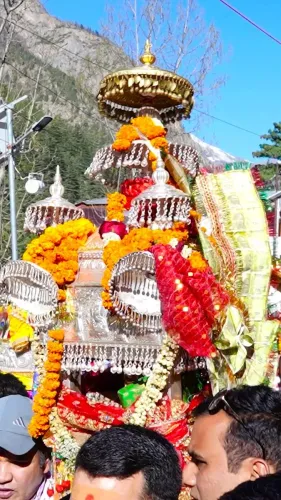
The Chief Minister cited over 65 lakh devotees visiting the Char Dham shrines — Yamunotri, Gangotri, Kedarnath, and Badrinath — during this year's yatra season. Hemkund Sahib received more than 3.90 lakh pilgrims, and Adi Kailash also drew large numbers. The state government says it is working to make each of these journeys safer, more comfortable, and better organised.
Critically, Dhami signalled that the government is no longer content with a pilgrimage window measured in months. A formal push to promote winter pilgrimage is under way, encouraging devotees to visit Uttarakhand's religious sites even in the off-season. The logic is straightforward: year-round footfall means year-round livelihoods — for local youth, homestay owners, hoteliers, transporters, and small traders.
Kainchi Dham circuit and the spread of benefits to remote villages
One of the more distinctive announcements was a plan to develop a dedicated spiritual tourism circuit linking sites associated with Baba Neem Karoli Maharaj, including the internationally renowned Kainchi Dham ashram. With devotee footfall at Kainchi Dham rising sharply in recent years — the site draws visitors from across India and beyond — the state is expanding facilities and infrastructure to manage the influx.
The broader tourism policy, Dhami said, is designed to push economic gains beyond Haridwar, Rishikesh, and other established centres. Eco-tourism, adventure tourism, wellness tourism, homestays, and village tourism are all part of the same intent: to ensure that remote Himalayan villages become destinations in their own right, not just transit points.
The event was attended by Uttarakhand Cabinet Minister Satpal Maharaj, Uttar Pradesh Tourism Minister Jayveer Singh, elected representatives, local citizens, and a large contingent of pravasi Uttarakhandis — the Uttarakhand diaspora — underlining that this is as much a story about identity and belonging as it is about roads and railways.
The infrastructure is being laid. The question now is whether the economic benefits travel as far into the mountains as the pilgrims do.
Point of View
And the Delhi-Dehradun corridor's economic multiplier depends heavily on complementary last-mile investments in mountain zones. The inter-state presence of UP's Tourism Minister at this event signals that the Char Dham pilgrimage economy is increasingly being framed as a shared Himalayan asset rather than a purely Uttarakhand-centred one — a political alignment worth watching as both states approach the next election cycle.
NationPress
17 Nov 2026
Frequently Asked Questions
What is the Delhi-Dehradun Economic Corridor?
The Delhi-Dehradun Economic Corridor is a major road infrastructure project designed to improve direct connectivity between Delhi and Dehradun, reducing travel time and boosting economic linkages between the two cities.
How many pilgrims visited Char Dham in 2026?
According to the Chief Minister's Office of Uttarakhand, over 65 lakh devotees completed the Char Dham Yatra in 2026, covering the Yamunotri, Gangotri, Kedarnath, and Badrinath shrines.
What is the Rishikesh-Karnprayag Railway Project?
The Rishikesh-Karnprayag Railway Project is a planned broad-gauge rail line running into the Garhwal Himalayas, intended to provide all-weather rail connectivity to pilgrimage towns and remote areas of central Uttarakhand.
What is the Kainchi Dham spiritual tourism circuit?
The Uttarakhand government is developing a dedicated spiritual tourism circuit linking sites associated with Baba Neem Karoli Maharaj , including the Kainchi Dham ashram, with expanded facilities to handle rising pilgrim footfall.
How is Uttarakhand promoting year-round tourism?
The state is encouraging pilgrims to visit religious sites during winter as well, while simultaneously promoting eco-tourism, adventure tourism, wellness tourism, homestays, and rural tourism to generate employment across all seasons.