CM Dhami Pushes Pilgrimage Corridors Across Uttarakhand
Synopsis
Chief Minister Pushkar Singh Dhami confirmed on 21 July 2026 that the Ganga, Mansakhand, Kedarkhand, and Goljyu corridors, along with Yamuna Tirth at Haripur, Dehradun, are under active development to enhance pilgrim facilities and generate employment for local communities.
Key Takeaways
Five corridors are simultaneously under development: Ganga Corridor, Mansakhand Corridor, Kedarkhand Corridor, Goljyu Corridor, and Yamuna Tirth at Haripur, Dehradun .
CM Pushkar Singh Dhami personally affirmed rapid progress across all five projects on 21 July 2026 .
The government's dual objective is pilgrim amenities and local employment generation in hill districts.
Projects build on the Char Dham Pariyojana (2017) and the central Namami Gange programme (2014) .
Both Garhwal (Kedarkhand) and Kumaon (Mansakhand, Goljyu) divisions are covered, reflecting a state-wide approach.
Employment and progress data are expected at the next Uttarakhand state budget session .
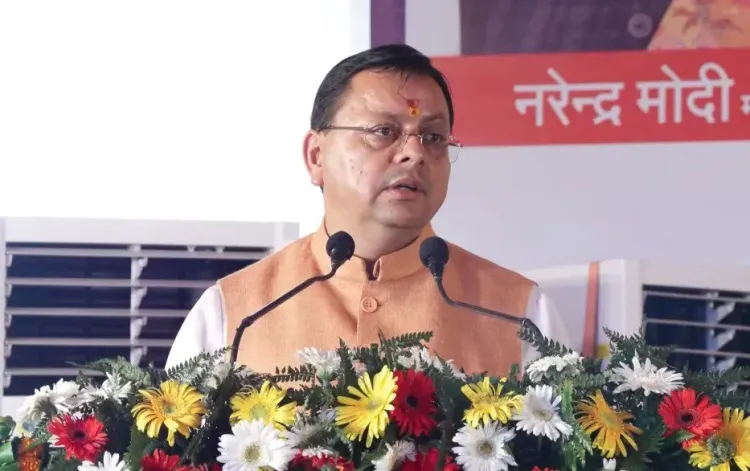
The Chief Minister's Office of Uttarakhand on Tuesday, 21 July 2026 quoted Chief Minister Pushkar Singh Dhami affirming that multiple pilgrimage corridor projects across the state are progressing rapidly, with a twin focus on pilgrim amenities and local employment generation.
Speaking on the state's religious-tourism infrastructure drive, CM Dhami said: 'Today, along with the Ganga Corridor, the Mansakhand, Kedarkhand, Goljyu Corridor, and Yamuna Tirth at Haripur, Dehradun are also being developed rapidly. Our effort is to provide facilities to pilgrims and means of livelihood to local people.' The statement underlines the Uttarakhand government's dual mandate of faith-based infrastructure and grassroots economic uplift.
Context
Uttarakhand's economy is heavily anchored to religious tourism, with millions of pilgrims visiting the Char Dham sites and Ganga-belt shrines each year. The corridors named by CM Dhami span both the Garhwal and Kumaon divisions of the state. The Mansakhand Corridor covers key Kumaon pilgrimage sites, the Kedarkhand Corridor encompasses the Garhwal shrine belt including Kedarnath, the Goljyu Corridor is centred on the revered Goljyu deity temples of Kumaon, and the Yamuna Tirth project is being developed in Haripur, Dehradun along the Yamuna river.Policy Backdrop
The corridor model builds on two significant policy precedents. The Char Dham Pariyojana, announced in 2017, committed to all-weather road connectivity and facility upgrades to the state's four principal shrines. In parallel, the central government's Namami Gange programme, launched in 2014, included ghat redevelopment and riverfront beautification works in Uttarakhand districts. The current wave of corridor projects represents a consolidation and expansion of both these policy streams, bringing corridor-style development — previously more associated with states like Uttar Pradesh and Madhya Pradesh — firmly into Uttarakhand's planning framework.Stakeholders and Impact
The government's stated objectives address two distinct groups. Pilgrims stand to benefit from improved ghats, access roads, resting facilities, and sanitation infrastructure at each corridor site. Local residents and the tourism-sector workforce are the intended beneficiaries of the employment dimension, with corridor construction and subsequent hospitality and services work expected to generate livelihoods in otherwise economically fragile hill districts. Corridor-style projects in comparable states have demonstrated potential for sustained local employment in hospitality, transport, and retail once the pilgrim footfall increases.What's Next
The Uttarakhand Tourism Department is expected to present physical progress reports and employment data during the next state budget session. Civil society groups and local bodies in the Kumaon belt, particularly around the Goljyu and Mansakhand sites, will be watching whether employment commitments translate into measurable outcomes for hill communities. If delivery matches the scale of the government's stated ambition, Uttarakhand could consolidate its position as the leading pilgrimage-tourism destination in northern India, setting a template for faith-based corridor development in other Himalayan states.Point of View
State-wide pilgrimage-economy model. The explicit linkage of infrastructure to local employment is a politically calibrated message directed at hill communities who have historically felt bypassed by tourism revenues. This mirrors a pattern seen in Uttar Pradesh and Madhya Pradesh, where corridor branding has become a vehicle for both economic development and political consolidation in religiously significant constituencies. The real test will be whether construction timelines and job-creation numbers hold up under scrutiny when the state budget session convenes.
NationPress
20 Oct 2026
Frequently Asked Questions
What is the Ganga Corridor in Uttarakhand?
The Ganga Corridor is a state project to develop ghats, access roads, and pilgrim amenities along the Ganga river in Uttarakhand, aimed at improving the experience for pilgrims visiting riverfront sites.
What is the Mansakhand Corridor?
The Mansakhand Corridor covers key pilgrimage sites in the Kumaon division of Uttarakhand, aiming to upgrade connectivity and facilities for devotees visiting temples in that region.
What is the Goljyu Corridor in Uttarakhand?
The Goljyu Corridor focuses on temples dedicated to the Goljyu deity, a significant folk deity of the Kumaon hills, and is part of the state's broader effort to develop lesser-known pilgrimage circuits.
What is Yamuna Tirth Haripur in Dehradun?
Yamuna Tirth Haripur is a pilgrimage development zone being created along the Yamuna river in Haripur , Dehradun district, as part of Uttarakhand's corridor-based religious tourism push.
How will pilgrimage corridors create jobs in Uttarakhand?
The Uttarakhand government expects corridor construction and the resulting increase in pilgrim footfall to generate employment in hospitality, transport, retail, and local services for residents of hill districts near each corridor site.