CM Dhami Flags Off First Kailash Mansarovar Yatra 2026 Batch
Synopsis
Uttarakhand Chief Minister Pushkar Singh Dhami flagged off the first batch of 49 pilgrims for the Kailash Mansarovar Yatra 2026 from Tanakpur on 5 July, personally meeting each pilgrim and offering prayers for their safe and successful journey to Mount Kailash and Lake Mansarovar in Tibet.
Key Takeaways
CM Pushkar Singh Dhami flagged off the first batch of the Kailash Mansarovar Yatra 2026 from Tanakpur on 5 July 2026 .
The first batch comprises 49 pilgrims who will travel via the Lipulekh Pass corridor into Tibet .
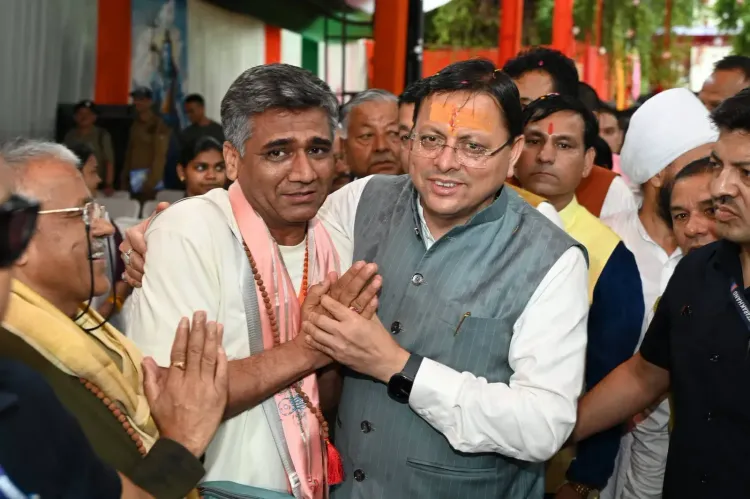
Dhami personally met each pilgrim, enquired about their well-being, and prayed to Baba Kailashpati for their safe journey.
The Kailash Mansarovar Yatra has been operated by the Government of India since 1981 under bilateral understandings with China .
Tanakpur in Champawat district is the designated staging point for the Uttarakhand–Lipulekh overland route.
Further batches are expected at regular intervals, subject to weather and diplomatic clearances from Beijing .
Uttarakhand Chief Minister Pushkar Singh Dhami on Sunday, 5 July 2026, flagged off the first batch of 49 pilgrims for the Kailash Mansarovar Yatra 2026 from Tanakpur in Champawat district, wishing them a safe and successful journey to one of Hinduism's most sacred destinations.
Context
Dhami personally met with each pilgrim before departure, enquiring about their well-being and offering prayers to Baba Kailashpati (Lord Shiva of Kailash) for a mangalmay, surakshit evam saphal yatra — a blessed, safe, and successful pilgrimage. The flag-off ceremony marked the formal commencement of the 2026 yatra season on the Uttarakhand overland route.
Tanakpur, a town in Champawat district, serves as the primary staging point for pilgrims taking the Lipulekh Pass corridor into Tibet, where Mount Kailash and Lake Mansarovar are located. The route traverses some of the highest and most challenging terrain in the Himalayas.
Policy Backdrop
The Kailash Mansarovar Yatra has been operated by the Government of India since 1981 under bilateral understandings with China, making it one of the longest-running government-facilitated religious pilgrimages in the country. Each annual batch is subject to diplomatic clearance from Beijing and logistical coordination between the Ministry of External Affairs and the Uttarakhand state government.
Two official overland routes exist: the Tanakpur–Lipulekh corridor in Uttarakhand and the Sikkim–Nathu La corridor. Participation numbers and route viability have historically fluctuated with India–China border dynamics and public-health conditions, making each season's commencement diplomatically significant. Pilgrims undergo rigorous medical screening before being cleared for the high-altitude journey.
The Uttarakhand government under Chief Minister Dhami has made religious tourism — including the Char Dham Yatra and allied pilgrimages — a centrepiece of the state's economic and cultural agenda since 2021.
Stakeholders and Impact
The 49 pilgrims in the first batch represent devout Hindus who undergo a competitive selection process managed by the Ministry of External Affairs before being assigned to a batch. For many, the yatra to Mount Kailash — revered as the abode of Lord Shiva — is a once-in-a-lifetime spiritual undertaking.
The Uttarakhand tourism sector, particularly businesses along the Tanakpur–Pithoragarh–Lipulekh belt, benefits directly from pilgrimage traffic through accommodation, transport, and provisioning demand. A smooth 2026 season would reinforce the state's standing as the gateway to high-Himalayan religious circuits.
What's Next
Subsequent batches are expected to depart from Tanakpur at regular intervals through the yatra season, pending weather conditions and diplomatic clearances. The Ministry of External Affairs is the nodal authority for any changes to batch schedules or total pilgrim quotas for 2026.
The state government's active role in flagging off the first batch signals continued political priority for religious tourism in Uttarakhand, with Chief Minister Dhami positioning the yatra as both a spiritual service and a driver of economic activity in the hill districts bordering Nepal and Tibet.
Point of View
Given that the overland route's viability is contingent on India–China border relations which have been strained since 2020. A smooth flag-off normalises the bilateral religious-travel framework and gives New Delhi a low-key confidence-building measure without formal diplomatic fanfare. For Dhami, aligning state machinery with a Ministry of External Affairs-managed pilgrimage also reinforces the BJP's broader narrative of protecting and facilitating Hindu religious traditions at the highest level of governance.
NationPress
5 Jul 2026
Frequently Asked Questions
What is the Kailash Mansarovar Yatra?
The Kailash Mansarovar Yatra is an annual government-regulated pilgrimage that allows Indian citizens to visit Mount Kailash and Lake Mansarovar in Tibet, operated by the Government of India since 1981 under bilateral arrangements with China.
Which route does the Tanakpur batch take for Kailash Mansarovar?
The Tanakpur batch travels via the Lipulekh Pass, a high-altitude border crossing in Uttarakhand, which is one of two official overland routes — the other being the Sikkim–Nathu La corridor.
How many pilgrims are in the first batch of Kailash Mansarovar Yatra 2026?
The first batch flagged off from Tanakpur on 5 July 2026 comprises 49 pilgrims.
Who flagged off the Kailash Mansarovar Yatra 2026 first batch?
Uttarakhand Chief Minister Pushkar Singh Dhami personally flagged off the first batch of 49 pilgrims from Tanakpur on 5 July 2026.
How is the Kailash Mansarovar Yatra organised in India?
The Ministry of External Affairs is the nodal agency for the Kailash Mansarovar Yatra, coordinating diplomatic clearances with China, conducting medical screening of pilgrims, and working with state governments like Uttarakhand to manage ground logistics and batch departures.