CM Dhami Gets Central Disaster Aid Update from MoS Rai
Synopsis
Union MoS Home Nityanand Rai briefed Uttarakhand CM Pushkar Singh Dhami on central disaster assistance: ₹1,012 crore SDRF allocated for 2025-26, ₹811.87 crore sanctioned under PDNA, and an Inter-Ministerial Central Team assessment underway for additional NDRF support after 2025 cloudburst events.
Key Takeaways
Union MoS Home Affairs Nityanand Rai briefed CM Pushkar Singh Dhami on central disaster assistance for Uttarakhand on 7 July 2026 .
Uttarakhand has been allocated ₹1,012 crore under SDRF for 2025-26 ; the central share of ₹911.20 crore has been fully released in two instalments.
Following 2025 cloudbursts, an Inter-Ministerial Central Team was formed on 8 August 2025 and conducted field visits from 7–9 September 2025 .
Against Uttarakhand's PDNA-based request of ₹10,998.95 crore , the centre has sanctioned ₹811.87 crore ; the first instalment of ₹182.67 crore was released on 26 May 2026 .
Forest land rehabilitation is restricted to conditions specified under Supreme Court of India directions.
Processing of additional NDRF assistance is ongoing after the state submitted a revised memorandum.
Union Minister of State for Home Affairs Nityanand Rai met Uttarakhand Chief Minister Pushkar Singh Dhami on 7 July 2026 to brief him on the central government's actions and ongoing financial assistance for rehabilitation and reconstruction in areas affected by natural disasters across Uttarakhand. The meeting covered fund releases under the State Disaster Response Fund, progress on a Post Disaster Needs Assessment, and the status of an Inter-Ministerial Central Team deployed after the 2025 cloudburst events.
Context
The Chief Minister's Office of Uttarakhand, in a post on X, quoted MoS Rai as stating that while primary responsibility for disaster management rests with state governments, the central government provides 'every possible cooperation' — har sambhav sahyog — in the form of logistical and financial support. He also clarified that in cases of severe natural calamities, additional financial assistance is provided from the National Disaster Response Fund (NDRF) based on the assessment of an Inter-Ministerial Central Team, following a prescribed procedure.
CM Dhami acknowledged that Uttarakhand is a 'sensitive state' from the perspective of natural disasters, noting that annual losses hamper development work and adversely affect the state's infrastructural capacity. He expressed gratitude to the Prime Minister and the Home Minister for the central government's support in disaster management.
Policy Backdrop
For the financial year 2025-26, Uttarakhand has been allocated ₹1,012 crore under the State Disaster Response Fund (SDRF). Of this, ₹911.20 crore is the central government's share and ₹100.80 crore is the state's contribution. The central government has already released its entire share in two equal instalments.
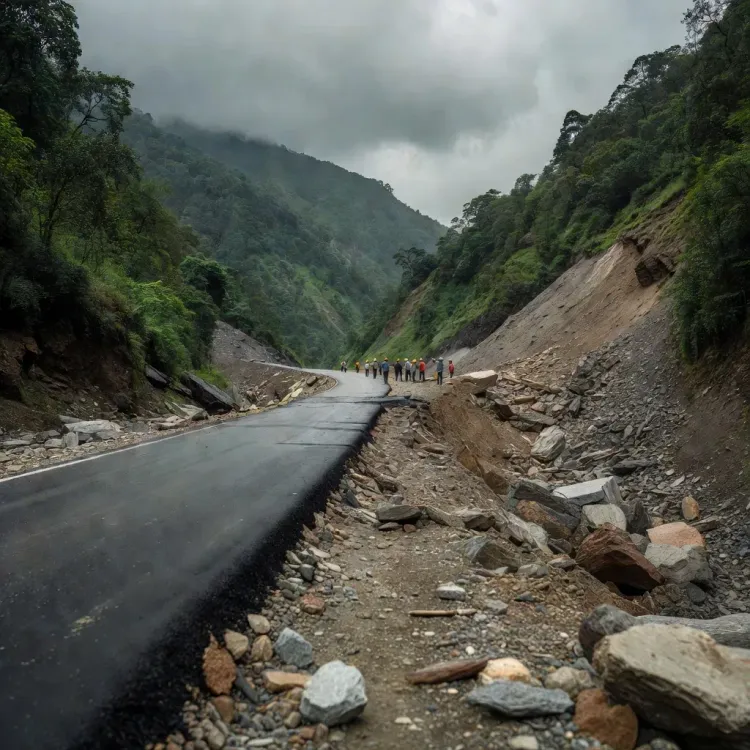
Following the 2025 cloudburst incidents, the central government proactively constituted an Inter-Ministerial Central Team on 8 August 2025 — without waiting for a formal memorandum from the state. The team conducted field visits to affected areas from 7 to 9 September 2025 to assess damage. After the state government subsequently submitted a revised memorandum, further action on additional financial assistance is being processed as per the prescribed procedure.
The Disaster Management Act, 2005 established the legal framework for SDRF and NDRF, formalising the federal model in which states lead primary response while the centre supplements funding. Uttarakhand has invoked this framework repeatedly since the catastrophic 2013 Kedarnath floods, which set a precedent for large-scale NDRF tranches following inter-ministerial team assessments.
Stakeholders and Impact
Under the Post Disaster Needs Assessment (PDNA) — a mandatory exercise under central guidelines for restoration and reconstruction after severe disasters — the Uttarakhand government assessed damages from the 2025 natural disasters and requested assistance of ₹10,998.95 crore. Against this request, the central government has sanctioned ₹811.87 crore. The first instalment of ₹182.67 crore was released to the state government on 26 May 2026.
Disaster-affected residents seeking rehabilitation on forest land face an additional constraint: MoS Rai clarified that forest land can only be used under specific conditions and terms as directed by the Supreme Court of India. This places limits on where displaced communities can be resettled, a recurring challenge in a state where significant population clusters exist within or adjacent to forest zones.
What's Next
The remaining instalments of the sanctioned ₹811.87 crore PDNA-based assistance are yet to be released, and the state's request for additional NDRF funds following the revised memorandum is still being processed at the central level. Progress on reconstruction projects will depend on the pace of these disbursements and adherence to Supreme Court norms on forest-land use. Uttarakhand's vulnerability to monsoon-season disasters means the state is likely to remain a focal point for central disaster finance discussions through the remainder of the 2025-26 and into the next fiscal cycle.
Point of View
The gap between the state's PDNA request of nearly ₹11,000 crore and the sanctioned ₹811.87 crore underscores the structural tension in India's disaster finance model, where central norms cap assistance well below assessed need. The Supreme Court's forest-land restrictions add a legal dimension that limits rehabilitation options in a state where geography and forest cover overlap heavily with disaster-prone zones. Progress on remaining disbursements and NDRF processing will be a key indicator of how effectively the federal compact translates into on-ground recovery.
NationPress
7 Jul 2026
Frequently Asked Questions
How much SDRF funds has Uttarakhand received for 2025-26?
Uttarakhand has been allocated ₹1,012 crore under the State Disaster Response Fund for 2025-26, of which the central government's share of ₹911.20 crore has been fully released in two equal instalments. The remaining ₹100.80 crore is the state's own contribution.
What is the PDNA and how much aid did Uttarakhand request?
A Post Disaster Needs Assessment (PDNA) is a mandatory central government exercise to estimate reconstruction and restoration needs after severe disasters. Uttarakhand conducted a PDNA for its 2025 natural disasters and requested ₹10,998.95 crore ; the centre sanctioned ₹811.87 crore , with a first instalment of ₹182.67 crore released on 26 May 2026 .
What did the Inter-Ministerial Central Team do in Uttarakhand?
The Inter-Ministerial Central Team was constituted on 8 August 2025 — without waiting for a state memorandum — to assess damage from the 2025 cloudburst events. The team visited affected areas from 7 to 9 September 2025 and its assessment forms the basis for processing additional NDRF assistance.
Can disaster victims in Uttarakhand be rehabilitated on forest land?
Forest land can only be used for rehabilitation under specific conditions and terms as directed by the Supreme Court of India . MoS Nityanand Rai clarified this restriction during his meeting with CM Dhami, highlighting a legal constraint on resettlement options in the heavily forested state.
Who is primarily responsible for disaster management in India — the state or the Centre?
Under the Disaster Management Act, 2005 , primary responsibility for disaster management rests with state governments. The central government supplements state efforts through SDRF and NDRF funding, logistical support, and inter-ministerial assessments, but does not lead the primary response.