CM Dhami Hails Bhagwan Ghantakarna as Uttarakhand's Timeless Guardian
Synopsis
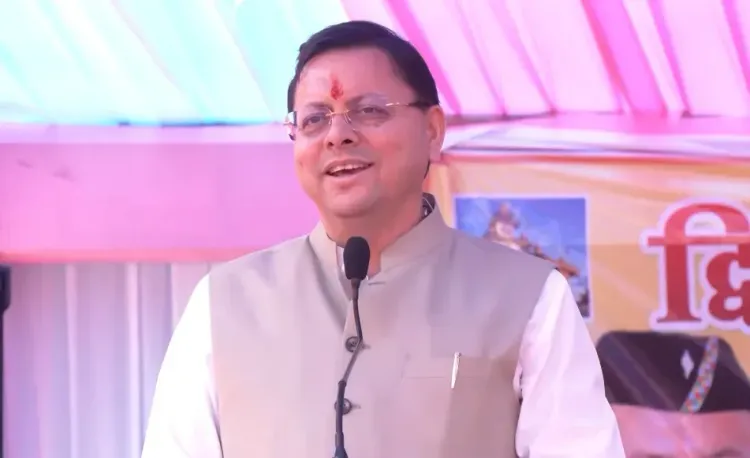
Uttarakhand Chief Minister Pushkar Singh Dhami on 27 May 2026 publicly invoked folk deity Bhagwan Ghantakarna, calling him a centuries-old invisible protector of the people — a statement that underscores the state's deep bond with its Himalayan folk worship traditions.
Key Takeaways
CM Pushkar Singh Dhami described Bhagwan Ghantakarna as a protector worshipped for centuries in Uttarakhand .
The statement was posted on 27 May 2026 via the official Chief Minister's Office account on X.
Ghantakarna is a significant folk deity in the Himalayan belt, associated with protection against evil and calamity.
Uttarakhand , known as Devbhoomi , has a dense tradition of folk shrine worship alongside major pilgrimage circuits.
CM Dhami has consistently engaged with the state's religious and cultural heritage since taking office in 2021 .
The statement signals state-level recognition of folk worship traditions beyond the mainstream Char Dham circuit.
Chief Minister Pushkar Singh Dhami of Uttarakhand on Wednesday, 27 May 2026 invoked the folk deity Bhagwan Ghantakarna, describing him as a protector worshipped for centuries who stands guard over devotees in times of crisis.
What the Chief Minister Said
Sharing the statement through the official Chief Minister's Office account on X, CM Dhami said: 'Bhagwan Ghantakarna sadiyon se rakshak ke roop mein pooje jaate hain' — 'Bhagwan Ghantakarna has been worshipped as a protector for centuries. In times of crisis, he guards us all as an invisible shield.' The remark frames the deity not merely as a religious figure but as a living, active presence in the lives of the people of Uttarakhand.
Context: Who Is Bhagwan Ghantakarna?
Ghantakarna is a significant folk deity in the Himalayan belt, particularly venerated in Uttarakhand and parts of the broader Hindu tradition. The name translates roughly to 'one with bell-shaped ears,' and the deity is traditionally associated with protection against evil forces and calamity. Worship of Ghantakarna is deeply embedded in the village-level religious culture of the region, where local shrines and seasonal festivals mark the deity's significance across communities.
Unlike pan-Indian deities with standardised iconography, Ghantakarna belongs to the rich tapestry of Uttarakhand's regional folk tradition — a tradition that coexists with mainstream Shaivite and Vaishnavite worship across the state's Garhwal and Kumaon divisions.
Policy Backdrop: Cultural Outreach by State Leadership
State governments across India have long used public statements on regional deities and protective folk traditions as a form of cultural outreach, reinforcing social cohesion and acknowledging local belief systems. CM Dhami, who has helmed Uttarakhand since 2021, has consistently engaged with the state's religious and cultural heritage as part of his public communication.
Uttarakhand, often called the 'Devbhoomi' (Land of Gods), is home to an extraordinary density of temples, folk shrines, and pilgrimage circuits. The state's identity is closely intertwined with its spiritual landscape, and political leaders across parties have historically acknowledged this dimension of public life. Statements of this nature align with a broader pattern of reinforcing regional pride and cultural continuity.
Stakeholders and Community Impact
The primary audience for such remarks is the large community of devotees and local residents for whom Bhagwan Ghantakarna is an active part of religious life. By elevating the deity's stature through an official channel, the Chief Minister's Office signals state-level recognition of folk worship traditions that can sometimes be overshadowed by more prominent pilgrimage destinations such as Kedarnath, Badrinath, and the Char Dham circuit.
For local communities — particularly those in smaller villages where Ghantakarna shrines anchor community identity — such acknowledgement carries symbolic weight, affirming that their traditions are seen and respected by the state administration.
What to Watch
Observers should watch for any follow-up announcements from the Uttarakhand government regarding heritage conservation, temple development, or cultural festivals centred on folk deities. The state has in recent years expanded infrastructure around major pilgrimage sites, and similar attention to lesser-known folk shrines could signal a broadening of that cultural agenda. Any upcoming festival season linked to Bhagwan Ghantakarna worship in the state may provide additional context for the Chief Minister's remarks.
Point of View
The statement elevates a regional tradition to the level of state endorsement, a move that resonates with village communities whose beliefs rarely receive such visibility. This fits a broader pattern across Indian state governments of weaving local religious identity into governance communication, reinforcing cultural continuity as a political asset. The forward implication is whether such statements translate into tangible heritage or infrastructure support for lesser-known folk shrines.
NationPress
20 Sept 2026
Frequently Asked Questions
Who is Bhagwan Ghantakarna?
Bhagwan Ghantakarna is a folk deity venerated primarily in Uttarakhand and the broader Himalayan belt, traditionally worshipped as a protector against evil forces and calamity. The name means 'one with bell-shaped ears,' and the deity occupies an important place in the region's village-level religious culture.
What did CM Pushkar Singh Dhami say about Bhagwan Ghantakarna?
CM Dhami stated that Bhagwan Ghantakarna has been worshipped as a protector for centuries and acts as an invisible guardian for all people in times of crisis. The remark was shared through the official Chief Minister's Office account on X on 27 May 2026.
Why is Uttarakhand called Devbhoomi?
Uttarakhand is called Devbhoomi, meaning 'Land of Gods,' because of its extraordinary density of temples, folk shrines, and pilgrimage circuits including the Char Dham — Kedarnath, Badrinath, Gangotri, and Yamunotri. Folk deity worship traditions like that of Ghantakarna add to this spiritual heritage.
When did Pushkar Singh Dhami become Chief Minister of Uttarakhand?
Pushkar Singh Dhami has served as Chief Minister of Uttarakhand since 2021. He has frequently engaged with the state's religious and cultural heritage through official communications.
Is Bhagwan Ghantakarna worshipped outside Uttarakhand?
Ghantakarna is primarily associated with the Himalayan region, with strong veneration in Uttarakhand. The deity also appears in broader Hindu folk traditions, though the most concentrated worship traditions are rooted in the Garhwal and Kumaon divisions of Uttarakhand.