CM Dhami Hails ISRO's Gaganyaan Crew Module Milestone
Synopsis
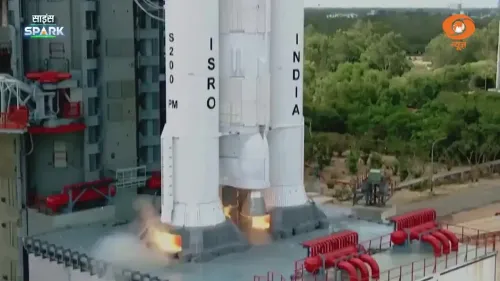
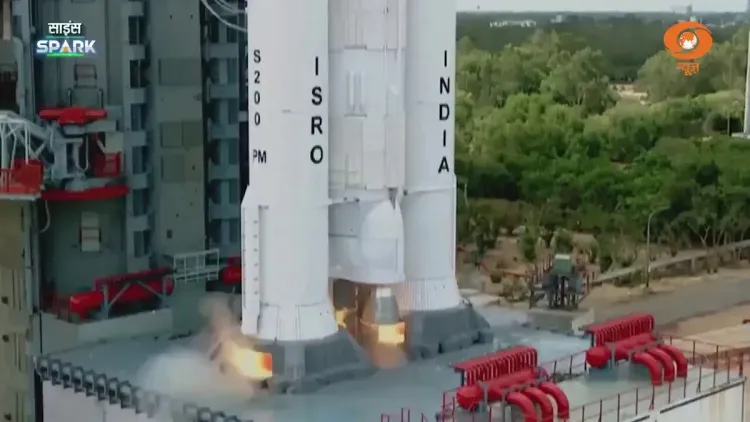
Uttarakhand Chief Minister Pushkar Singh Dhami praised ISRO on 21 July 2026 after three critical qualification tests for the Gaganyaan Crew Module were completed successfully, marking a key step in India's bid to join the exclusive club of nations capable of independent human spaceflight.
Key Takeaways
CM Pushkar Singh Dhami publicly congratulated ISRO on 21 July 2026 for completing three critical Gaganyaan Crew Module qualification tests.
The Crew Module is the habitable re-entry capsule designed to carry up to three astronauts into low-Earth orbit.
The Gaganyaan programme was sanctioned by the Union Cabinet in 2018 with a budget of Rs 10,000 crore .
Qualification tests verify the module's ability to withstand structural, thermal and environmental stresses before crewed flight.
A successful crewed mission would make India only the fourth nation to independently launch humans into space.
ISRO is expected to conduct at least one uncrewed orbital test flight before a crewed Gaganyaan mission proceeds.
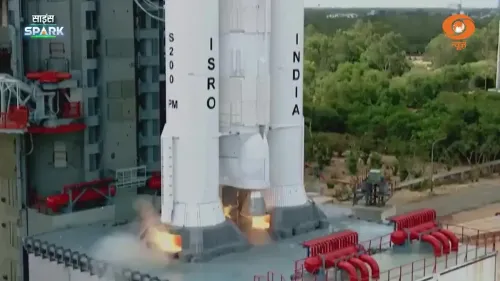
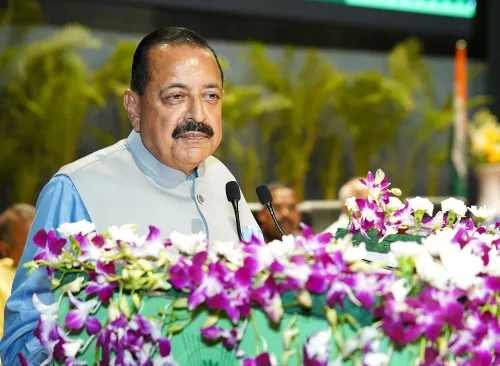
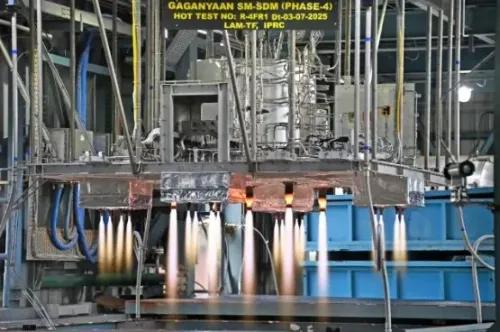
Uttarakhand Chief Minister Pushkar Singh Dhami on Tuesday, 21 July 2026, congratulated the Indian Space Research Organisation (ISRO) after the successful completion of three critical qualification tests for the Gaganyaan Crew Module, describing the achievement as 'a proud milestone for India' and a significant step forward in the country's human spaceflight journey.
Context
In his post, CM Dhami praised the 'brilliant team at ISRO' for their 'dedication and innovation,' crediting the agency with strengthening India's position as a 'global leader in space exploration.' The Crew Module is the habitable re-entry capsule at the heart of Gaganyaan — designed to carry a crew of up to three astronauts into low-Earth orbit and return them safely to Earth. Qualification tests of this kind validate that the module can withstand the structural, thermal and environmental stresses of spaceflight before any human is placed aboard.
Policy Backdrop
The Gaganyaan programme was approved by the Union Cabinet in 2018 with an initial outlay of Rs 10,000 crore, originally targeting a crewed flight by 2022 — a timeline that has since been revised as the programme moved through successive test phases. ISRO has pursued an incremental qualification strategy, progressively certifying the crew module, life-support systems and crew-escape mechanisms before committing to an uncrewed orbital demonstration and, ultimately, a crewed mission. Completion of these three qualification tests marks a concrete advance along that roadmap.
Stakeholders and Impact
ISRO's Gaganyaan team — spanning engineers, scientists and mission planners across multiple centres — stands at the centre of this achievement. A successful human spaceflight programme would place India in an exclusive group of nations — alongside the United States, Russia and China — capable of independently launching humans into orbit. Beyond national prestige, the programme is expected to catalyse growth in India's broader space ecosystem, including private-sector suppliers, academia and the emerging commercial launch industry. For the wider public, milestones such as these serve as visible proof-points of the country's deepening technological self-reliance.
What's Next
ISRO is expected to conduct at least one uncrewed Gaganyaan orbital test flight before committing to a crewed mission, with updated timelines likely to surface in forthcoming parliamentary sessions or the agency's annual technical reports. The successful qualification of the Crew Module clears a key prerequisite for those subsequent phases. Looking further ahead, India's human spaceflight ambitions extend to a proposed national space station, making each incremental milestone today a building block for a far more expansive programme tomorrow.
Point of View
A domain long dominated by the United States, Russia and China. Completion of the Crew Module qualification tests is a genuinely substantive milestone, not merely a ceremonial one, as it directly gates the timeline to uncrewed and then crewed orbital flights. The broader arc here is India's deliberate pivot from being a cost-efficient satellite launcher to a full-spectrum space power, and each verified test result narrows the distance between ambition and operational reality.
NationPress
21 Jul 2026
Frequently Asked Questions
What are the Gaganyaan Crew Module qualification tests?
Qualification tests for the Gaganyaan Crew Module are a series of rigorous structural, thermal and environmental assessments designed to confirm that the capsule can safely withstand the stresses of launch, spaceflight and re-entry before any astronaut boards it.
What is the Gaganyaan mission?
Gaganyaan is India's first crewed spaceflight programme, approved by the Union Cabinet in 2018 with a budget of Rs 10,000 crore, aiming to carry up to three astronauts into low-Earth orbit aboard an ISRO-built rocket and crew module.
Why did CM Dhami congratulate ISRO on 21 July 2026?
Uttarakhand Chief Minister Pushkar Singh Dhami congratulated ISRO because the agency successfully completed three critical qualification tests for the Gaganyaan Crew Module, a significant step toward India's first crewed space mission.
When will India's first crewed Gaganyaan flight happen?
ISRO has not yet announced a confirmed date for the crewed Gaganyaan flight; the agency plans at least one uncrewed orbital test mission first, with updated timelines expected in forthcoming official announcements.
Which countries can independently send humans to space?
As of now, only the United States, Russia and China have independently launched humans into orbit; a successful Gaganyaan crewed mission would make India the fourth such nation.