CM Dhami Honours 1947 Partition Victims at Haridwar
Synopsis
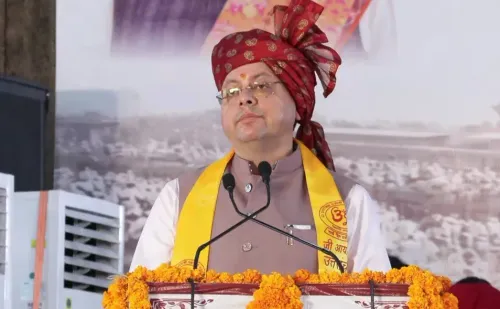
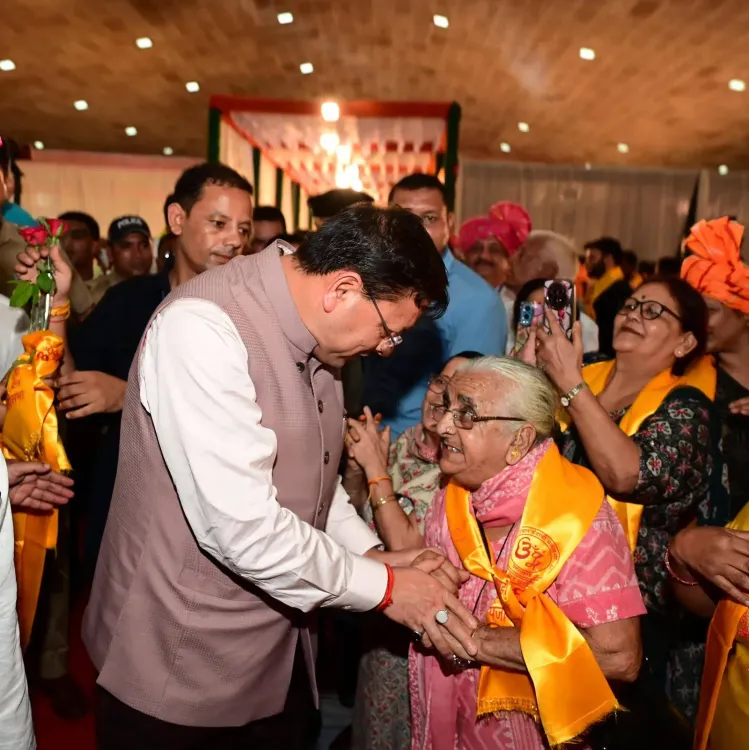
On Partition Horrors Remembrance Day, Uttarakhand CM Pushkar Singh Dhami paid solemn tribute in Haridwar to the millions displaced and killed in the 1947 Partition, calling it a division not just of geography but of lives, identities, and dreams.
Key Takeaways
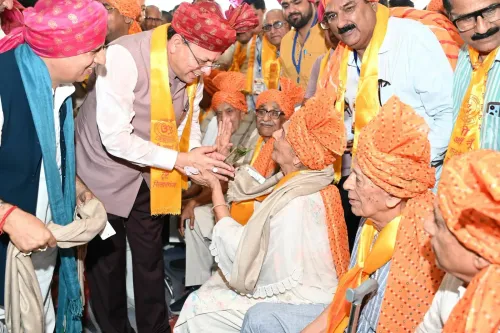
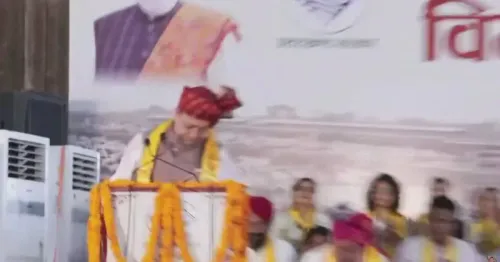
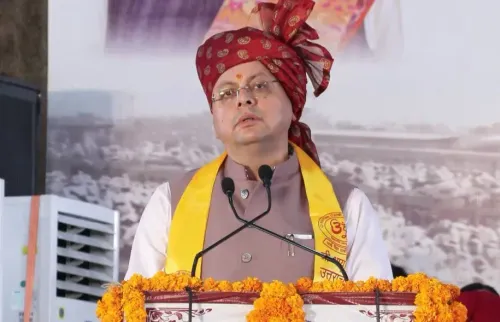
Uttarakhand CM Pushkar Singh Dhami attended a Partition Horrors Remembrance Day observance in Haridwar on 14 August 2026 .
He paid tribute to those who endured the 'unbearable sting' of the 1947 Partition of British India.
Dhami described the Partition as a division of 'the lives, identities, and dreams of crores of people,' not merely a geographical boundary.
The Government of India designated 14 August as Partition Horrors Remembrance Day in 2021 to honour Partition victims annually.
The event reflects a nationwide pattern of BJP-led state governments formally observing the centrally declared remembrance day.
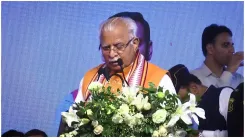
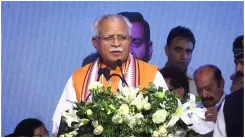
Seventy-nine years after one of history's most violent mass displacements, Uttarakhand Chief Minister Pushkar Singh Dhami stood in Haridwar on 14 August 2026 to pay tribute to the millions who bore the unbearable weight of Partition — and to insist that India must never forget them.
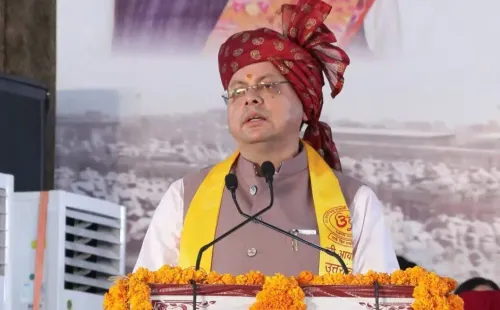
Dhami, attending a Partition Horrors Remembrance Day observance in the pilgrim city, offered homage to those he called 'Bharat Mata ke sapoot' — 'sons and daughters of Mother India' — who endured the trauma of 1947. 'That line drawn across the chest of Mother India was not merely a division of geography,' he said. 'It was the division of the lives, identities, and dreams of crores of people.'
A wound that words cannot measure
The Chief Minister described the anguish of displacement and the horror of that era as something that 'even words struggle to convey.' The 1947 Partition of British India into India and Pakistan triggered one of the largest forced migrations in recorded history — an estimated 10 to 20 million people uprooted, and communal violence that claimed hundreds of thousands of lives. For the families of survivors, the grief is not history; it is inheritance.
Dhami's tribute in Haridwar — a city whose own identity is inseparable from the spiritual and cultural fabric that Partition strained — carried particular resonance. 'Such a tragedy,' he said, 'is something the nation can never forget.'
14 August as a day of national memory
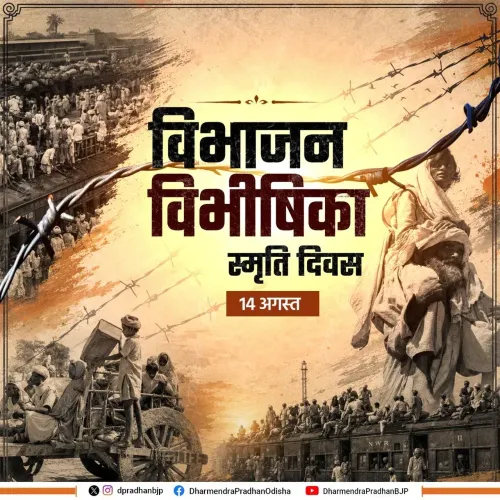
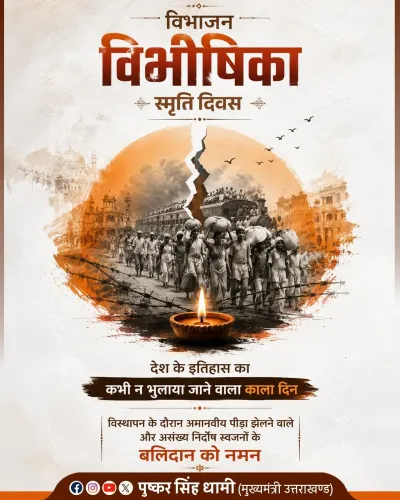
The observance has a formal foundation. In August 2021, the Government of India declared 14 August — the eve of Independence Day — as Partition Horrors Remembrance Day, a nationally designated annual commemoration to honour those who suffered and perished during Partition. The date, chosen deliberately to sit alongside the celebration of freedom, is meant to hold both the joy of independence and the sorrow of its cost in the same breath.
Dhami's Haridwar event is part of a broader pattern of BJP-led state governments marking the day with official ceremonies, keeping the remembrance institutionalised at the state level alongside central observances.
Every year on this date, India pauses to reckon with the price at which its freedom was paid — and every year, that reckoning demands the same unflinching honesty Dhami invoked on the banks of the Ganga.
Point of View
A city of deep Hindu religious significance, the event carries symbolic weight beyond the ceremonial. The framing of Partition as an existential wound to 'Mother India' — rather than a bilateral political settlement — is consistent with how the ruling party has shaped public discourse around 1947 for over a decade. Whether this remembrance deepens into substantive archival, educational, or survivor-support initiatives at the state level remains the real test of the day's meaning.
NationPress
14 Aug 2026
Frequently Asked Questions
What is Partition Horrors Remembrance Day in India?
Partition Horrors Remembrance Day is observed every year on 14 August to honour the millions who suffered, were displaced, or were killed during the 1947 Partition of British India. The Government of India officially declared this observance in August 2021 .
Why did CM Dhami visit Haridwar on 14 August 2026?
Uttarakhand Chief Minister Pushkar Singh Dhami attended a Partition Horrors Remembrance Day event in Haridwar to pay tribute to those who endured the trauma of the 1947 Partition, calling their suffering something the nation must never forget.
What did CM Dhami say about the 1947 Partition?
Dhami said the line drawn in 1947 was not merely a division of geography but 'the division of the lives, identities, and dreams of crores of people,' and that the pain of displacement and horror of that era was difficult to put into words.
When did India declare 14 August as Partition Horrors Remembrance Day?
The Government of India declared 14 August as Partition Horrors Remembrance Day in August 2021 , choosing the date — the eve of Independence Day — to hold both the joy of freedom and the sorrow of its human cost together.
How many people were displaced in the 1947 Partition of India?
The 1947 Partition triggered one of the largest forced migrations in history, with an estimated 10 to 20 million people displaced and hundreds of thousands killed in communal violence across the subcontinent.