CM Dhami in Punjab, Rallies Youth for Drug-Free India
Synopsis
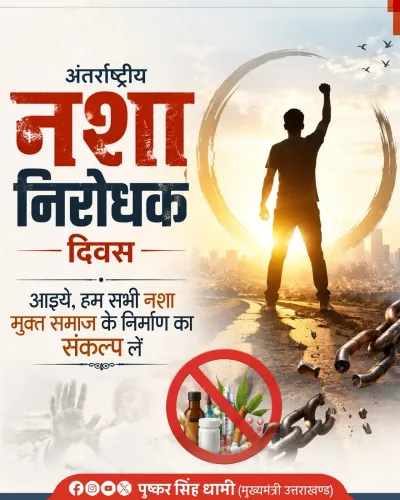
Uttarakhand Chief Minister Pushkar Singh Dhami visited Mukerian, Hoshiarpur, on 26 September 2026, addressing a large road show under the 'Nasha Mukt Punjab, Nasha Mukt Bharat' campaign, calling on Punjab's youth to lead a decisive fight against drug abuse.
Key Takeaways
CM Pushkar Singh Dhami travelled from Uttarakhand to Punjab on 26 September 2026 for an anti-drug campaign event.
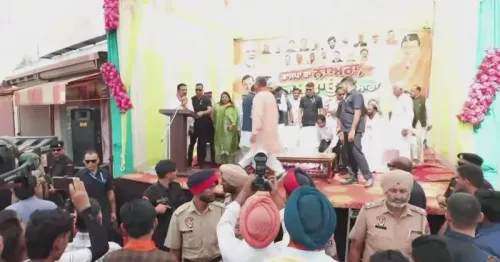
The road show was held in Mukerian, Hoshiarpur district , drawing a large public gathering.
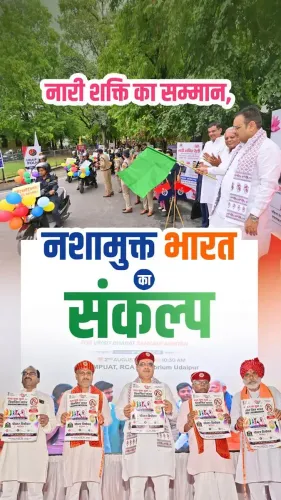
The campaign banner is 'Nasha Mukt Punjab, Nasha Mukt Bharat' — Drug-Free Punjab, Drug-Free India.
Dhami stated that drugs harm 'not just one individual, but the entire family and future generations.' His central appeal: redirect youth energy from addiction toward nation-building .
The visit is a rare instance of a sitting chief minister crossing state lines to support a social awareness campaign, signalling cooperative federalism on public health.
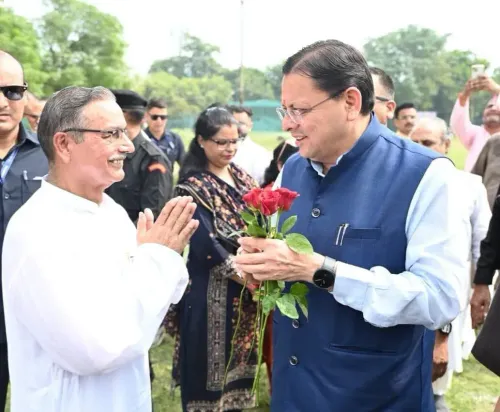
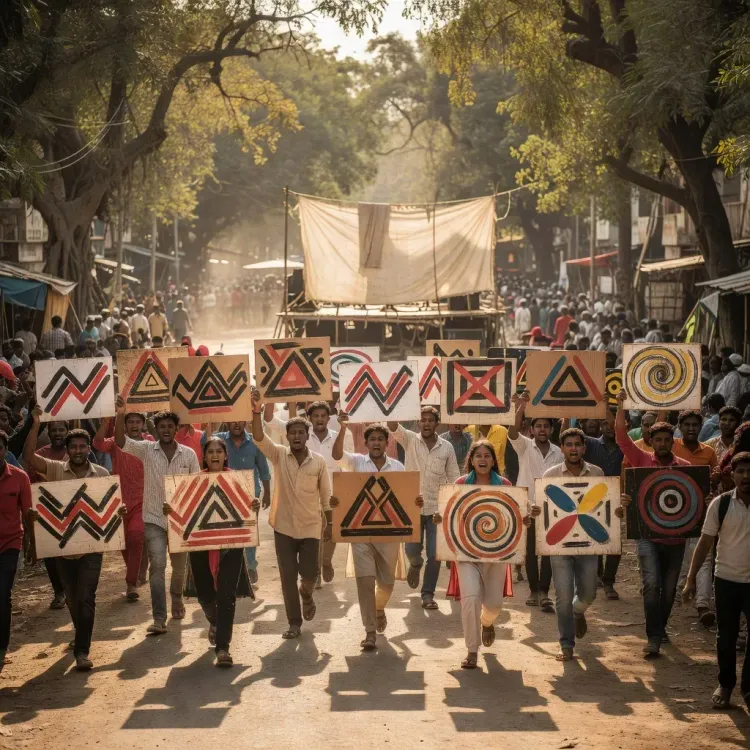
Crossing state lines with a social mandate, Uttarakhand Chief Minister Pushkar Singh Dhami travelled to Punjab on Saturday, 26 September 2026, joining a massive road show in Mukerian, Hoshiarpur district, to rally residents — especially the young — against drug abuse under the banner 'Nasha Mukt Punjab, Nasha Mukt Bharat' (Drug-Free Punjab, Drug-Free India).
The Chief Minister's Office of Uttarakhand posted the details on X, quoting CM Dhami directly: 'Drugs destroy not just one individual, but the entire family and the future of generations to come.' His call to action was unambiguous — redirect youth energy away from narcotics and toward nation-building, using Punjab as the starting point for a national transformation.
Why Mukerian, and Why Now
Hoshiarpur sits in a region of Punjab that has witnessed the human cost of substance abuse up close. Punjab has long been identified as one of India's states most acutely affected by drug dependency, a crisis that has reshaped family structures, hobbled economic productivity, and strained public health infrastructure across districts. The choice of Mukerian for a high-visibility road show — drawing a large crowd — signals that the campaign is targeting communities, not just podiums.
An inter-state visit of this kind carries its own political and social weight. A sitting chief minister travelling from a neighbouring state to participate in an awareness drive is an uncommon gesture, one that frames the drug problem explicitly as a shared national emergency rather than a local administrative failure.
The 'Nasha Mukt' Vision: From Punjab to the Nation
The 'Nasha Mukt Punjab, Nasha Mukt Bharat' campaign positions Punjab's recovery as the proof of concept for a nationwide movement. CM Dhami framed the logic plainly: a drug-free Punjab is not the end goal — it is the launchpad. The energy that young people currently spend on or lose to addiction, he argued, must be channelled into productive citizenship and national development.
This messaging aligns with a broader pattern in Indian public discourse, where narcotics control is increasingly presented not merely as a law-enforcement challenge but as a generational and civilisational one. Youth, families, and communities are cast as both the victims and the primary agents of recovery.
Cooperative Federalism in a Social Cause
Chief ministers crossing state borders to back social campaigns are relatively rare — and when they happen, they signal either deep political alignment or genuine policy urgency. Dhami's presence in Punjab underscores that the anti-narcotics push is being treated as a cause worth federal solidarity, above routine partisan lines. Whether this translates into concrete joint policy steps between the Uttarakhand and Punjab governments — coordinated enforcement, shared rehabilitation protocols, or joint awareness infrastructure — will be the real measure of this visit's lasting impact.
For now, the image of a Himalayan state's chief minister standing on a Punjab street, microphone in hand, urging a crowd to reclaim its children from addiction, is itself a statement. Drug-free India, the campaign insists, begins here.
Point of View
A framing that suits the BJP's broader 'Nasha Mukt Bharat' political messaging ahead of future electoral cycles in Punjab. Inter-state chief-ministerial solidarity on social campaigns is a soft but effective tool of cooperative federalism — it signals unity without requiring formal policy agreements. The emphasis on youth as both victims and rescuers taps into a well-worn but genuinely resonant mobilisation strategy. The real test will be whether this road-show energy converts into cross-state administrative action on rehabilitation and enforcement.
NationPress
26 Sept 2026
Frequently Asked Questions
Why did Uttarakhand CM Dhami go to Punjab?
CM Pushkar Singh Dhami travelled to Punjab to participate in a large anti-drug road show in Mukerian, Hoshiarpur, under the 'Nasha Mukt Punjab, Nasha Mukt Bharat' campaign, calling on youth to unite against substance abuse.
What is the Nasha Mukt Punjab Nasha Mukt Bharat campaign?
'Nasha Mukt Punjab, Nasha Mukt Bharat' is an anti-drug awareness campaign that positions Punjab's fight against substance abuse as the foundation for a broader drug-free India movement, with a particular focus on mobilising young people.
Where was the road show held?
The road show was held in Mukerian, a town in Hoshiarpur district, Punjab, on 26 September 2026.
What did CM Dhami say about drugs and youth?
Dhami said drugs destroy not just one person but an entire family and future generations, and called for youth energy to be channelled into nation-building rather than lost to addiction.
Does Punjab have a serious drug problem?
Punjab has long been identified as one of India's states most severely affected by substance abuse, with elevated rates of drug dependency that have had widespread social and economic consequences across communities.