CM Dhami inaugurates Kamdhenu Lok at Saptarishi, Haridwar
Synopsis
Uttarakhand CM Pushkar Singh Dhami inaugurated Kamdhenu Lok at Saptarishi, Haridwar, offering prayers to Lord Shiva and reaffirming his government's commitment to cow protection, gaushala promotion, and stray cattle welfare under the broader BJP cultural governance framework.
Key Takeaways
Kamdhenu Lok was inaugurated by CM Pushkar Singh Dhami at Saptarishi, Haridwar on 12 November 2026 .
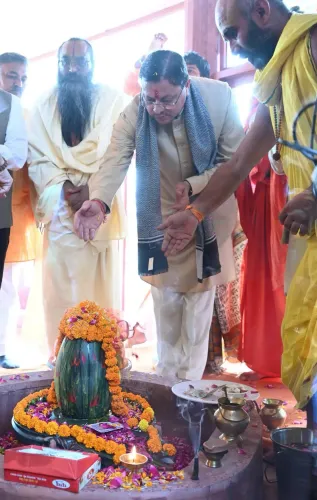
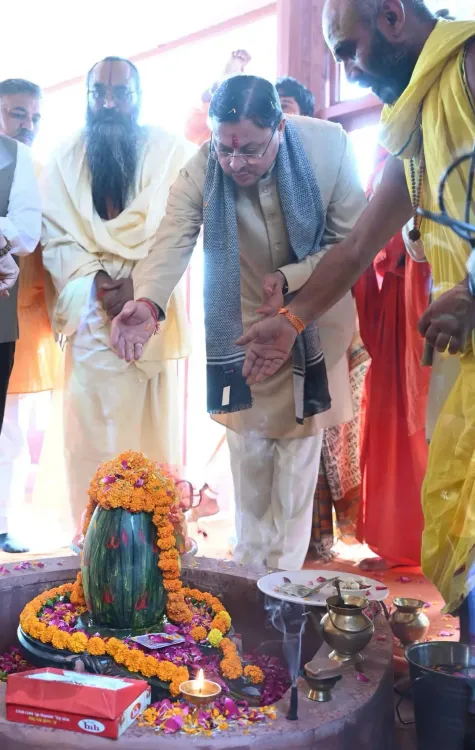
Dhami also performed puja of Lord Shiva and prayed for the peace and prosperity of all Uttarakhand residents.
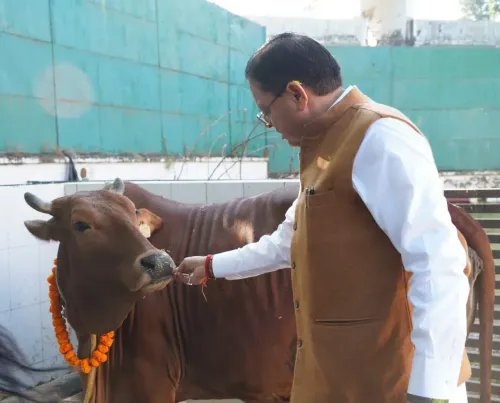
The CM reiterated the state government's commitment to protecting, promoting, and caring for cattle ( gowvansh ).
Key policy pillars cited: encouraging gaushalas , protecting stray cattle, and ensuring their proper sustenance.
The project aligns with the nationally launched Rashtriya Gokul Mission (2014) for indigenous cattle conservation.
Future budget allocations and possible cattle-protection legislation in the Uttarakhand assembly remain key markers to watch.
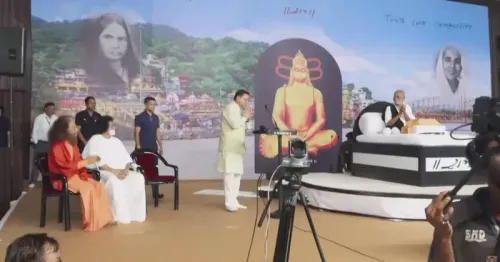
At the sacred banks of Haridwar's Saptarishi ghats, Uttarakhand Chief Minister Pushkar Singh Dhami on Thursday, 12 November 2026 inaugurated Kamdhenu Lok — a facility dedicated to the cow, revered as the divine Kamdhenu in Hindu tradition — and offered prayers to Devadhideva Mahadeva (Lord Shiva, supreme among the gods), seeking peace, happiness, and prosperity for all residents of the state.
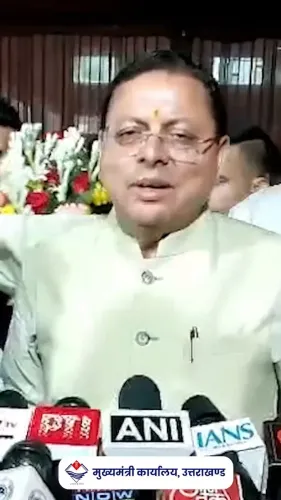
Sharing the moment on X, CM Dhami wrote: 'The cow mother is the identity of our Sanatan culture, faith, and traditions. In Indian culture, the cow is regarded not merely as worthy of worship, but as a symbol of service, compassion, and prosperity. Our government is working with continuous commitment for the protection, promotion, and care of cattle.'
Kamdhenu Lok: what the new facility represents
Haridwar, one of the holiest cities in India and a gateway to the Char Dham pilgrimage circuit, sits on the Ganga and draws millions of devotees annually. Placing a cattle-welfare and cultural facility here — at Saptarishi, a site steeped in Vedic lore — signals a deliberate blending of religious heritage with governance. The name 'Kamdhenu Lok' invokes the mythological wish-fulfilling cow, anchoring the project firmly in Sanatan symbolism.
Dhami emphasised that his government is making 'continuous efforts' toward encouraging gaushalas (cow shelters), protecting stray cattle, and ensuring their proper sustenance — three pressure points that have long tested local administration in both urban and rural Uttarakhand.
BJP's cow-welfare policy thread — from Delhi to Dehradun
The inauguration sits within a well-established national policy lineage. The Rashtriya Gokul Mission, launched by the central government in 2014, set the template: conserve indigenous cattle breeds, strengthen gaushala infrastructure, and elevate the economic value of bovine rearing. BJP-governed states, including Uttarakhand, have layered their own programmes on top of that national framework.
For Dhami, who has served as Chief Minister since 2021, cultural and religious initiatives have been a consistent part of his governance signature — from pushing the Uniform Civil Code to accelerating Char Dham infrastructure. Kamdhenu Lok fits that pattern: a project that speaks simultaneously to devout Hindus, gaushala operators, and rural communities dealing with the economic burden of stray cattle.
The stray-cattle problem behind the symbolism
Strip away the devotional framing and a practical challenge comes into focus. Stray cattle — cows no longer economically productive and abandoned by owners — cause crop damage and road accidents across north Indian states, creating friction between the religious imperative to protect cows and the daily realities of farmers and commuters. Gaushala funding, the core of Dhami's stated commitment, is the state's primary policy lever for managing this tension.
How much budget the Uttarakhand government allocates to these schemes in the next assembly session, and whether a formal cattle-protection legislation follows, will determine whether Kamdhenu Lok marks the beginning of a broader policy push or remains a ceremonial landmark at a holy city.
Point of View
It reinforces a 2021-onwards pattern of using high-visibility religious landmarks (Char Dham, UCC, now Kamdhenu Lok) to consolidate the Hindu voter base ahead of future assembly cycles. The harder test is whether symbolic inaugurations translate into measurable outcomes: gaushala funding quantum, stray cattle numbers, and farmer relief — metrics that will ultimately determine whether this is policy or pageantry.
NationPress
12 Nov 2026
Frequently Asked Questions
What is Kamdhenu Lok in Haridwar?
Kamdhenu Lok is a facility dedicated to cow welfare and Sanatan cultural heritage, inaugurated by Uttarakhand CM Pushkar Singh Dhami at Saptarishi, Haridwar on 12 November 2026. It is named after the mythological wish-fulfilling cow Kamdhenu.
What did CM Dhami do at Saptarishi Haridwar on 12 November 2026?
CM Dhami inaugurated Kamdhenu Lok, performed prayers to Lord Shiva, and sought happiness, peace, and prosperity for all residents of Uttarakhand.
What is the Rashtriya Gokul Mission?
The Rashtriya Gokul Mission is a central government scheme launched in 2014 to conserve indigenous cattle breeds, strengthen gaushala infrastructure, and promote the economic value of bovine rearing across India.
What is Uttarakhand government's policy on cow protection?
The Uttarakhand government, led by CM Pushkar Singh Dhami, has committed to encouraging gaushalas (cow shelters), protecting stray cattle, and ensuring their proper sustenance, in line with the national Rashtriya Gokul Mission framework.
Why is cow protection a political issue in BJP-governed states?
Cow protection intersects religious sentiment among Hindus, the practical problem of stray cattle damaging crops and causing accidents, and BJP's broader cultural nationalism platform — making it both a governance challenge and a consistent political priority in states like Uttarakhand.