CM Dhami Vows to Protect Uttarakhand's Identity With Strict Laws

Synopsis
Uttarakhand CM Pushkar Singh Dhami declared on November 12, 2026, that his government has enacted strict laws to protect the identity and original character of Devbhoomi Uttarakhand, calling firm decisions the hallmark of his administration.
Key Takeaways
CM Pushkar Singh Dhami posted on November 12, 2026 reaffirming strict laws to protect Uttarakhand's identity and 'original character.' The term Devbhoomi ('Land of the Gods') frames Uttarakhand's governance around its status as a major Hindu pilgrimage region.
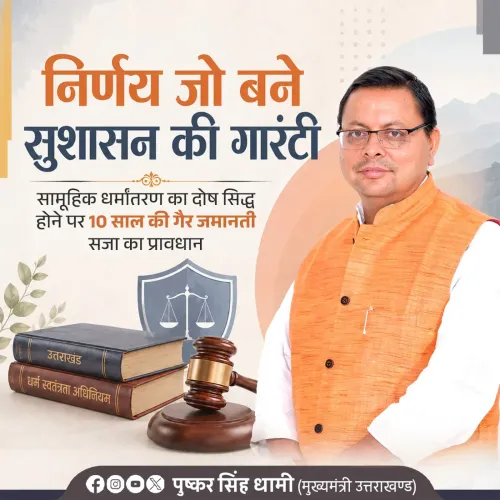
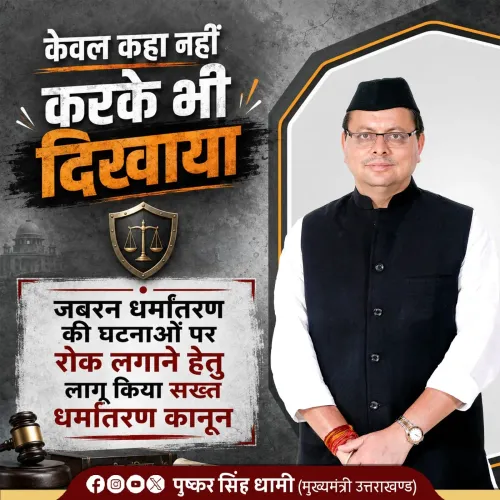
Uttarakhand strengthened its anti-conversion law in 2022 , one of the flagship measures underpinning Dhami's identity-protection agenda.
BJP-governed states with pilgrimage or border significance have consistently pursued cultural-identity legislation as a policy pillar.
Enforcement records and potential court challenges to these laws remain the key variables to watch in coming months.
Uttarakhand Chief Minister Pushkar Singh Dhami drew a sharp line on Thursday, November 12, 2026 — the state's identity is not negotiable, and the laws his government has enacted will keep it that way. In a pointed post on X, Dhami signalled that decisive, even uncomfortable, governance is the defining trait of his administration.
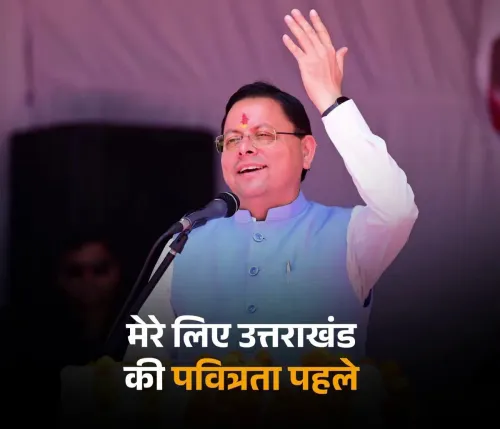
Posting in Hindi, Dhami wrote: 'Devbhoomi Uttarakhand ki asmita aur mool swaroop ki raksha ke liye hamari sarkar ne kathor kanoon laagu kiye hain' — 'Our government has enacted strict laws to protect the identity and original character of Devbhoomi Uttarakhand.' He added: 'Taking firm decisions in the interest of the state is our hallmark.'
What 'Strict Laws' Means in Uttarakhand's Context
The reference to tough legislation lands against a well-established backdrop. Uttarakhand tightened its anti-conversion law in 2022, introducing stiffer penalties for unlawful religious conversions — one of several measures the state has pursued under the banner of protecting the cultural and demographic character of a region home to some of Hinduism's most revered pilgrimage sites. The name Devbhoomi — literally 'Land of the Gods' — is not merely poetic; it anchors a political and legal argument that the state carries a special obligation to preserve its religious and cultural fabric.
A BJP Pattern Across Pilgrimage and Border States
BJP-governed states with significant pilgrimage economies or border sensitivities have made cultural-identity legislation a consistent policy thread. Uttarakhand, sharing a sensitive international border and hosting the Char Dham circuit, fits squarely into that framework. Dhami's framing — firm decisions as a matter of identity, not just policy — positions the government's legislative record as a core electoral and ideological credential heading into the assembly's next session.
Enforcement, Courts, and What Comes Next
The real test for any 'strict law' is what happens after the post. Enforcement track records, potential court challenges, and whether fresh bills are tabled in the Uttarakhand Legislative Assembly will determine whether this statement is a reaffirmation of existing statute or a signal of new legislative intent. Civil-liberties groups and opposition parties have previously questioned the constitutional scope of anti-conversion provisions, and that scrutiny is unlikely to ease.
Devbhoomi's identity politics are not abstract — they shape land use, tourism regulation, and demographic policy across a state where religion and governance are rarely far apart. Dhami just reminded everyone that his government intends to keep them intertwined.
Point of View
But the open-ended language suggests the government may be signalling further legislative moves. Across BJP-ruled states, identity-linked laws have served a dual purpose: satisfying a core ideological constituency while creating a legal architecture that opposition parties must contest in court rather than on the streets. Dhami is making Uttarakhand's version of that argument explicitly his own.
NationPress
12 Nov 2026
Frequently Asked Questions
What laws has the Uttarakhand government enacted to protect the state's identity?
Uttarakhand strengthened its anti-conversion law in 2022, increasing penalties for unlawful religious conversions. CM Dhami has cited such measures as central to protecting the cultural and original character of Devbhoomi Uttarakhand.
Why is Uttarakhand called Devbhoomi?
Devbhoomi means 'Land of the Gods' in Sanskrit. Uttarakhand is home to major Hindu pilgrimage sites including the Char Dham — Badrinath, Kedarnath, Gangotri, and Yamunotri — giving the term both religious and political significance in the state's governance discourse.
What did CM Pushkar Singh Dhami say on November 12, 2026?
CM Dhami posted on X stating that his government has enacted strict laws to protect the identity and original character of Devbhoomi Uttarakhand, and that taking firm decisions in the state's interest is the hallmark of his administration.
Have Uttarakhand's identity protection laws faced legal challenges?
Civil-liberties groups and opposition parties have previously questioned the constitutional scope of anti-conversion laws in Uttarakhand and other BJP-governed states. Court challenges remain an ongoing concern for such legislation.
Which other BJP-governed states have passed similar identity protection laws?
Several BJP-governed states including those with significant pilgrimage economies or border sensitivities have enacted or strengthened anti-conversion legislation, making it a consistent policy thread across the party's state governments.