CM Dhami Joins PM Modi at Triple Navy Commissioning Ceremony

Synopsis
Prime Minister Narendra Modi commissioned INS Dunagiri, INS Sanshodhak, and INS Agray into the Indian Navy on 21 June 2026 in a rare tri-commissioning ceremony. Uttarakhand Chief Minister Pushkar Singh Dhami attended and shared the live broadcast, highlighting India's Atmanirbhar Bharat-driven naval modernisation drive.
Key Takeaways
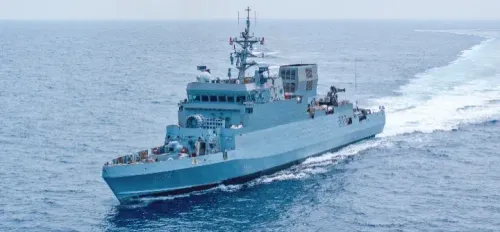
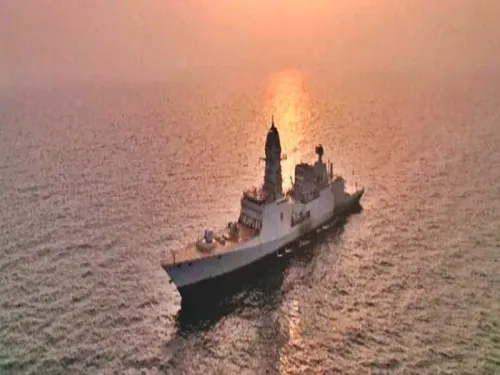
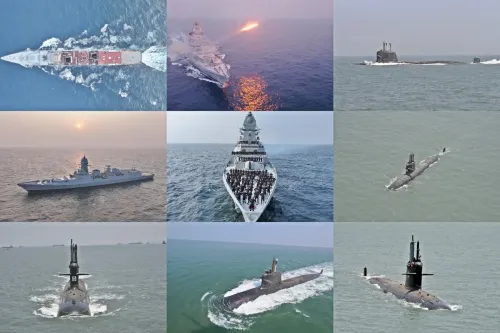
Three vessels commissioned simultaneously: INS Dunagiri (Project 17A stealth frigate), INS Sanshodhak (survey vessel), and INS Agray (offshore patrol vessel) were inducted in a single ceremony.
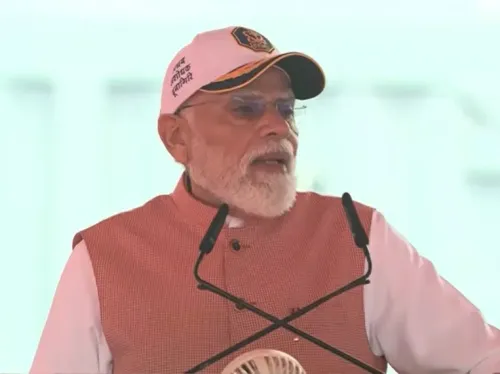
PM Modi presided over the tri-commissioning event on 21 June 2026 .
CM Dhami of Uttarakhand attended and broadcast the event live, linking state BJP leadership to national defence milestones.
The inductions advance India's goal of building a 200-ship navy under the Atmanirbhar Bharat defence manufacturing framework.
Project 17A , approved in 2015 , covers seven indigenous stealth frigates; INS Dunagiri is among the most advanced deliveries in that programme.
Further Project 17A frigates and auxiliary vessels are expected to be commissioned over the next two years.
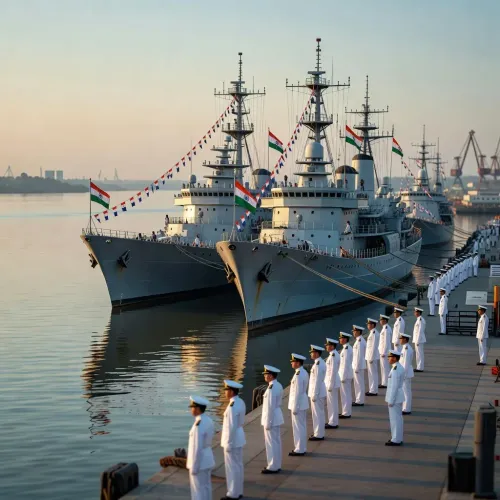
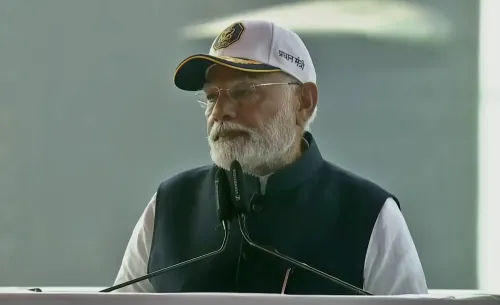
Uttarakhand Chief Minister Pushkar Singh Dhami joined Prime Minister Narendra Modi on Sunday, 21 June 2026, at the tri-commissioning ceremony of INS Dunagiri, INS Sanshodhak, and INS Agray — a rare simultaneous induction of three warships and auxiliary vessels into the Indian Navy.
Context
Dhami shared a live broadcast of the event on social media, describing Prime Minister Modi's participation in the ceremony as 'tri-commissioning samaroh mein sahbhagita' (participation in the tri-commissioning ceremony). The simultaneous commissioning of three naval assets in a single event underscores the pace at which India is expanding its maritime fleet. Such joint inductions are relatively uncommon and signal a deliberate effort to showcase fleet growth at scale.
Policy Backdrop
The inductions fit squarely within India's Atmanirbhar Bharat (self-reliant India) defence manufacturing push, which since 2020 has prioritised indigenous warship construction and reduced dependence on foreign platforms. The broader strategic goal is to build a 200-ship navy, a target that successive governments have pursued through programmes such as Project 17A — a 2015 Cabinet-approved plan for seven stealth frigates to be built domestically. INS Dunagiri, a Project 17A stealth frigate, represents one of the most advanced vessels in that pipeline. INS Sanshodhak is a survey vessel, and INS Agray is an offshore patrol vessel, together broadening the Navy's operational reach across combat, hydrographic, and coastal-patrol roles.
India's defence shipyards — principally Mazagon Dock Shipbuilders in Mumbai and Garden Reach Shipbuilders and Engineers in Kolkata — have been central to this indigenous build-up. The Atmanirbhar framework has accelerated timelines and increased domestic content requirements for naval platforms, with commissioning ceremonies increasingly serving as public milestones for this policy arc.
Stakeholders and Impact
For the Indian Navy, the simultaneous addition of a stealth frigate, a survey vessel, and a patrol vessel in one ceremony strengthens capabilities across blue-water combat, maritime domain awareness, and exclusive economic zone surveillance. Defence shipyards gain visibility and order confidence, reinforcing the industrial case for sustained indigenous production. Chief Minister Dhami's presence at a national defence event — outside his home state of Uttarakhand — reflects the BJP's broader political messaging around national security, linking state leadership to central government achievements in defence modernisation.
What's Next
The Indian Navy is expected to induct additional Project 17A frigates over the next two years as the remaining vessels in the seven-ship programme progress through sea trials and delivery schedules. Further auxiliary vessel inductions are also on the horizon, keeping the pace of fleet expansion consistent with the 200-ship target. Each commissioning event is likely to carry similar political and strategic significance as India positions naval modernisation as a cornerstone of its great-power aspirations.
Point of View
Timed to reinforce the Atmanirbhar Bharat narrative ahead of a period of heightened strategic competition in the Indo-Pacific. Chief Minister Dhami's attendance at a Navy event far from Uttarakhand illustrates how the BJP uses national security optics to build political capital at the state level, tying regional leaders to central government achievements. The tri-commissioning format also reflects a maturing shipbuilding pipeline: India's yards are now delivering at a tempo that makes multi-vessel inductions feasible. If subsequent Project 17A deliveries stay on schedule, India's naval modernisation story will become an increasingly prominent plank in both defence diplomacy and domestic politics.
NationPress
21 Jun 2026
Frequently Asked Questions
What is INS Dunagiri and why is it significant?
INS Dunagiri is a Project 17A stealth guided-missile frigate built indigenously in India. It is significant because it represents one of the most advanced surface combatants in the Indian Navy's fleet, built under the Atmanirbhar Bharat self-reliance programme approved by the Cabinet in 2015.
What happened at the tri-commissioning ceremony on 21 June 2026?
Prime Minister Narendra Modi presided over the simultaneous commissioning of three Indian Navy vessels — INS Dunagiri, INS Sanshodhak, and INS Agray — in a single ceremony on 21 June 2026. Uttarakhand Chief Minister Pushkar Singh Dhami also attended the event.
What is Project 17A?
Project 17A is an Indian Navy programme approved by the Cabinet in 2015 for the construction of seven indigenous stealth frigates. The ships are being built at domestic shipyards as part of India's push for self-reliance in warship design and manufacturing.
Why was CM Dhami at a Navy commissioning event?
Uttarakhand Chief Minister Pushkar Singh Dhami attended the tri-commissioning ceremony as part of the BJP's broader political engagement with national defence milestones, linking state-level leadership to central government achievements in naval modernisation.
What is India's 200-ship navy target?
India's 200-ship navy target is a long-term fleet expansion goal pursued by successive governments to build a larger, predominantly indigenous naval force capable of sustained operations across the Indian Ocean region and beyond.