CM Dhami lays foundation for Rs 235 cr Ganga Corridor projects in Haridwar
Synopsis
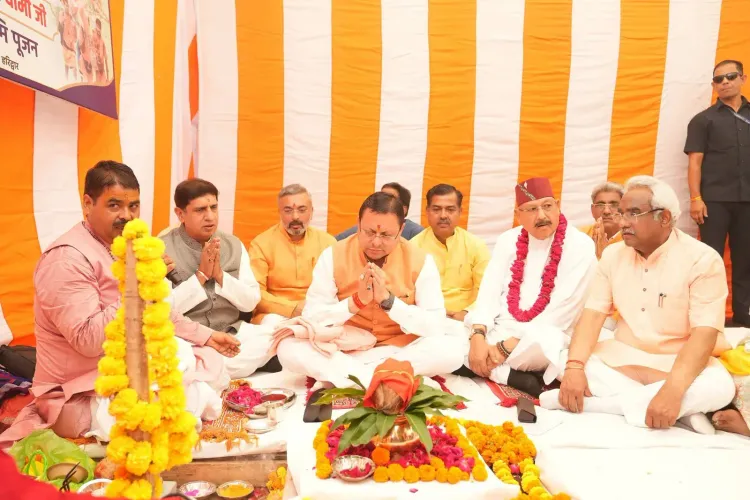
Uttarakhand CM Pushkar Singh Dhami broke ground on three Ganga Corridor projects worth over Rs 235 crore in Haridwar on 21 July 2026, targeting improved pilgrim infrastructure ahead of Kumbh Mela 2027 and the Kanwar Mela, while advancing the state's broader 'development and heritage' corridor agenda.
Key Takeaways
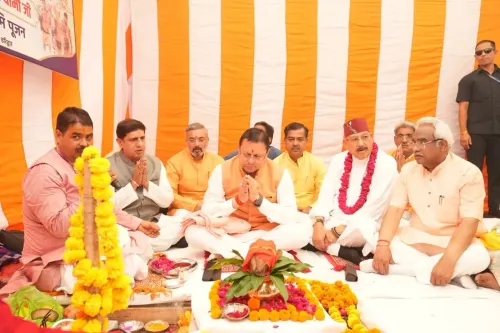
Chief Minister Pushkar Singh Dhami performed the bhoomi pujan for three Ganga Corridor projects in Haridwar on 21 July 2026 .
The combined project outlay exceeds Rs 235 crore .
The infrastructure is designed to support the Kumbh Mela 2027 and the annual Kanwar Mela in Haridwar.
The state is simultaneously developing the Kedarkhand , Manaskhand , Goljyu , Vivekananda and Yamuna Teertha corridors across Uttarakhand.
The projects are expected to generate local employment and livelihood opportunities alongside pilgrim amenity upgrades.
The initiative aligns with the Centre's Namami Gange and PRASAD schemes for pilgrimage infrastructure development.
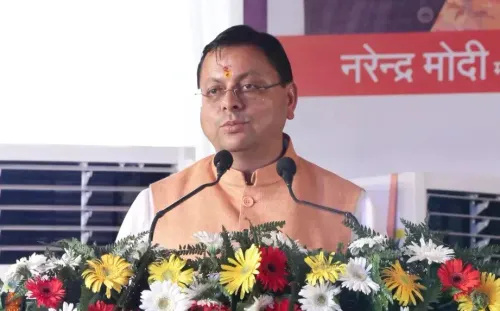
Uttarakhand Chief Minister Pushkar Singh Dhami on Tuesday, 21 July 2026, performed the bhoomi pujan (ground-breaking ceremony) for three infrastructure projects linked to the Ganga Corridor in Haridwar, with a combined outlay of more than Rs 235 crore. The projects are intended to accelerate holistic development of the pilgrimage city and to put in place durable civic infrastructure ahead of the Kumbh Mela 2027 and the annual Kanwar Mela.
Context
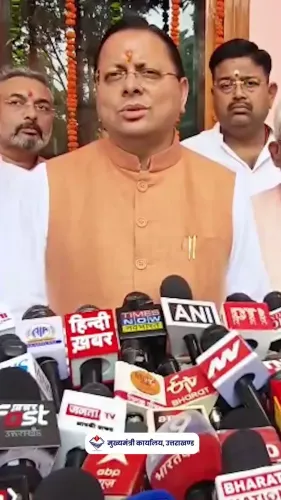
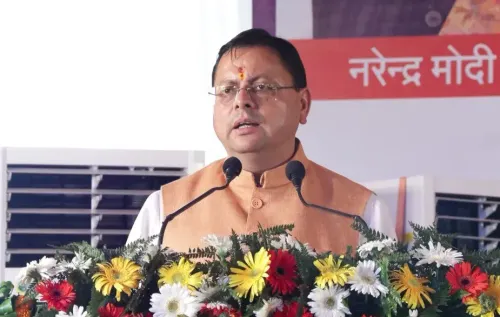
Posting on X, Chief Minister Dhami stated that the three projects would 'give new momentum to the overall development of Haridwar' while also playing a 'crucial role in ensuring the organised, safe and successful conduct of the upcoming Kumbh Mela 2027 and Kanwar Mela.' He credited the initiative to the 'able leadership and guidance' of Prime Minister Narendra Modi, framing the government's approach as advancing 'vikas aur virasat' — 'development and heritage' — simultaneously.
The bhoomi pujan marks the formal commencement of civil works on the Ganga Corridor's latest phase in Haridwar, a city that sits at the foothills of the Himalayas along the banks of the Ganga and serves as one of India's most visited pilgrimage destinations year-round.
Policy Backdrop
The Ganga Corridor project in Haridwar forms part of a wider state-level push to develop riverfront ghats, pilgrim amenities and access infrastructure — an approach consistent with the Namami Gange programme launched in 2015 and the PRASAD scheme introduced in 2014-15 by the Union Ministry of Tourism for the rejuvenation of identified pilgrimage destinations, including Haridwar.
Chief Minister Dhami's post also enumerated a broader portfolio of corridor projects under way across Uttarakhand: the Kedarkhand Corridor, Manaskhand Corridor, Goljyu Corridor, Vivekananda Corridor, Haripura, and the Yamuna Teertha project in Dehradun. Together, these initiatives reflect a coordinated state strategy of bundling pilgrim safety upgrades, heritage conservation and local economic development under a single 'development with heritage' framework.
The Char Dham Highway project, announced in 2016, further underpins this pattern by improving road connectivity to major pilgrimage centres in the state, reducing travel times and easing crowd management during peak mela seasons.
Stakeholders and Impact
The most immediate beneficiaries are the millions of pilgrims who visit Haridwar annually for the Kanwar Mela — one of the world's largest religious gatherings — and those expected to converge for the Kumbh Mela 2027. Improved ghats, access roads and civic amenities are expected to reduce congestion and enhance safety for large crowds.
Chief Minister Dhami also highlighted the economic dimension, noting that these efforts are 'creating new opportunities for employment and livelihood for local people.' The construction phase itself is expected to generate short-term jobs, while completed infrastructure is projected to sustain long-term gains for the local hospitality, transport and retail sectors tied to religious tourism.
Local communities in and around Haridwar stand to benefit from upgraded public spaces, improved drainage and better pedestrian access to the riverfront — infrastructure improvements that serve residents as much as visitors.
What's Next
With the bhoomi pujan complete, attention will shift to tendering, contractor mobilisation and phased construction timelines for all three projects under the Rs 235 crore outlay. The state government's ability to commission the works well before the Kumbh Mela 2027 window will be a key benchmark for the broader corridor programme.
Progress on the parallel corridor projects — Kedarkhand, Manaskhand and Yamuna Teertha — will also be closely watched as indicators of whether Uttarakhand can deliver its multi-site heritage development agenda on schedule. Integrated crowd management and logistics planning for Kumbh 2027 are expected to follow as the next major planning milestone.
Point of View
Timed to the electoral and cultural salience of Kumbh Mela 2027. By publicly crediting Prime Minister Modi's leadership, Chief Minister Dhami reinforces the BJP's 'double-engine government' narrative — presenting state-level delivery as an extension of central vision rather than an independent achievement. The simultaneous enumeration of six corridor projects signals an attempt to demonstrate breadth of execution, though the real test will be whether construction is completed before the mela window opens. This pattern of pre-mela infrastructure bundling has become a template across BJP-governed states, blending heritage branding with measurable civic output.
NationPress
21 Jul 2026
Frequently Asked Questions
What are the three Ganga Corridor projects inaugurated in Haridwar?
Chief Minister Dhami's post does not name the three individual projects, but collectively they are part of the Ganga Corridor development initiative in Haridwar with a total cost of more than Rs 235 crore. Detailed project names and scope are expected to be released by the Uttarakhand government as tendering proceeds.
When is Kumbh Mela 2027 in Haridwar?
The Uttarakhand government has referenced Kumbh Mela 2027 as a key deadline for the Haridwar infrastructure projects. Precise dates for the mela are yet to be officially announced by the state authorities.
What is the Ganga Corridor project in Haridwar?
The Ganga Corridor is an ongoing riverfront development initiative in Haridwar aimed at upgrading ghats, improving pilgrim access and enhancing civic amenities along the Ganga. It is part of a broader state and central government effort that includes schemes such as Namami Gange and PRASAD.
What other corridor projects is the Uttarakhand government building?
Alongside the Ganga Corridor in Haridwar, the Uttarakhand government is developing the Kedarkhand Corridor, Manaskhand Corridor, Goljyu Corridor, Vivekananda Corridor, Haripura, and the Yamuna Teertha project in Dehradun, all aimed at upgrading religious and cultural sites across the state.
How will the Haridwar projects benefit local people?
Chief Minister Dhami stated that the projects will create new employment and livelihood opportunities for local communities. Beyond construction-phase jobs, completed infrastructure is expected to boost Haridwar's religious tourism economy, benefiting hospitality, transport and retail businesses.