CM Dhami orders ground inspection of Badrinath Highway landslide zone
Synopsis
CM Pushkar Singh Dhami directed Rudraprayag DM Vishal Mishra to conduct an on-site inspection of the Sirobagad landslide zone on the Badrinath National Highway on October 28, 2026, flagging the vulnerability of a key Char Dham pilgrimage route ahead of winter.
Key Takeaways
CM Pushkar Singh Dhami personally directed the inspection of the Sirobagad landslide zone on the Badrinath National Highway .
Rudraprayag DM Vishal Mishra conducted the on-site ground inspection on October 28, 2026 .
The Badrinath National Highway is a critical artery for the Char Dham pilgrimage circuit, serving hundreds of thousands of pilgrims annually.
Rudraprayag district is among the most landslide-prone zones on Uttarakhand's Himalayan highway network.
The Char Dham Highway project , launched around 2016 , aims to widen and stabilise pilgrimage routes including to Badrinath.
An unaddressed slippage at Sirobagad over winter could worsen before the next pilgrimage season opens.
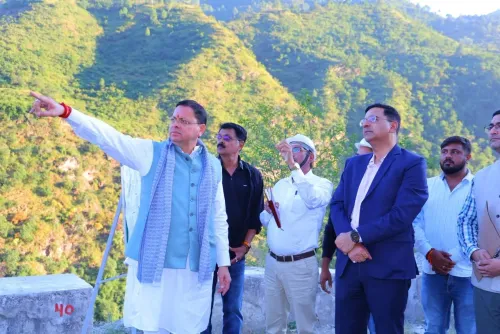
A stretch of the Badrinath National Highway drew urgent official attention on Wednesday, October 28, 2026, when Rudraprayag District Magistrate Vishal Mishra personally walked the Sirobagad landslide zone — acting on direct orders from Chief Minister Pushkar Singh Dhami to assess the ground reality on one of Uttarakhand's most critical pilgrimage arteries.
Sirobagad: a recurring chokepoint on the Char Dham lifeline
The Badrinath National Highway is far more than a road — it is the primary route connecting hundreds of thousands of pilgrims each year to the Badrinath temple, the most northerly of the four shrines on the Char Dham circuit. The highway cuts through Rudraprayag district, a zone that sits squarely in the geological fault lines of the central Himalayas, where loose debris, seasonal rain, and steep gradients combine to make landslides a near-annual disruption.
The Sirobagad stretch has historically been one of the most vulnerable points on this corridor. A landslide here does not just inconvenience commuters — it can strand pilgrims mid-journey, cut off local villages, and trigger a cascading impact on the religious tourism economy that Uttarakhand depends on heavily.
From CM's desk to the debris field
The Chief Minister's Office confirmed that DM Vishal Mishra conducted the on-site sthaliya nirikshan (ground inspection) under CM Dhami's explicit directions — a signal that Dehradun is not treating this as a routine maintenance note. On-the-ground inspection by a district magistrate, rather than a junior engineer, typically precedes either an emergency stabilisation order or a decision on road closure and diversion.
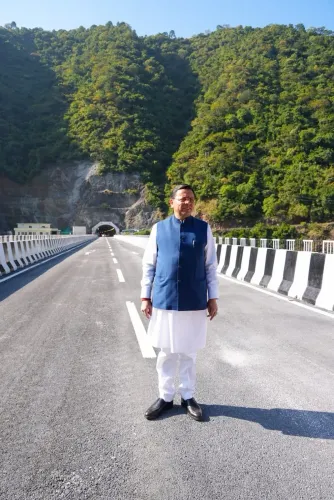
This pattern of top-down accountability is consistent with the Dhami administration's stated approach to disaster preparedness along Char Dham routes. The Char Dham Highway project, launched around 2016, was designed specifically to widen and geologically stabilise roads to pilgrimage sites including Badrinath — but the sheer scale of the terrain means active monitoring and rapid response remain indispensable even as long-term works proceed.
What the inspection means for pilgrims and highway users
For the hundreds of thousands of pilgrims and residents who depend on the Badrinath National Highway, the DM's visit is the first formal step in a potential intervention chain. Following such inspections, the state typically either deploys roadclearing machinery, imposes temporary traffic restrictions, or issues a stabilisation brief to the National Highways Authority or the state PWD.
With the pilgrimage season's closure period approaching in late autumn, the timing of this inspection matters. Any unaddressed slippage at Sirobagad over winter could compound into a far larger blockage by the time the route reopens for the next season's yatra.
The state's next move — stabilisation works, a road diversion, or an emergency tender — will determine whether Sirobagad remains a hazard or gets resolved before the snows seal the highway for winter.
Frequently Asked Questions
What is the Sirobagad landslide zone on Badrinath Highway?
Sirobagad is a stretch on the Badrinath National Highway in Rudraprayag district that is particularly vulnerable to landslides due to unstable slopes and Himalayan terrain, and has historically disrupted pilgrimage and local traffic.
Why did CM Dhami order an inspection of Badrinath National Highway?
Chief Minister Pushkar Singh Dhami ordered the inspection to assess the current condition of the Sirobagad landslide zone and ensure timely action to protect highway connectivity, especially ahead of winter when conditions can worsen.
Who is Rudraprayag DM Vishal Mishra?
Vishal Mishra is the District Magistrate of Rudraprayag in Uttarakhand, responsible for administrative oversight including infrastructure safety along major highways in the district.
What is the Char Dham Highway project?
The Char Dham Highway project, launched around 2016, is a central government initiative to widen and stabilise roads connecting the four major pilgrimage sites in Uttarakhand — Badrinath, Kedarnath, Gangotri, and Yamunotri.
Is Badrinath National Highway frequently hit by landslides?
Yes. Rudraprayag district, through which the Badrinath National Highway passes, is one of the most landslide-prone areas in Uttarakhand due to its Himalayan geology, steep gradients, and heavy monsoon rainfall.