CM Dhami pledges tech-driven PDS overhaul for Uttarakhand
Synopsis
Uttarakhand Chief Minister Pushkar Singh Dhami announced on 16 October 2026 that the state is making its Public Distribution System more transparent and technology-driven, while ramping up nutrition welfare for women and children through multiple government schemes.
Key Takeaways
CM Pushkar Singh Dhami reaffirmed his government's commitment to food security and citizen nutrition on 16 October 2026 .
The Public Distribution System (PDS) in Uttarakhand is being made more transparent, effective, and technology-based, per the Chief Minister's statement.
Special focus is on delivering better nutrition to women and children through existing public welfare schemes.
The policy draws on the National Food Security Act, 2013 and the POSHAN Abhiyaan (2018) as its national framework.
Nationwide Aadhaar-linked ePoS devices , rolled out from 2015, form the technological backbone for curbing PDS leakages.
Uttarakhand's hilly, remote terrain makes last-mile food delivery a specific challenge the state must address beyond national averages.
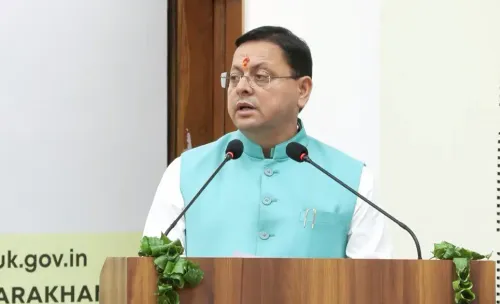
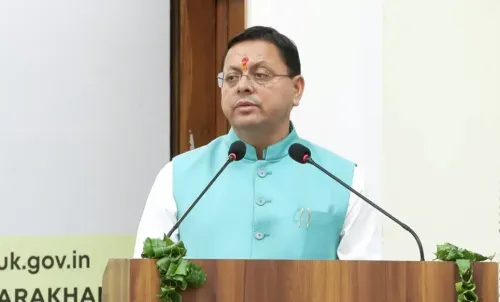
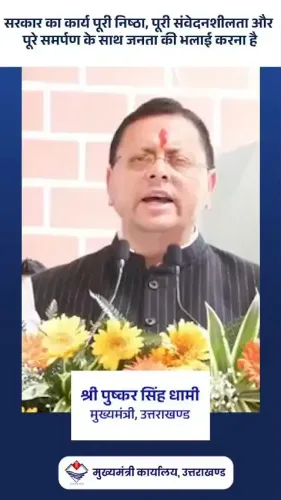
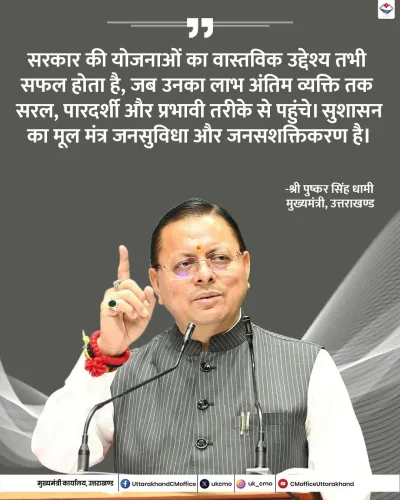
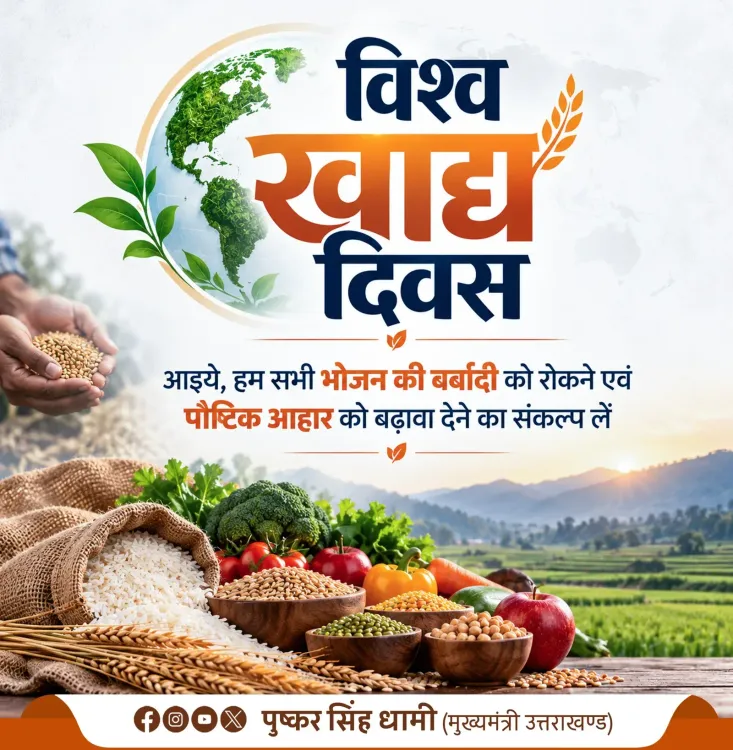
Ensuring nutritious food reaches every doorstep is the foundation of a healthy society — and on Friday, 16 October 2026, Uttarakhand Chief Minister Pushkar Singh Dhami made clear that his government is treating that principle as active policy, not aspiration. In a post on X, Dhami laid out a three-pronged commitment: strengthening food security, making the Public Distribution System (PDS) more transparent and technology-driven, and delivering better nutrition to women and children through welfare schemes.
Translated from Hindi, the Chief Minister wrote: 'Ensuring access to adequate and nutritious food for every person is the cornerstone of building a healthy and empowered society. Along with strengthening the food security system in the state, the Public Distribution System is being made more transparent, effective, and technology-based. Continuous work is being done through various public welfare schemes to provide better nutrition to women and children. Our government is committed to the nutrition and welfare of every citizen.'
The national scaffold Uttarakhand is building on
The policy architecture behind the statement is not new — but the emphasis is deliberate. The National Food Security Act, 2013 gave priority households a legal right to subsidised food grain, creating the entitlement baseline every state now works within. On top of that, the POSHAN Abhiyaan, launched in 2018, set national targets for reducing stunting, wasting, and anaemia — particularly among women and children under five. Uttarakhand, a hilly northern state with significant rural and remote terrain, faces specific last-mile delivery challenges that make both schemes harder to execute than in flat, densely connected states.
The technology layer Dhami specifically invokes has a clear precedent: the nationwide rollout of Aadhaar-linked electronic Point of Sale (ePoS) devices across PDS outlets from 2015 onward. These devices were designed to end ghost beneficiaries and plug leakages — a perennial problem that had drained subsidised grain before it reached genuine households. States that integrated ePoS early reported measurable reductions in diversion.
Why women and children sit at the centre
The specific call-out of women and children is not rhetorical. India's nutrition indicators have historically been weakest in this demographic — childhood stunting and maternal anaemia remain stubbornly high in several hill districts. POSHAN Abhiyaan and complementary Anganwadi-linked programmes have tried to close this gap through convergence of health, sanitation, and direct food supplementation. Dhami's framing signals that Uttarakhand is positioning itself within this national mission, even as the state tailors delivery to its own geography.
Indian states have progressively digitised PDS operations over the past decade — a trend that cuts across political lines but has been driven with particular intensity in BJP-governed states keen to demonstrate administrative efficiency. The pattern that emerges is one where technology adoption and targeted nutrition programmes are increasingly inseparable: data from ePoS devices feeds beneficiary tracking, which informs scheme coverage assessments, which loop back into resource allocation. Whether Uttarakhand's on-ground execution matches the ambition will show up in state-level PDS digitisation reports and periodic nutrition surveys — the numbers to watch.
A government that can prove food actually reached the last village in the hills, not just the nearest depot, will have made the real argument.
Point of View
With its dispersed hill communities, the challenge is not only policy design but demonstrable last-mile reach. Periodic state nutrition surveys and PDS audit reports will be the real test of whether this commitment translates into measurable outcomes.
NationPress
16 Oct 2026
Frequently Asked Questions
What did CM Pushkar Singh Dhami say about food security in Uttarakhand?
On 16 October 2026, CM Dhami stated that his government is strengthening the food security system, making the Public Distribution System more transparent and technology-driven, and running welfare schemes to improve nutrition for women and children.
What is the Public Distribution System (PDS) in India?
The Public Distribution System is the national mechanism through which the government distributes subsidised food grains to eligible households, operating through a network of fair-price shops across the country.
What is POSHAN Abhiyaan and how does it relate to Uttarakhand?
POSHAN Abhiyaan is a national nutrition mission launched in 2018 targeting reductions in stunting, wasting, and anaemia — particularly among women and children. Uttarakhand participates in this programme as part of its welfare commitments highlighted by CM Dhami.
How is technology being used to improve PDS delivery in India?
From 2015 onward, Aadhaar-linked electronic Point of Sale (ePoS) devices were deployed at PDS outlets nationwide to authenticate beneficiaries, reduce ghost beneficiaries, and curb diversion of subsidised food grains.
Why is food security particularly challenging in Uttarakhand?
Uttarakhand's hilly and remote terrain creates significant last-mile delivery challenges, making it harder to ensure subsidised food grains reach rural and isolated households compared to flatter, better-connected states.