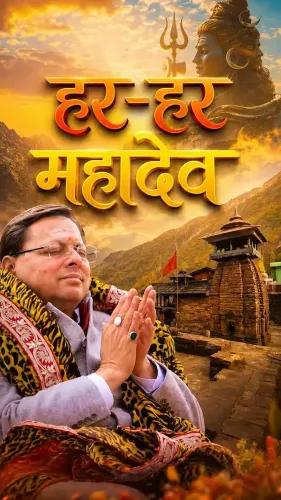
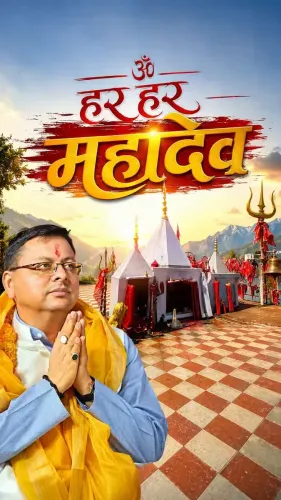
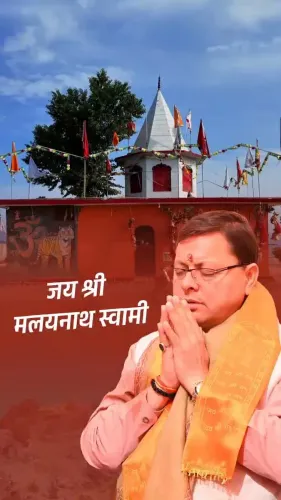
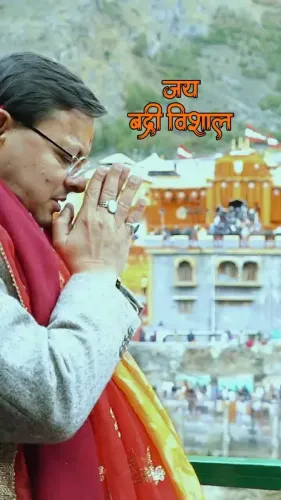
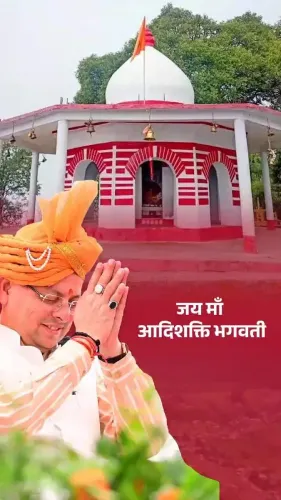
CM Dhami promotes Shri Malyanath Swami temple in Pithoragarh
Synopsis
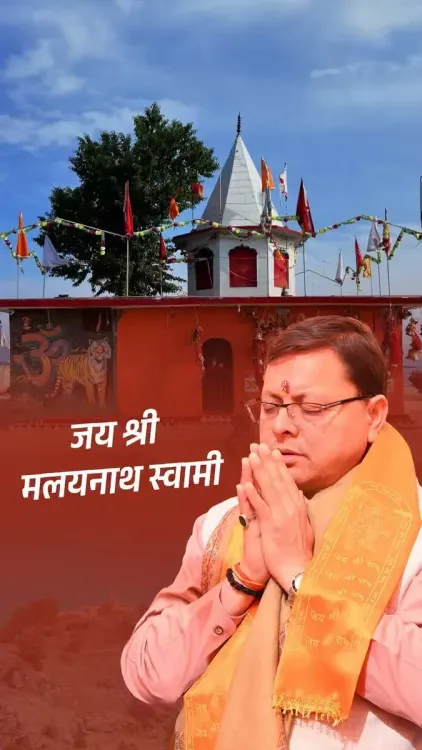
Uttarakhand CM Pushkar Singh Dhami spotlighted the ancient Shri Malyanath Swami Shiva temple in Didihat, Pithoragarh on 27 September 2026, calling it a confluence of faith and spiritual peace and urging pilgrims to visit.
Key Takeaways
CM Pushkar Singh Dhami promoted the Shri Malyanath Swami temple in Didihat, Pithoragarh on 27 September 2026 via X.
The temple is dedicated to Lord Shiva and is described as an ancient shrine set amid Himalayan natural surroundings.
Pithoragarh district borders Nepal and contains numerous lesser-known temples outside mainstream pilgrimage routes.
The post fits Dhami's recurring pattern of using social media to amplify remote Shiva temples in border districts.
Uttarakhand is officially branded Devbhoomi , with religious tourism central to the state's economic and cultural identity.
Tucked into the rugged Himalayan landscape of Didihat, Pithoragarh, the ancient shrine of Shri Malyanath Swami is getting a fresh wave of attention — this time from the highest office in the state. Uttarakhand Chief Minister Pushkar Singh Dhami on Sunday, 27 September 2026, took to X to spotlight the Lord Shiva temple, urging pilgrims visiting Pithoragarh to seek the blessings of Bholenath at this revered site.
Dhami described the temple as 'aastha, bhakti aur aadhyatmik shanti ka adbhut sangam' — 'a wondrous confluence of faith, devotion and spiritual peace' — and called attention to its 'divine sanctity and enchanting natural surroundings that move every devotee's heart.' The post, accompanied by a video of the shrine, is part of a pattern that has become a signature of his tenure: using official social media reach to lift lesser-known hill temples into the public eye.
Didihat's quiet temple on Dhami's radar
Didihat is a small town in Pithoragarh district, a remote Himalayan region that shares a border with Nepal. The district is dotted with ancient temples, but many remain outside the mainstream pilgrimage circuits that draw heavy footfall to sites like Kedarnath or Badrinath. The Shri Malyanath Swami temple, dedicated to Lord Shiva, is one such shrine — revered locally but not yet widely catalogued in official tourism promotions.
Devbhoomi branding and the border-district push
Uttarakhand carries the official identity of Devbhoomi — the Land of the Gods — a brand built on its extraordinary density of Hindu pilgrimage sites. Successive state governments have leaned into this identity, pairing social media messaging with incremental road and connectivity upgrades to hill shrines. Dhami's administration has continued and amplified that strategy, with the Chief Minister personally amplifying temples across border districts where both religious tourism and infrastructure investment remain works in progress.
The broader intent is visible: putting Pithoragarh-area temples on the mental map of pilgrims who already make the journey to Kumaon. Whether a formal state tourism department announcement on temple infrastructure or its inclusion in an official pilgrimage circuit follows remains to watch.
Point of View
Even a single viral post from the CM can translate into measurable pilgrim footfall. The strategy also quietly reinforces Uttarakhand's Devbhoomi identity ahead of what are expected to be competitive state election cycles, tying religiosity to governance without requiring a policy announcement. The real test will be whether social media amplification is followed by tangible infrastructure — better roads, amenities, and formal circuit integration — that makes the CM's digital endorsement redeemable on the ground.
NationPress
27 Sept 2026
Frequently Asked Questions
Where is the Shri Malyanath Swami temple located?
The Shri Malyanath Swami temple is located in Didihat , a town in Pithoragarh district of Uttarakhand , in the central Himalayas near the Nepal border.
Which deity is worshipped at the Malyanath Swami temple?
The temple is dedicated to Lord Shiva , worshipped here as Malyanath Swami and referred to by CM Dhami as Bholenath.
Why did CM Dhami promote the Malyanath Swami temple?
CM Pushkar Singh Dhami posted about the temple on 27 September 2026 to encourage pilgrims visiting Pithoragarh to seek blessings at the shrine, part of a broader pattern of promoting lesser-known Uttarakhand temples on social media.
What is Devbhoomi and why is Uttarakhand called that?
Devbhoomi means 'Land of the Gods' and is Uttarakhand's official branding, reflecting its exceptionally high density of ancient Hindu pilgrimage sites and temples across the Himalayan state.
How do I get to Didihat in Pithoragarh?
Didihat is accessible by road from Pithoragarh town , the district headquarters. The nearest airport is Naini Saini in Pithoragarh, with onward road connectivity into the Himalayan interior.