CM Dhami's Gramotthan Scheme Transforms 7 Women in Champawat
Synopsis
The Chief Minister's Office of Uttarakhand has highlighted the Ganga Swayam Sahayata Samuh of Dudhouri village, Champawat, where seven women have achieved self-reliance by joining CM Pushkar Singh Dhami's Gramotthan Pariyojana, offering a district-level model of rural women's empowerment.
Key Takeaways
The Ganga Swayam Sahayata Samuh , a seven-member women's self-help group in Dudhouri village, Champawat district , was spotlighted by the Uttarakhand CMO on 21 November 2026 .
The group is affiliated with the state government's Gramotthan Pariyojana , a scheme promoting village-level self-reliance through community livelihood activities.
Chief Minister Pushkar Singh Dhami has been credited with the vision behind the initiative, which targets remote hill districts in Uttarakhand.
Champawat , in the Kumaon division, is one of the hill districts where out-migration and limited economic opportunity have historically been acute challenges.
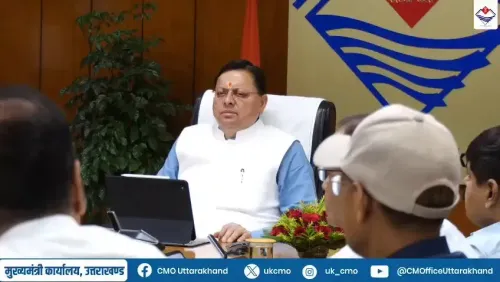
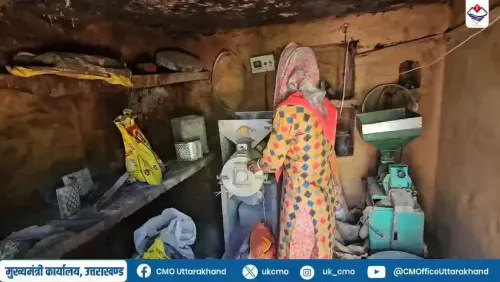
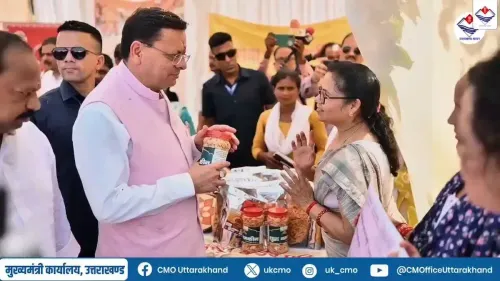
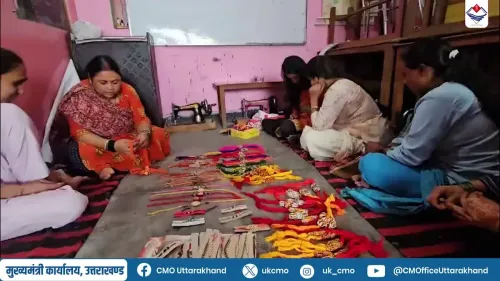
The CMO's post included a video documenting the group's journey, part of a broader government strategy to highlight district-level success stories under the scheme.
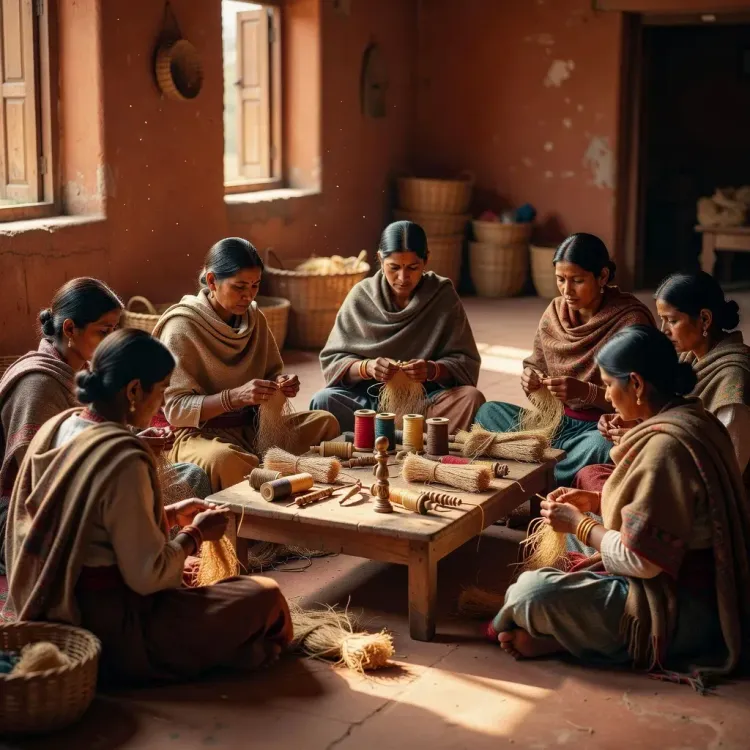
Seven women from a remote Kumaon village have quietly rewritten what self-reliance looks like in the hills of Uttarakhand. The Chief Minister's Office of Uttarakhand on Saturday, 21 November 2026, spotlighted the Ganga Swayam Sahayata Samuh of Dudhouri village, Champawat district — a seven-member women's self-help group that has emerged as a model of grassroots empowerment under the state's Gramotthan Pariyojana.
Dudhouri's Seven: How One Village Group Became a State Showcase
The CMO's post described the group as 'mahila sashaktikaran ki ek behtareen misal' — 'a fine example of women's empowerment' — crediting Chief Minister Pushkar Singh Dhami's vision for enabling the transformation. By joining the Gramotthan Pariyojana, the seven members of the Ganga group have, in the government's words, 'aatmanirbharta ki nayi ibarat likhi hai' — 'written a new chapter of self-reliance.' The post carries a video documenting their journey, lending a human face to what is otherwise a district-level policy story.
What the Gramotthan Pariyojana Is Designed to Do
The Gramotthan Pariyojana is an Uttarakhand government scheme aimed at building village-level self-reliance through community groups and livelihood activities. Champawat, a district in Uttarakhand's Kumaon division, sits squarely in the kind of remote hill geography the scheme targets — areas where economic opportunity is thin and out-migration has long been a pressure valve. Self-help groups become anchors: they create local income, keep households in place, and build collective bargaining power for women who might otherwise have none.
Uttarakhand administrations have consistently promoted SHGs as a tool to plug the economic gap in far-flung hill districts. The Dhami government's decision to amplify individual district success stories — rather than only citing aggregate numbers — signals a deliberate communication strategy: make the policy feel personal, not bureaucratic.
The Bigger Fight Against Hill Out-Migration
The Ganga group's story sits inside a larger, stubborn challenge. Uttarakhand's hill districts have seen steady depopulation for decades as working-age residents leave for the plains in search of jobs. Women-led self-help groups, when they work, do double duty: they generate income and give families a reason to stay. A functioning SHG in Dudhouri is, in that sense, a small but concrete counter to a demographic trend that state planners have struggled to reverse.
Whether the Gramotthan Pariyojana is being scaled to other villages in Champawat — and what measurable income gains the Ganga group has logged — remain details the government has yet to put on public record. What Saturday's post does establish is that the scheme has at least one district-level success story the Chief Minister's Office considers worth broadcasting.
Seven women in a Kumaon village started something. The question now is how many more villages are next.
Point of View
Making policy feel tangible to a rural audience. For CM Dhami, who took office in 2021, amplifying grassroots women's empowerment narratives serves a dual purpose: it reinforces his administration's development credentials while addressing Uttarakhand's long-standing out-migration problem through a human lens. The Gramotthan Pariyojana fits within a national pattern of state governments leveraging self-help group models to demonstrate welfare delivery at the last mile. Until measurable income data and scale figures for the scheme are made public, however, the story remains compelling but incomplete.
NationPress
21 Nov 2026
Frequently Asked Questions
What is the Gramotthan Pariyojana in Uttarakhand?
The Gramotthan Pariyojana is an Uttarakhand government scheme designed to promote village-level self-reliance by supporting community groups — particularly women's self-help groups — in building local livelihoods, especially in remote hill districts.
What is the Ganga Swayam Sahayata Samuh?
The Ganga Swayam Sahayata Samuh is a women's self-help group based in Dudhouri village, Champawat district, Uttarakhand, consisting of seven members who have pursued self-reliance through the state's Gramotthan Pariyojana.
Where is Dudhouri village located?
Dudhouri village is located in Champawat district, which is part of the Kumaon division of Uttarakhand in northern India.
What is CM Pushkar Singh Dhami's role in this initiative?
Chief Minister Pushkar Singh Dhami, who has led Uttarakhand since 2021, is credited by the state government with providing the vision behind the Gramotthan Pariyojana under which the Ganga self-help group has achieved self-reliance.
Why are self-help groups important in Uttarakhand's hill districts?
Self-help groups in Uttarakhand's hill districts help create local income and economic opportunity, which can reduce out-migration — a long-standing challenge in remote Kumaon and Garhwal areas where jobs are scarce.