CM Dhami secures final forest nod for 72 MW Tyuni-Plasu hydro project
Synopsis
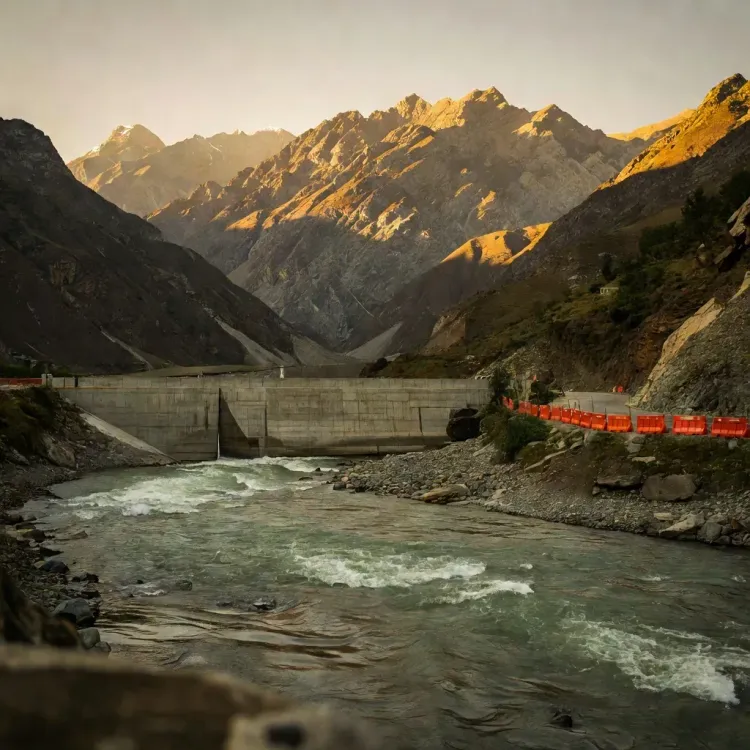
The Central Government has granted final forest clearance to UJVN Limited's 72 MW Tyuni-Plasu Hydroelectric Project in Uttarakhand, removing the last major regulatory hurdle before construction can begin. CM Pushkar Singh Dhami's office credited his persistent efforts for securing the approval.
Key Takeaways
The Central Government has granted final (Stage-II) forest clearance under the Forest (Conservation) Act, 1980 to the Tyuni-Plasu Hydroelectric Project.
The project has a capacity of 72 megawatts and is developed by state utility UJVN Limited (Uttarakhand Jal Vidyut Nigam Limited) .
The clearance was announced on October 31, 2026 by the Chief Minister's Office of Uttarakhand.
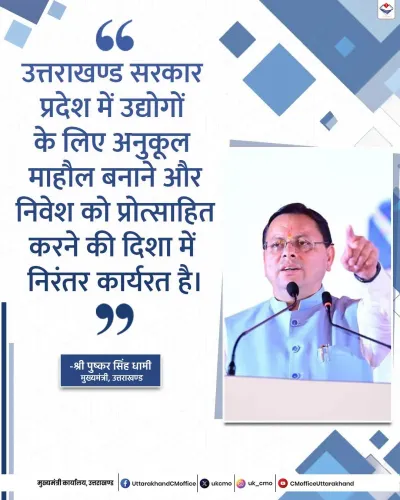
The approval is attributed to the continued efforts of Chief Minister Pushkar Singh Dhami , who has been in office since March 2021.
Final forest clearance is one of the last major statutory hurdles before physical construction work can commence on Himalayan hydro projects.
Next steps include land acquisition, environmental management compliance, and finalising a power purchase agreement.
A critical regulatory milestone just cleared in Uttarakhand — the Central Government has granted final forest clearance to the 72 megawatt Tyuni-Plasu Hydroelectric Project under UJVN Limited, removing one of the last statutory hurdles standing between the state and a significant boost to its power generation capacity. The Chief Minister's Office of Uttarakhand announced the approval on Saturday, October 31, 2026, crediting the persistent efforts of Chief Minister Pushkar Singh Dhami.
The official post, in Hindi, states: 'Mukhyamantri Shri Pushkar Singh Dhami ke nirantar prayason ke phalasvaroop UJVN Limited ki 72 megawatt kshamata ki Tyuni-Plasu Jal Vidyut Pariyojana ko Bharat Sarkar se mili antim van svikruti.' — translated: 'As a result of Chief Minister Shri Pushkar Singh Dhami's continued efforts, the 72 MW Tyuni-Plasu Hydroelectric Project of UJVN Limited has received final forest clearance from the Government of India.'What final forest clearance actually means
Under the Forest (Conservation) Act, 1980, any infrastructure project that requires diversion of forest land must secure prior approval from the Ministry of Environment, Forest and Climate Change in a multi-stage process. The 'final' clearance — also called Stage-II clearance — is the definitive green light that allows physical diversion of forest land to begin. It is, in practical terms, the signal that ground-breaking can proceed.
For hydro projects tucked into the ecologically sensitive Himalayas, this clearance is rarely routine. Hill states including Uttarakhand and Himachal Pradesh have historically watched project timelines slip by years as files moved through Delhi. Getting to Stage-II is a genuine achievement, not a paperwork formality.
UJVN's role and Uttarakhand's hydro ambitions
Uttarakhand Jal Vidyut Nigam Limited (UJVN Limited) is the state-owned utility tasked with developing and operating Uttarakhand's hydroelectric portfolio. The state's power policy — anchored since the early 2000s in unlocking its vast Himalayan river potential — has consistently looked to small and medium hydro projects as the backbone of its generation strategy.
A 72 MW project is squarely in that medium-scale band: large enough to make a measurable difference to the grid, small enough to move faster through the regulatory pipeline than the mega-dams of an earlier era. With forest clearance now in hand, the focus shifts to remaining statutory steps, land acquisition, and agreeing a power purchase arrangement before construction can commence in earnest.
Dhami's persistent push — and what comes next
Chief Minister Dhami, in office since March 2021, has consistently framed energy self-sufficiency as a development priority for the hill state. The CMO's specific attribution of this clearance to his 'continuous efforts' signals that the approval involved active political engagement at the Centre — not merely bureaucratic process.
The hard work is not over. Project teams must now move on land acquisition, environmental management plans, and securing a viable power purchase agreement before a shovel breaks ground. But the forest clearance was the gate. Uttarakhand just walked through it.
Point of View
The announcement fits a clear political pattern: positioning himself as an effective interlocutor with the BJP-led central government on development files that matter to the state's economy. More broadly, this clearance is a small but concrete data point in the ongoing debate about how India balances Himalayan ecology with energy security — a tension that only grows sharper as climate pressures mount and power demand rises across the northern grid.
NationPress
31 Oct 2026
Frequently Asked Questions
What is the Tyuni-Plasu Hydroelectric Project?
The Tyuni-Plasu Hydroelectric Project is a 72 megawatt hydropower scheme being developed by UJVN Limited (Uttarakhand Jal Vidyut Nigam Limited), the state-owned power utility of Uttarakhand.
What is final forest clearance for a hydroelectric project in India?
Under the Forest (Conservation) Act, 1980 , infrastructure projects that divert forest land must obtain central government approval in stages. Final or Stage-II clearance from the Ministry of Environment, Forest and Climate Change is the definitive permission allowing actual diversion of forest land to begin, and is one of the last major regulatory gates before construction.
Who is responsible for building the Tyuni-Plasu project?
UJVN Limited (Uttarakhand Jal Vidyut Nigam Limited) is the Uttarakhand state-owned utility responsible for developing and operating the Tyuni-Plasu Hydroelectric Project.
What happens now that the Tyuni-Plasu project has received forest clearance?
With final forest clearance secured, the project team must now progress on remaining steps including land acquisition, environmental management plan implementation, and finalising a power purchase agreement before physical construction can commence.
Why do Himalayan hydro projects face delays in getting forest clearances?
Hydroelectric projects in Himalayan states like Uttarakhand are located in ecologically sensitive areas, making the multi-stage central clearance process under the Forest (Conservation) Act particularly rigorous. Historically, delays in these approvals have significantly extended project timelines for state utilities across Uttarakhand and Himachal Pradesh.