CM Dhami Pushes Badrinath Dham Master Plan Redevelopment
Synopsis
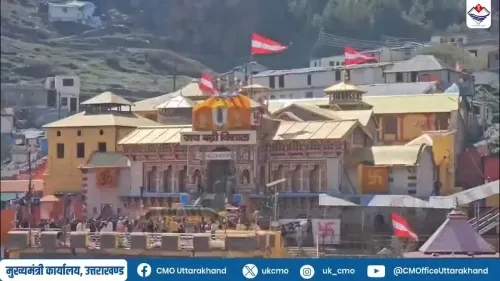
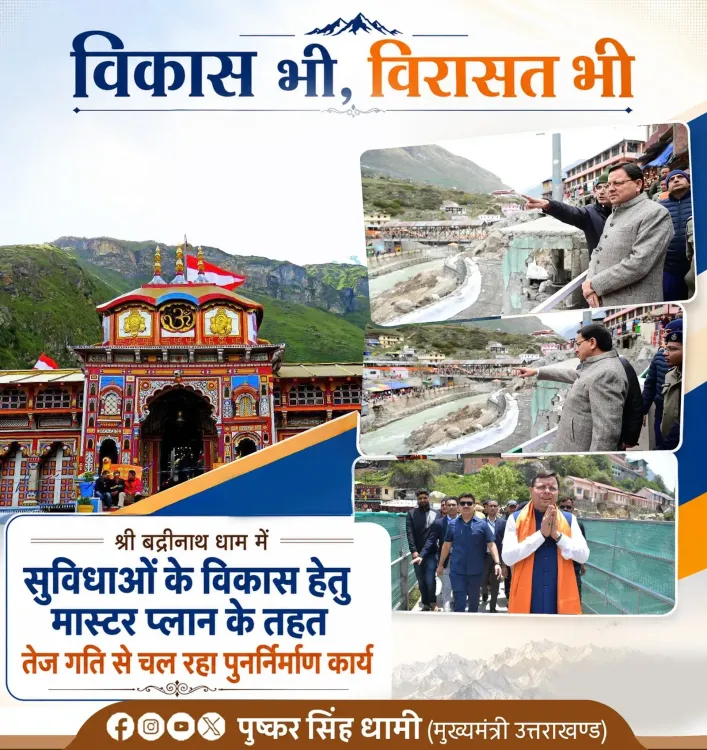
Uttarakhand Chief Minister Pushkar Singh Dhami on 22 June 2026 announced that reconstruction under the Badrinath Dham master plan is accelerating, with the government focused on modern pilgrim amenities, improved infrastructure, and preservation of the shrine's sacred character.
Key Takeaways
CM Pushkar Singh Dhami confirmed on 22 June 2026 that Badrinath Dham master plan reconstruction work is progressing at a fast pace.
The government's stated goals are modern pilgrim facilities, better infrastructure, and protection of the dham's divinity.
The initiative is part of a broader post- 2013 Kedarnath disaster push to rebuild and upgrade all four Char Dham sites.
The PRASHAD scheme and the Char Dham all-weather road project (approved 2016 ) provide the central policy and funding framework for such works.
Key stakeholders include pilgrims, the Uttarakhand tourism sector, and local economies in towns such as Joshimath and Chamoli .
Parallel redevelopment at Kedarnath , Yamunotri , and Gangotri makes the full Char Dham circuit a region-wide infrastructure priority.
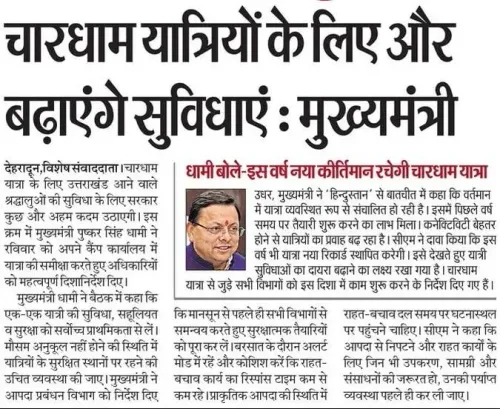
Uttarakhand Chief Minister Pushkar Singh Dhami on Monday, 22 June 2026, reaffirmed his government's commitment to the ongoing redevelopment of Badrinath Dham, stating that reconstruction work under the site's master plan is progressing at an accelerated pace. The announcement underscores the state's dual focus on modernising pilgrim facilities while preserving the sacred character of one of India's most revered Himalayan shrines.
Context
Pushkar Singh Dhami posted in Hindi, writing that his government is continuously working to develop modern amenities for pilgrims, build better infrastructure, and protect the divinity of the dham. 'यह पहल आस्था, सुविधा और विरासत के संरक्षण का उत्कृष्ट माध्यम है' — translated as 'This initiative is an excellent medium for the preservation of faith, convenience, and heritage' — encapsulates the stated three-pronged vision driving the project.
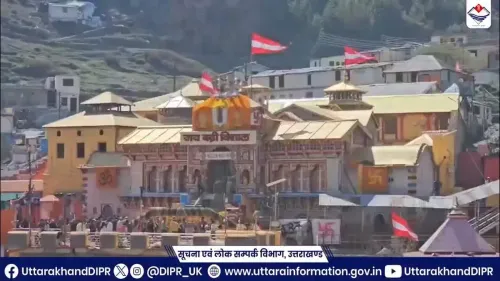
Badrinath Dham, situated in the upper Chamoli district of Uttarakhand in the Himalayas, is one of the four sacred Char Dham pilgrimage sites dedicated to Lord Vishnu. It draws hundreds of thousands of devotees each year during the pilgrimage season, placing significant pressure on existing infrastructure.
Policy Backdrop
The Badrinath master plan is part of a broader pattern of Himalayan pilgrimage redevelopment that gained urgency after the 2013 Kedarnath floods, which devastated infrastructure across the region and exposed the vulnerability of high-altitude religious sites to natural disasters. Since then, both state and central governments have prioritised rebuilding and upgrading Char Dham sites with an emphasis on blending modern amenities with environmental and cultural safeguards.
At the central level, the PRASHAD scheme — the Pilgrimage Rejuvenation and Spiritual, Heritage Augmentation Drive — was launched to fund infrastructure improvements at religious sites nationwide, with Char Dham destinations among its key beneficiaries. Separately, the Char Dham all-weather road project, which received central approval in 2016, aims to provide year-round vehicular connectivity to Badrinath, Kedarnath, Yamunotri, and Gangotri, significantly easing access for pilgrims and emergency services alike.
The Badrinath master plan operates within this layered policy framework, targeting upgrades to reception areas, pedestrian corridors, sanitation, lodging facilities, and ghats, while retaining the temple precinct's traditional architectural character.
Stakeholders and Impact
The primary beneficiaries of the redevelopment are the pilgrims who undertake the Badrinath yatra each season, many of whom are elderly or travel from distant states and require accessible, safe facilities at high altitude. Improved infrastructure is expected to reduce congestion around the temple complex and enhance the overall experience of the visit.
The Uttarakhand tourism sector stands to gain substantially as well. Upgraded Char Dham infrastructure supports longer visitor stays, higher spending, and greater economic activity in surrounding towns such as Joshimath and Chamoli. Local traders, hoteliers, and transport operators are among those with a direct stake in the project's timely completion.
Heritage conservationists and environmental groups continue to watch the project closely, given the ecological sensitivity of the Alaknanda river valley and the seismic vulnerability of the Himalayan terrain. The master plan's stated commitment to preserving the dham's 'divinity' suggests the government is cognisant of these concerns, though the balance between development and conservation remains a subject of ongoing public discourse.
What's Next
Parallel redevelopment works are under way at Kedarnath, Yamunotri, and Gangotri, making the Char Dham circuit a region-wide infrastructure priority for the Dhami government. The phased rollout of the Badrinath master plan — covering construction of new pilgrim facilities, beautification of the riverfront, and road-widening approaches — will be a key metric by which the administration's delivery record is assessed ahead of future electoral cycles.
As pilgrim footfall at Himalayan shrines continues to rise year on year, the pace and quality of the Badrinath redevelopment will set a template for how India manages the intersection of mass religious tourism, cultural heritage, and mountain ecology.
Point of View
Framing development not as disruption but as an act of devotion. The messaging fuses religious sentiment with governance delivery, a political register the BJP has refined across multiple Himalayan shrine projects since 2014. By invoking faith, convenience, and heritage simultaneously, the administration preempts criticism from both conservationists and pilgrims' groups. The real test will come when specific phases of the master plan are completed and independently assessed for quality, environmental compliance, and accessibility.
NationPress
20 Sept 2026
Frequently Asked Questions
What is the Badrinath Dham master plan?
The Badrinath Dham master plan is a government-approved redevelopment blueprint for the Char Dham pilgrimage site in Uttarakhand, covering upgrades to pilgrim facilities, pedestrian corridors, riverfront beautification, and sanitation, while aiming to preserve the temple precinct's traditional heritage character.
Who is overseeing the Badrinath redevelopment project?
The Uttarakhand state government under Chief Minister Pushkar Singh Dhami is overseeing the project, with support from central schemes such as the PRASHAD programme and the Char Dham all-weather road project.
What is the PRASHAD scheme and how does it relate to Badrinath?
PRASHAD — Pilgrimage Rejuvenation and Spiritual, Heritage Augmentation Drive — is a central government scheme to fund infrastructure at religious sites across India. Char Dham destinations including Badrinath are among its key beneficiaries for pilgrim facility upgrades.
Why is Badrinath Dham infrastructure being upgraded?
Rising pilgrim footfall, the vulnerability exposed by the 2013 Kedarnath floods, and the need for modern amenities at high-altitude sites have driven the push to upgrade Badrinath and other Char Dham shrines with better roads, sanitation, lodging, and safety infrastructure.
What other Char Dham sites are being redeveloped alongside Badrinath?
Parallel redevelopment works are under way at Kedarnath, Yamunotri, and Gangotri, making all four Char Dham sites part of a region-wide infrastructure priority for the Uttarakhand government.