CM Dhami Outlines Uttarakhand Govt's Four Pillar Work Culture
Synopsis
Chief Minister Pushkar Singh Dhami has articulated Uttarakhand's administrative philosophy as rooted in four principles: simplification, resolution, disposal, and citizen satisfaction — reflecting the BJP led state government's stated focus on efficient, citizen centric governance.
Key Takeaways
CM Pushkar Singh Dhami publicly stated that the Uttarakhand government's work culture is based on four pillars: simplification, resolution, disposal, and satisfaction.
The statement was shared by the official Chief Minister's Office of Uttarakhand account on X on 13 July 2026 .
The Dhami administration has since 2021 pushed for paperless administration and online grievance portals in the state.
The four pillar framework mirrors administrative slogans adopted by other BJP governed states aligned with national digital governance themes.
Uttarakhand's mountainous geography makes citizen centric service delivery a particular governance priority for the state.
Implementation will be assessed through future circulars, budget announcements, and measurable grievance disposal timelines.
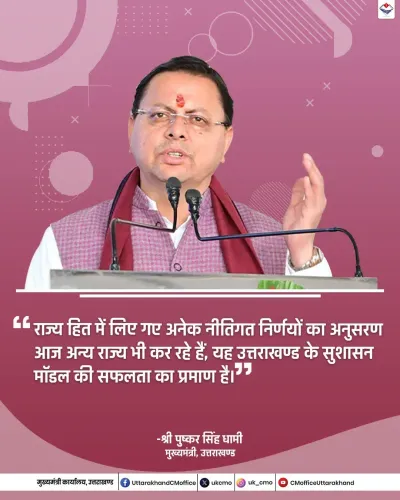
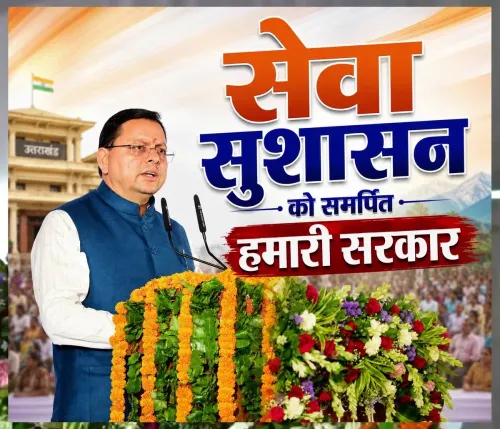
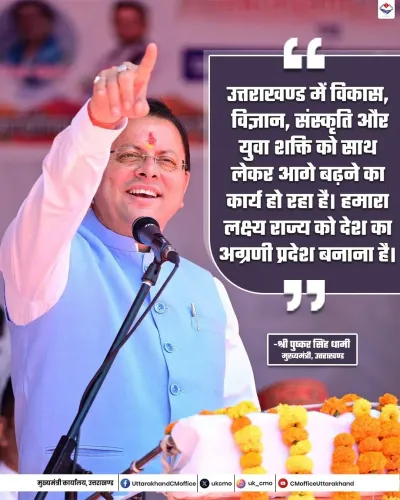
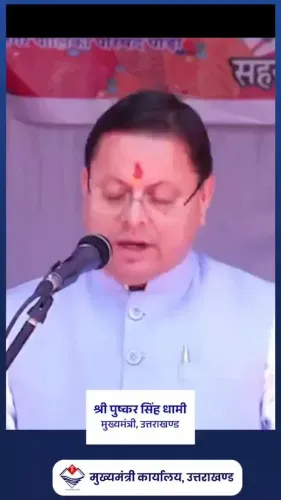
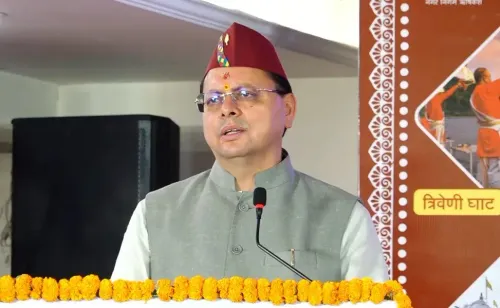
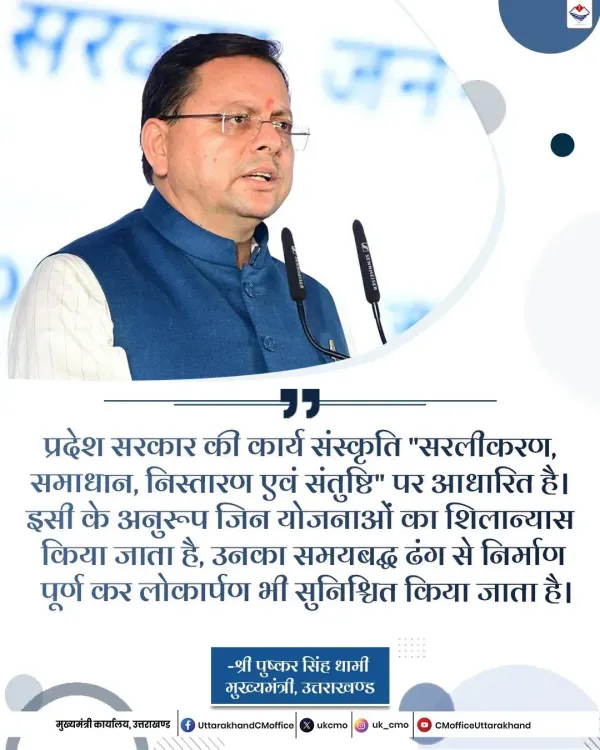
The Chief Minister's Office of Uttarakhand, on Monday, 13 July 2026, quoted Chief Minister Pushkar Singh Dhami articulating the state government's core administrative philosophy — one built on four guiding principles of simplification, resolution, disposal, and citizen satisfaction.
In his statement, CM Dhami declared: 'Pradesh sarkar ki karya sanskriti "saraleekarana, samadhan, nistarana evam santushti" par aadhaarit hai' — meaning, 'The state government's work culture is based on simplification, resolution, disposal, and satisfaction.' The remark encapsulates the administrative ethos the BJP led Uttarakhand government has sought to project since Dhami assumed office in March 2021.
Context
Pushkar Singh Dhami, who leads the Uttarakhand government from Dehradun, has consistently emphasised streamlining state delivery mechanisms. The four word framework — simplification, resolution, disposal, and satisfaction — is presented as the cultural foundation guiding how the state bureaucracy is expected to interact with citizens. The statement was shared by the official Chief Minister's Office account on X, signalling that this is an official government communication rather than a campaign remark.Policy Backdrop
Since the 2022 Uttarakhand assembly elections, the Dhami administration has pushed for paperless administration, online grievance portals, and faster disposal of citizen applications. These initiatives align with the broader national thrust on minimum government and maximum governance, a theme central to BJP governed states since 2014. The four pillar mantra mirrors similar administrative slogans adopted in other BJP ruled states, where process simplification and digital governance have been projected as markers of efficient delivery. Uttarakhand, carved out as a separate state in 2000, has particular governance challenges given its mountainous terrain and dispersed population, making efficient service delivery a perennial priority.Stakeholders and Impact
The primary beneficiaries of such a governance philosophy, if translated into practice, are Uttarakhand's citizens — particularly those in remote hill districts who have historically faced delays in accessing government services. The state bureaucracy is the key implementing body, and public statements of this nature are often accompanied by internal circulars or performance benchmarks for departments. For the ruling BJP, articulating a clear administrative identity serves both a governance and a political purpose, projecting competence ahead of future electoral cycles. Civil society groups and opposition parties in the state will likely assess whether the stated philosophy is backed by measurable improvements in grievance redressal timelines.What's Next
The practical test for this four pillar framework lies in the details: whether upcoming budget sessions or government circulars introduce specific timelines for grievance disposal, measurable targets for e governance dashboards, or citizen satisfaction indices. Observers will watch for any follow up policy announcements from the Uttarakhand secretariat that operationalise the principles CM Dhami has publicly articulated. A governance culture statement carries weight only when it is backed by institutional mechanisms — and that accountability will define how this declaration is ultimately judged.Point of View
Quotable framework. It connects to the broader national narrative of 'minimum government, maximum governance' that has defined BJP's political brand since 2014, giving state level leaders a ready vocabulary to project efficiency. The real analytical question is whether this statement precedes a concrete policy push — such as mandated grievance disposal timelines or a public facing satisfaction index — or whether it remains an aspirational positioning exercise. In either case, it sets a public benchmark against which the Dhami administration's delivery record can be measured.
NationPress
12 Oct 2026
Frequently Asked Questions
What is Uttarakhand CM Dhami's governance philosophy?
CM Pushkar Singh Dhami has stated that the Uttarakhand government's work culture is based on four principles: simplification, resolution, disposal, and citizen satisfaction, as communicated by the Chief Minister's Office on 13 July 2026.
What does 'saraleekarana, samadhan, nistarana evam santushti' mean?
The Hindi phrase translates to 'simplification, resolution, disposal, and satisfaction' — the four pillars CM Dhami has outlined as the foundation of the Uttarakhand state government's administrative culture.
What governance reforms has Uttarakhand introduced under Dhami?
Since 2021, the Dhami administration has promoted paperless administration, online grievance portals, and faster disposal of citizen applications, aligned with national digital governance priorities.
Is Uttarakhand a BJP governed state?
Yes, Uttarakhand has been governed by the BJP since 2017, and Pushkar Singh Dhami has served as Chief Minister since March 2021, winning re election after the 2022 assembly elections.
How does Uttarakhand's governance challenge differ from other states?
Uttarakhand's mountainous terrain and dispersed population make efficient service delivery especially challenging, making citizen centric administrative reform a recurring policy priority for successive state governments.