CM Dhami: Uttarakhand politics now about service, not power
Synopsis
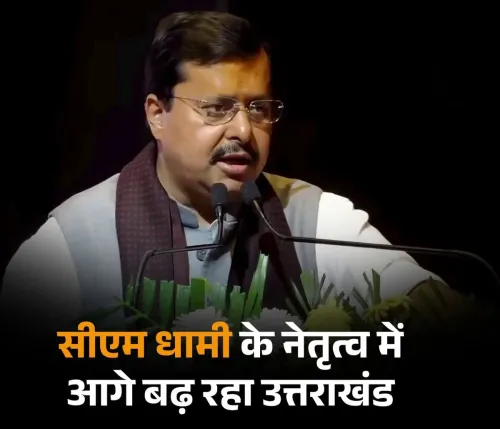
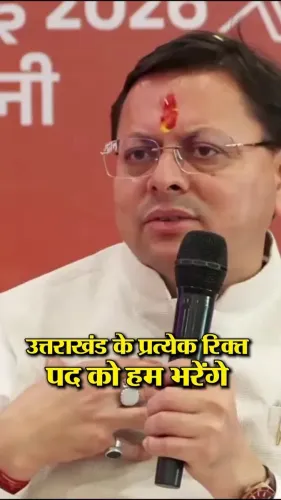
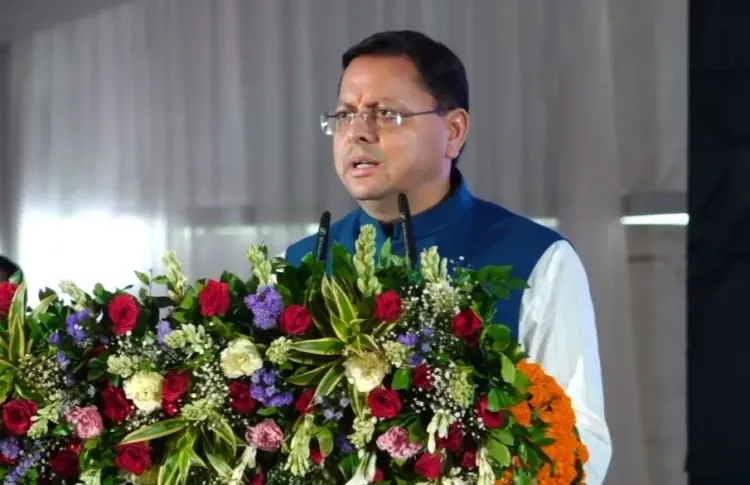
Chief Minister Pushkar Singh Dhami declared on 4 July 2026 that Uttarakhand's politics has shifted from power and promises to service and results, drawing a sharp contrast with the state's history of frequent government changes.
Key Takeaways
CM Pushkar Singh Dhami stated that the era of governments changing without improving public welfare is over in Uttarakhand .
He defined the current political philosophy as centred on seva (service), performance, and results — not power, position, or promises.
Uttarakhand alternated between Congress and BJP governments from its formation in 2000 until the BJP's consecutive victory in 2022 .
The statement was shared by the Chief Minister's Office on 4 July 2026 , signalling a deliberate pre-election narrative push.
The 2027 Uttarakhand assembly elections will be the key test of whether voters endorse this governance framing.
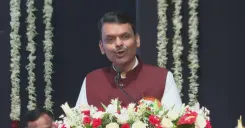
The Chief Minister's Office of Uttarakhand, on Saturday, 4 July 2026, shared a statement by Chief Minister Pushkar Singh Dhami asserting a fundamental shift in the state's governance philosophy — from political power-seeking to measurable public service delivery.
Context
Speaking to the people of Uttarakhand, CM Dhami remarked: 'Pradesh ki janta ne woh samay bhi dekha, jab sarkaarein badlati raheen, lekin janta ki taqdeer nahin badli.' ['The people of the state have seen those times when governments kept changing, but the fate of the people did not change.'] He added that politics in the state is now centred on 'service, not power; performance, not position; and results, not promises.'
The statement reflects a deliberate rhetorical posture — drawing a contrast between the state's pre-2017 era of frequent government turnovers and the current administration's self-described results-oriented approach.
Policy Backdrop
Uttarakhand, carved out as a separate state in 2000, spent its first two decades cycling between Congress and BJP governments, with no party winning back-to-back majorities until the BJP's return to power in 2022 under Dhami. That consecutive mandate was widely interpreted as a public endorsement of the BJP's governance record in the state.
Since 2017, successive BJP administrations in Uttarakhand have anchored their public communication around infrastructure expansion, tourism development, and administrative accountability. Dhami, who first took office in 2021, has continued and deepened that framing, frequently invoking delivery metrics over political rhetoric.
Stakeholders and Impact
The primary audience for this message is Uttarakhand's general population — a state of roughly 1.1 crore people whose livelihoods span agriculture, tourism, and remittance income from residents working outside the state. For these citizens, the promise of stable, outcome-focused governance carries direct implications for infrastructure, employment, and public services.
The statement also signals to party workers and administrative machinery that performance benchmarks — not political loyalty alone — will define the government's identity heading into the 2027 Uttarakhand assembly elections.
What's Next
Political observers will watch for upcoming state budget presentations and official performance-review reports that could quantify the 'results' CM Dhami references. The 2027 assembly elections will serve as the definitive test of whether voters in Uttarakhand accept the service-and-performance framing as a credible account of the current government's record. How the opposition responds to this narrative — and whether it can offer a counter-argument grounded in on-ground data — will shape the electoral contest in the months ahead.
Point of View
' he is pre-emptively neutralising anti-incumbency sentiment ahead of the 2027 elections. This mirrors a broader BJP playbook visible across several states, where the party attempts to shift voter evaluation from grievances to comparative performance. The durability of this message will depend entirely on whether the administration can back it with verifiable delivery data before the election cycle intensifies.
NationPress
4 Jul 2026
Frequently Asked Questions
What did CM Pushkar Singh Dhami say about Uttarakhand's governance?
CM Dhami said the state's politics has shifted from seeking power and making promises to focusing on service, performance, and results — contrasting the current administration with past governments that changed frequently without improving public welfare.
Why does Uttarakhand have a history of frequent government changes?
Since its formation in 2000, Uttarakhand alternated between Congress and BJP governments every five years, with no party winning a consecutive majority until the BJP's re-election in 2022 under CM Dhami.
When are the next Uttarakhand assembly elections?
The next Uttarakhand assembly elections are expected in early 2027, and they will be a key test of whether voters accept the BJP's service-and-performance narrative.
What is the BJP's governance approach in Uttarakhand?
Since 2017, BJP governments in Uttarakhand have focused on infrastructure, tourism development, and administrative accountability, framing their record around measurable outcomes rather than political rhetoric.
Who is Pushkar Singh Dhami?
Pushkar Singh Dhami is the Chief Minister of Uttarakhand and a BJP leader who first took office in 2021 and led the party to a consecutive election victory in 2022.