CM Dhami Vows Quality Education for Every Child in Uttarakhand
Synopsis
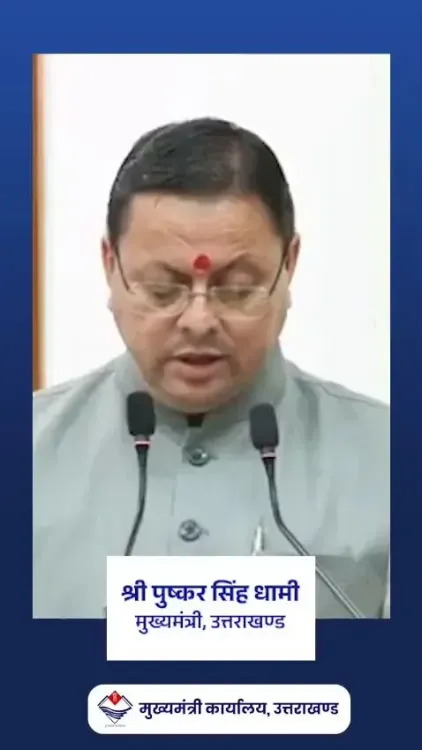
Chief Minister Pushkar Singh Dhami has declared an unwavering government resolve to ensure every child in Devbhoomi Uttarakhand receives both good values and quality education, reinforcing the state's alignment with the National Education Policy 2020.
Key Takeaways
CM Pushkar Singh Dhami described the commitment to child education in Uttarakhand as a vikalp rahit sankalp — an unconditional, non-negotiable resolve.
The statement emphasises both sanskar (values) and shiksha (formal education), reflecting the dual focus of NEP 2020 .
Uttarakhand began phased implementation of the National Education Policy 2020 from 2021 , integrating moral and cultural education into school curricula.
The state's identity as Devbhoomi — the Land of the Gods — has consistently shaped how successive governments frame education and cultural preservation together.
Schoolchildren across Uttarakhand's hill districts, where access to quality schooling remains uneven, are the primary intended beneficiaries.
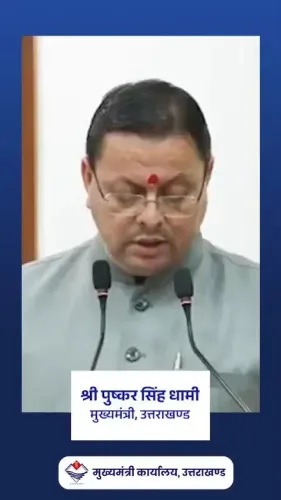
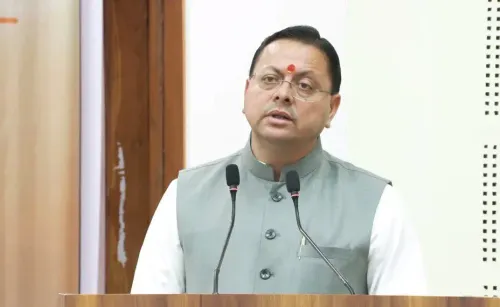
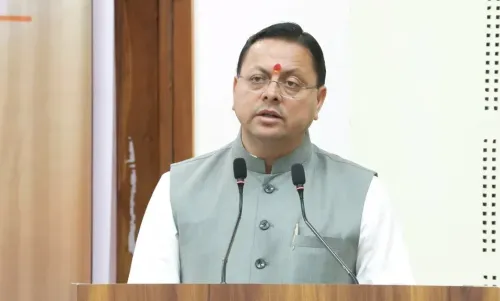
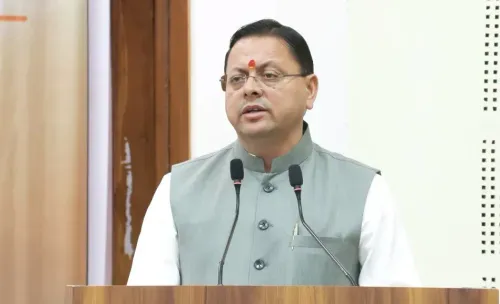
The Chief Minister's Office of Uttarakhand on Friday, 3 July 2026, shared a statement by Chief Minister Pushkar Singh Dhami reaffirming the state government's unconditional commitment to ensuring every child in Devbhoomi Uttarakhand receives both good values and quality education.
Context
Speaking on the state's education agenda, CM Dhami declared: 'Yeh hamari sarkar ka vikalp rahit sankalp hai ki Devbhoomi Uttarakhand mein pratyek bachche ko achhe sanskar aur achhi shiksha mile' — 'It is our government's unwavering resolve that every child in Devbhoomi Uttarakhand receives good values and a good education.' The phrase vikalp rahit sankalp, meaning 'resolve without alternative' or 'unconditional commitment', signals that this is framed not as a policy aspiration but as a non-negotiable obligation of the state.
The statement carries particular weight in a state that has long identified itself through its spiritual and cultural heritage, with Uttarakhand officially recognised as Devbhoomi — the 'Land of the Gods'. Successive state governments have tied educational goals to the preservation of this cultural identity.
Policy Backdrop
Uttarakhand began phased implementation of the National Education Policy (NEP) 2020 from 2021, restructuring school curricula to integrate moral and cultural education alongside academic skills. The central framework explicitly calls for holistic development, encompassing ethics, heritage, and foundational literacy — aligning closely with the 'good values and good education' formulation used by CM Dhami.
Himalayan states, including Uttarakhand, have taken this a step further by weaving regional cultural identity into curriculum framing. This reflects a broader pattern across Indian states of adapting central education guidelines to local contexts since 2020, with value education emerging as a consistent thread in state-level policy communication.
Stakeholders and Impact
The primary beneficiaries of this commitment are Uttarakhand's schoolchildren — a population spread across challenging mountain terrain, where access to quality schooling has historically been uneven between urban centres and remote hill districts. State educators and school administrators are the key implementers, responsible for translating policy intent into classroom outcomes.
The dual emphasis on sanskar (values or cultural upbringing) and shiksha (formal education) reflects a deliberate framing that resonates with parent communities in the state, where traditional values and modern academic achievement are both seen as markers of a successful education system.
What's Next
Observers will look to the Uttarakhand state education department for concrete follow-through — including curriculum revision updates, teacher training modules, and enrollment figures — likely to surface in the next annual budget cycle. The statement is expected to set the political tone for education-related announcements in the months ahead.
As Indian states continue refining their implementation of NEP 2020, Uttarakhand's articulation of an 'unwavering resolve' on education positions CM Dhami's government to be judged against measurable outcomes in school access, quality, and value integration across the state's diverse geography.
Point of View
Designed to signal irreversibility. It connects to a broader pattern in which BJP-governed states have used NEP 2020 implementation as a vehicle for simultaneously advancing academic outcomes and cultural consolidation. For Uttarakhand, a state whose political identity is inseparable from its spiritual geography, tying 'good values' to 'good education' in a single breath is both a governance statement and a cultural assertion. The real test will be whether this resolve translates into measurable improvements in school infrastructure, teacher deployment, and learning outcomes across remote hill districts.
NationPress
3 Jul 2026
Frequently Asked Questions
What did CM Pushkar Singh Dhami say about education in Uttarakhand?
CM Pushkar Singh Dhami declared it the government's unconditional resolve that every child in Devbhoomi Uttarakhand receives both good values and quality education, using the phrase vikalp rahit sankalp to stress the commitment is non-negotiable.
What is Devbhoomi Uttarakhand?
Devbhoomi, meaning 'Land of the Gods', is the official designation of Uttarakhand, a Himalayan state in northern India known for its religious and cultural significance. The term is frequently used by state leaders to frame governance in the context of the region's heritage.
How is Uttarakhand implementing the National Education Policy 2020?
Uttarakhand began phased implementation of NEP 2020 from 2021, restructuring school curricula to integrate moral and cultural education alongside academic subjects, in line with the policy's holistic development mandate.
What does 'sanskar aur shiksha' mean in CM Dhami's statement?
The phrase combines sanskar , meaning values or cultural upbringing, with shiksha , meaning formal education. Together they reflect the dual goal of producing well-rounded citizens grounded in both academic knowledge and ethical values.
Which children does Uttarakhand's education commitment target?
The commitment is directed at all schoolchildren across Uttarakhand, with particular relevance to students in remote hill districts where access to quality schooling has historically been more limited than in urban areas.