CM Dhami Welcomes 47-Day Eco Cycle Yatra at Dehradun
Synopsis
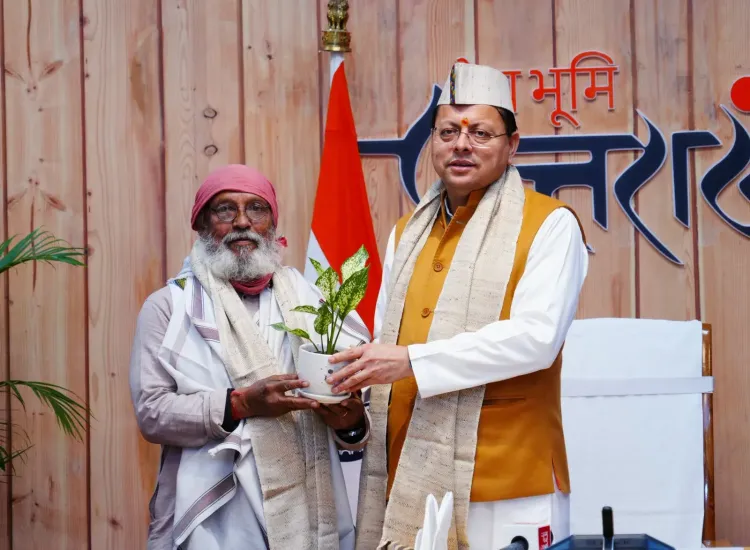
CM Pushkar Singh Dhami on 17 November 2026 welcomed cyclists completing a 47-day international eco cycle yatra led by Padma Bhushan Dr. Anil Prakash Joshi, underscored India–Nepal environmental cooperation, championed the Gross Environment Product metric, and unveiled the poster for the World Disaster Management Conference to be held in Dehradun from 28–30 November 2026.
Key Takeaways
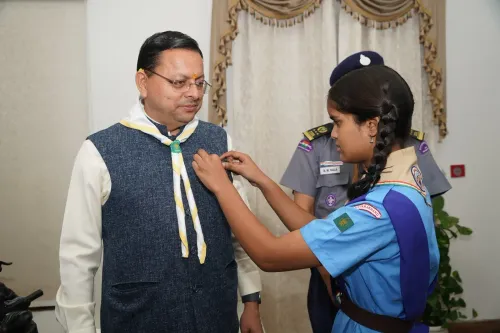
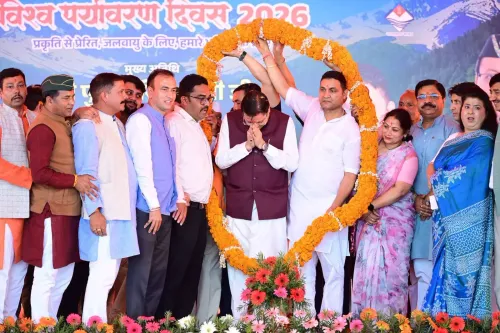
CM Dhami hosted the closing ceremony of the 47-day International Prakriti Path Cycle Yatra 2026 at his official Dehradun residence on 17 November 2026 .
The yatra was led by Padma Bhushan Dr.
Anil Prakash Joshi , renowned Himalayan ecologist and HESCO founder.
Dhami cited the Janakpur Dham–Ayodhya cultural bond to frame India–Nepal joint environmental action as a shared responsibility.
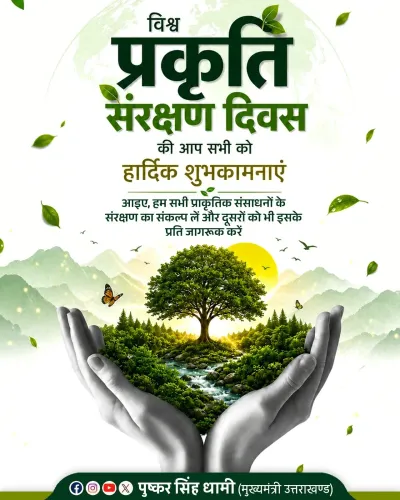
The Chief Minister endorsed Gross Environment Product (GEP) as a tool to balance ecology and economic development in Uttarakhand's planning.
The poster for the World Disaster Management Conference 2026 (28–30 November, Dehradun) was unveiled, marking the third anniversary of the Silkyara tunnel rescue of 41 workers .
Community participation, particularly by women and youth , was declared central to the state's conservation mission.
Forty-seven days, two nations, one Himalayan message — and on Tuesday, 17 November 2026, it all came home to Dehradun. Chief Minister Pushkar Singh Dhami presided over the grand closing ceremony of the International Prakriti Path Cycle Yatra 2026 at his official residence, welcoming the cyclists led by Padma Bhushan Dr. Anil Prakash Joshi back from their extraordinary cross-border journey.
A journey bigger than its distance
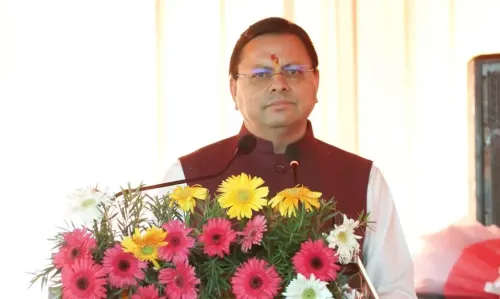
CM Dhami made clear this was no ordinary endurance event. 'Dr. Joshi's 47-day cycle journey is an inspiring example of his dedication, iron will and resolve towards nature and environmental conservation,' he said at the event. The yatra, he emphasised, was 'not merely a campaign to cover a long distance, but a meaningful effort to awaken society towards the conservation of jal, jungle, zameen [water, forest, land] and natural resources.'
Dr. Anil Prakash Joshi, founder of the Himalayan Environmental Studies and Conservation Organisation and a Padma Bhushan awardee, has built a decades-long reputation for translating ecological concern into grassroots action. This yatra continues that tradition at an international scale.
India–Nepal: shared rivers, shared risks
The Chief Minister used the occasion to frame environmental conservation explicitly as a bilateral India–Nepal imperative. 'The geographical and natural conditions of both countries are interconnected,' he said, pointing to centuries-old cultural and social ties symbolised by the Janakpur Dham–Ayodhya bond — a shared heritage he described through the phrase roti-beti ke aatmiya rishte [bonds of bread and kinship].
That cultural intimacy, Dhami argued, makes collective environmental action not optional but essential. Transboundary Himalayan watersheds, shared river systems, and common vulnerability to landslides and floods mean that a policy gap in one country becomes a disaster risk in the other.
Gross Environment Product and Uttarakhand's green ledger
One of the sharper policy notes the CM struck was his endorsement of the Gross Environment Product (GEP) concept — a metric Uttarakhand has been championing since around 2020–21 to place a measurable value on natural assets alongside conventional GDP. 'Development and environment are not adversaries,' Dhami said. 'Natural resources must be conserved as development plans move forward.'
He listed the state's conservation priorities — naule-dhare (traditional springs), chaal-khaal (rainwater catchment ponds), forests, rivers and biodiversity — pledging that community participation, especially of women and youth, would remain the government's 'non-negotiable commitment.'
Dehradun's World Disaster Management Conference: Silkyara's legacy on the agenda
The event carried a forward-looking announcement: CM Dhami unveiled the official poster for the World Disaster Management Conference 2026, to be held in Dehradun from 28 to 30 November 2026. Prof. Durgesh Pant, Director General of U-COST (Uttarakhand Council for Science and Technology), explained that the conference marks the third anniversary of the landmark Silkyara tunnel rescue of November 2023 — when 41 trapped workers were brought to safety after 17 harrowing days underground, in one of independent India's most dramatic rescue operations.
That rescue triggered hard questions about disaster preparedness in Himalayan infrastructure zones. The upcoming conference is positioned as a space to convert those lessons into lasting policy — with international participation expected given the yatra's cross-border dimension.
An Uttarakhand that leads a 47-day international eco-journey and then immediately anchors a global disaster-management summit in the same month is not just making a statement about conservation — it is positioning the Himalayan state as the intellectual and moral capital of mountain sustainability in South Asia.
Point of View
Institutionalised disaster policy.
NationPress
17 Nov 2026
Frequently Asked Questions
What is the International Prakriti Path Cycle Yatra 2026?
It is a 47-day international cycling expedition focused on raising awareness about environmental conservation — covering water, forest and land resources — led by Padma Bhushan Dr. Anil Prakash Joshi and concluding in Dehradun on 17 November 2026.
Who is Dr. Anil Prakash Joshi?
Dr. Anil Prakash Joshi is a Padma Bhushan awardee and the founder of the Himalayan Environmental Studies and Conservation Organisation (HESCO), widely recognised for grassroots ecology campaigns across the Himalayan region.
What is Gross Environment Product and why does Uttarakhand promote it?
Gross Environment Product (GEP) is a metric that attempts to measure the economic value of natural resources and environmental quality. Uttarakhand has championed it since around 2020–21 as a way to balance ecological conservation with conventional GDP-focused development planning.
What is the World Disaster Management Conference 2026?
The World Disaster Management Conference 2026 is scheduled from 28 to 30 November 2026 in Dehradun. It is being organised to mark the third anniversary of the November 2023 Silkyara tunnel rescue, in which 41 workers were safely extracted after 17 days underground.
What is the significance of the Silkyara tunnel rescue?
The Silkyara tunnel rescue of November 2023 was a landmark operation in Uttarakhand in which 41 workers trapped underground were brought to safety after 17 days, prompting nationwide attention to disaster preparedness standards in Himalayan infrastructure projects.