CM Fadnavis: 57,000 Satara Farmers Get Daytime Solar Power
Synopsis
On Independence Day 2026, Maharashtra's CMO announced that 57,000 farmers in Satara district now receive daytime solar electricity under the Mukhyamantri Saur Krishi Vahini Yojana, Chief Minister Devendra Fadnavis's scheme to solarize agricultural feeders and end the era of night-time irrigation.
Key Takeaways
57,000 farmers in Satara district are now covered under the Mukhyamantri Saur Krishi Vahini Yojana .
The scheme solarizes dedicated agricultural feeder lines, shifting farm power supply from night to daytime hours.
Chief Minister Devendra Fadnavis has been the political driver of the solar agricultural feeder programme, which dates to around 2018 .
The state scheme aligns with the central government's PM-KUSUM initiative to integrate renewables into agriculture.
Daytime solar power reduces distribution losses and lowers the subsidy burden on Maharashtra's electricity distribution companies.
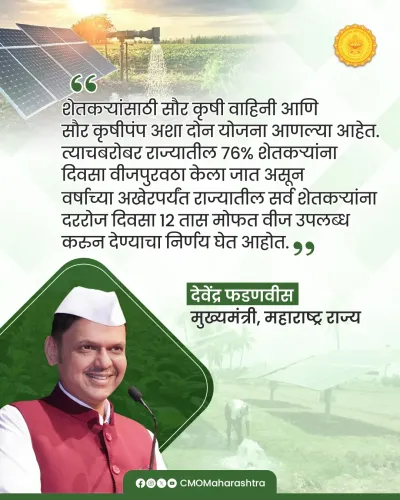
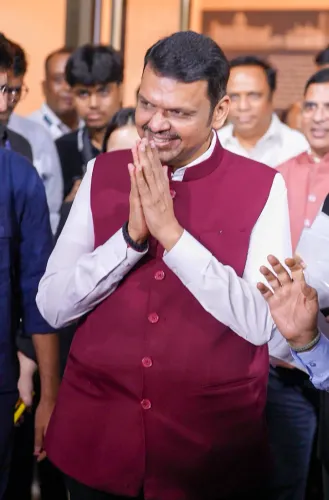
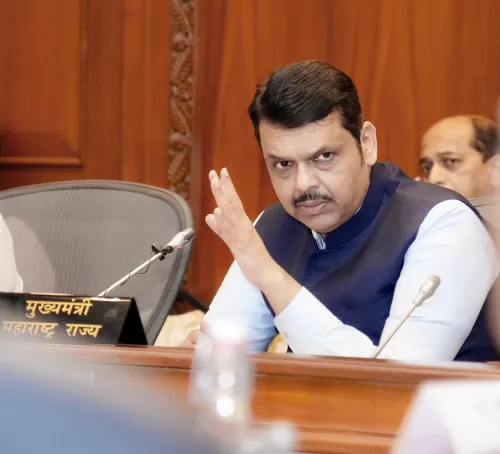
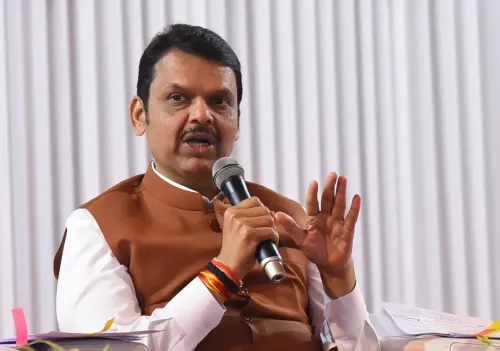
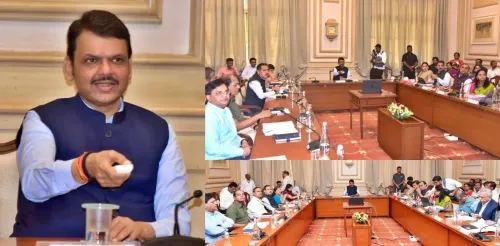
On Independence Day, 15 August 2026, the Chief Minister's Office of Maharashtra announced that 57,000 farmers in Satara district are now receiving daytime electricity — a shift made possible by the state's flagship Mukhyamantri Saur Krishi Vahini Yojana. For decades, Maharashtra's farm households ran their irrigation pumps in the dead of night; this scheme is rewriting that reality, feeder by feeder.
The CMO post, tagging Chief Minister Devendra Fadnavis, declared 'ऊर्जा स्वातंत्र्य' — 'energy freedom' — for the farmers of Satara, a district nestled in the Sahyadri ranges of western Maharashtra. The phrase lands with particular weight on a day the country marks its political independence.
What the Saur Krishi Vahini scheme actually does
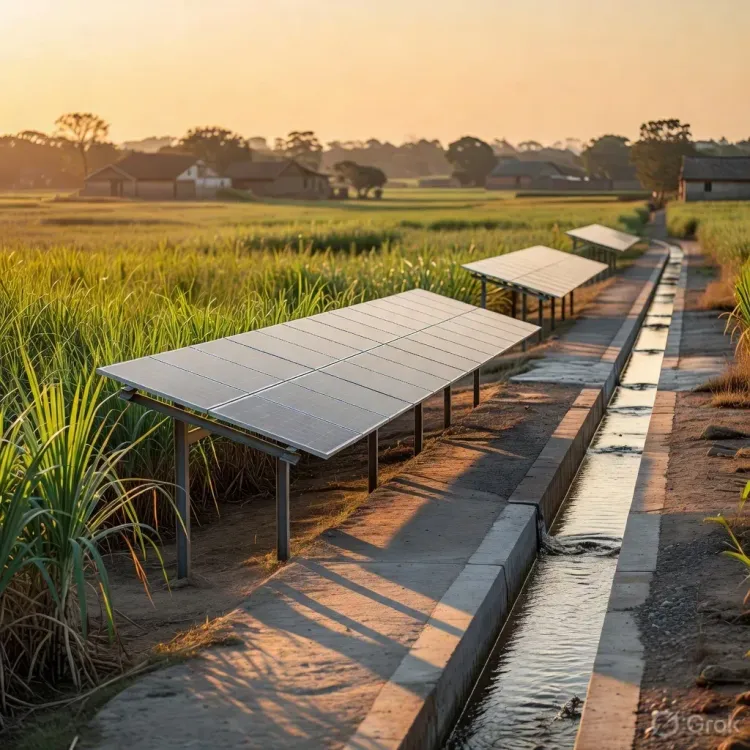
The Mukhyamantri Saur Krishi Vahini Yojana solarizes dedicated agricultural feeder lines, decoupling farm power supply from the general grid. Instead of drawing subsidised, often unreliable power at night, enrolled farmers get solar-generated electricity during daylight hours — precisely when pumps are most useful and when solar generation peaks. The logic is elegant: sun up, pumps running, no midnight alarms.
The programme traces its roots to the Fadnavis government's push around 2018 to restructure agricultural power delivery in Maharashtra. By attaching solar generation directly to dedicated farm feeders, the state simultaneously reduces distribution losses and trims the subsidy burden on its electricity distribution companies — a chronic fiscal pressure point for Maharashtra's power sector.
Satara as a test case for rural solar scale-up
Satara district has emerged as a visible milestone in this rollout. The district's terrain — a mix of irrigated sugarcane belts and rain-shadow dryland farms — makes reliable daytime power both economically significant and practically complex to deliver. Reaching 57,000 beneficiary farmers here signals that the feeder-solarization model is moving beyond pilot scale.
Maharashtra's approach also aligns with the central government's PM-KUSUM scheme, which incentivises states to solarize agricultural feeders and install standalone solar pumps. The state-level Saur Krishi Vahini Yojana effectively functions as Maharashtra's implementation vehicle for that broader national ambition.
The announcement on Independence Day is no accident — 'energy freedom' as a frame on 15 August carries obvious symbolic weight. Whether the remaining agricultural feeders across Maharashtra's 36 districts follow Satara's trajectory will be the real measure of the scheme's promise.
Point of View
The state attempts to solve the twin problem of unreliable supply and discom losses simultaneously, rather than treating them separately. The Independence Day framing of 'energy freedom' also signals that the Fadnavis administration is positioning farm solarization as a flagship welfare narrative ahead of future electoral cycles. How fast the remaining districts are brought on board will determine whether this is a genuine structural shift or a high-profile district showcase.
NationPress
15 Aug 2026
Frequently Asked Questions
What is the Mukhyamantri Saur Krishi Vahini Yojana?
It is a Maharashtra state scheme that solarizes dedicated agricultural electricity feeder lines, allowing farmers to receive reliable daytime power for irrigation pumps instead of drawing grid power at night.
How many farmers in Satara district benefit from the solar scheme?
According to the Chief Minister's Office of Maharashtra, 57,000 farmers in Satara district are now receiving daytime electricity under the scheme.
Who launched the Mukhyamantri Saur Krishi Vahini Yojana?
The scheme is associated with Chief Minister Devendra Fadnavis and the Maharashtra government, with the solar agricultural feeder programme initiated around 2018 .
How does the Maharashtra solar feeder scheme relate to PM-KUSUM?
The state's Mukhyamantri Saur Krishi Vahini Yojana functions as Maharashtra's implementation vehicle for the central government's PM-KUSUM scheme, which incentivises states to solarize agricultural feeders and promote solar-powered irrigation.
Why is daytime power important for Maharashtra farmers?
Daytime power allows farmers to run irrigation pumps during sunlight hours when they can actively monitor fields, replacing the unsafe and inconvenient practice of operating pumps at night — a longstanding problem in Maharashtra's agricultural power supply.