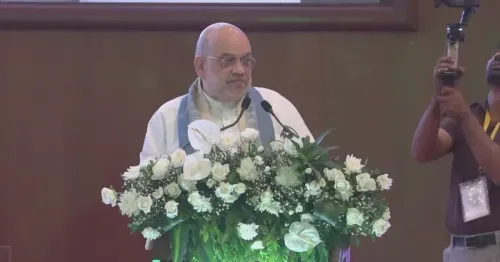
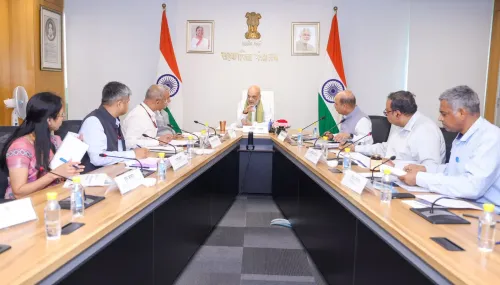
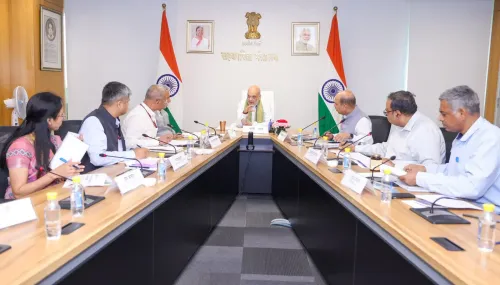
CM Fadnavis, Amit Shah Anchor NFSU-NUCFDC Cybersecurity MoU
Synopsis
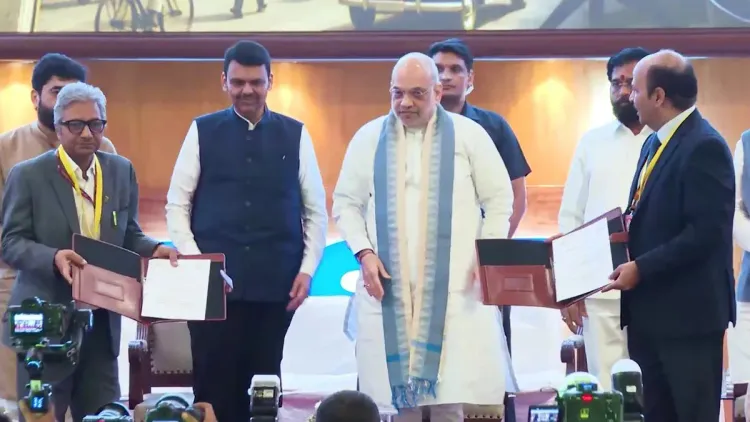
Union Home Minister Amit Shah and Maharashtra CM Devendra Fadnavis presided over an MoU between NFSU and NUCFDC on 8 August 2026, establishing a centralised cybersecurity framework for India's urban cooperative banks — a sector long exposed to digital threats.
Key Takeaways
Amit Shah and CM Devendra Fadnavis presided over the NFSU-NUCFDC MoU signing on 8 August 2026 .
The MoU aims to deliver a centralised cybersecurity system to urban cooperative banks across India.
NFSU , established by Parliament in 2020 , brings forensic and cybersecurity expertise; NUCFDC is the apex body for urban cooperative banks.
The initiative builds on the Ministry of Cooperation , created in July 2021 under Amit Shah to modernise the cooperative sector.
Deputy CM Eknath Shinde and Union Ministers of State Krishan Pal Gurjar and Murlidhar Mohol were present at the signing.
Phased rollout of the platform and potential expansion to rural cooperative banks are the key next steps to watch.
India's urban cooperative banks — thousands of them, holding the savings of small depositors from Mumbai to Nagpur — have long been the weakest link in the country's digital banking chain. On Saturday, 8 August 2026, the central and Maharashtra governments moved to close that gap: the Chief Minister's Office of Maharashtra announced the signing of a landmark MoU between the National Forensic Sciences University (NFSU) and the National Urban Cooperative Finance and Development Corporation (NUCFDC), presided over by Union Home and Cooperation Minister Amit Shah and Chief Minister Devendra Fadnavis.
One MoU, thousands of banks now in the shield
The agreement commits NFSU and NUCFDC to building a centralised cybersecurity system specifically for urban cooperative banks — institutions that, unlike their commercial counterparts, have historically operated without dedicated digital-security infrastructure. The post described it as 'बँकिंग क्षेत्रातील डिजिटल सुरक्षा अधिक सक्षम करण्याच्या दिशेने एक महत्त्वपूर्ण पाऊल' — 'a significant step towards strengthening digital security in the banking sector.'
Deputy Chief Minister Eknath Shinde, Union Minister of State Krishan Pal Gurjar, and Union Minister of State Murlidhar Mohol were among the dignitaries present at the signing ceremony.
Who is NFSU — and why it fits here
NFSU was established by an Act of Parliament in 2020 as India's central university for forensic science education, research, and training for law-enforcement institutions. Its mandate has since expanded to include cybersecurity capabilities for government bodies — making it a natural institutional partner for a banking-sector digital-security drive. NUCFDC, the apex body for urban cooperative banks, provides the financial and developmental backbone that connects the initiative to ground-level institutions.
Five years of cooperative-sector reform behind this moment
The MoU does not arrive in a vacuum. The Ministry of Cooperation was carved out as a standalone ministry in July 2021 — with Amit Shah at its helm — precisely to modernise cooperative institutions that had long sat outside the mainstream regulatory and technology frameworks applied to commercial banks. Since then, the push has been to bring urban cooperative banks under stronger oversight, better capitalisation, and now, credible cyber-defence. Repeated cybersecurity incidents at smaller cooperative banks have made the case for a centralised umbrella system more urgent with each passing year.
The next milestone to watch: phased rollout of the centralised cybersecurity platform across urban cooperative banks, and whether similar institutional MoUs extend to rural cooperative banks and state-level cooperative bodies.
For millions of small savers whose deposits sit in cooperative banks, a centralised cyber shield is no longer a luxury — it is the floor.
Point of View
Standardised cyber infrastructure over fragmented bank-by-bank solutions. Amit Shah's personal presence at the signing underlines that cooperative-sector reform remains a political priority, not just an administrative one. The real test will be implementation speed: centralised frameworks announced with fanfare have historically stalled at the rollout stage in India's cooperative sector.
NationPress
8 Aug 2026
Frequently Asked Questions
What is the NFSU-NUCFDC MoU about?
The MoU signed on 8 August 2026 commits the National Forensic Sciences University (NFSU) and the National Urban Cooperative Finance and Development Corporation (NUCFDC) to building a centralised cybersecurity system for urban cooperative banks across India.
Why do urban cooperative banks need a centralised cybersecurity system?
Urban cooperative banks, which number in the thousands and serve small savers, have historically lacked dedicated digital-security infrastructure and have faced repeated cybersecurity incidents, making a centralised protective framework necessary.
What is NFSU and why is it involved in banking cybersecurity?
The National Forensic Sciences University was established by an Act of Parliament in 2020 to advance forensic science education and research for government institutions; its cybersecurity mandate makes it a fit partner for protecting the cooperative banking sector.
How does this MoU relate to the Ministry of Cooperation?
The Ministry of Cooperation was established in July 2021 under Amit Shah to modernise cooperative institutions; the NFSU-NUCFDC MoU is a direct output of that five-year reform agenda, extending digital-security upgrades to the urban cooperative banking sector.