Maharashtra CM Fadnavis launches India's first AI app for farmers on Krishi Diwas
Synopsis
On Maharashtra Krishi Diwas, CM Fadnavis unveiled India's first AI-powered farming app — a first-of-its-kind national initiative — alongside mandatory seed certification, ₹28,000 crore in annual free electricity, and a flood diversion project targeting a drought-free Maharashtra. The package is the state's most sweeping agricultural policy push in years.
Key Takeaways
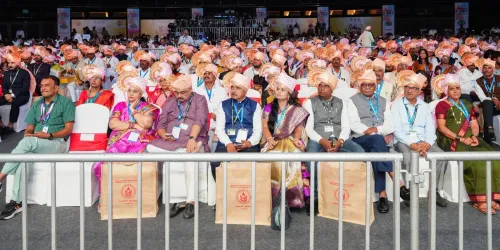
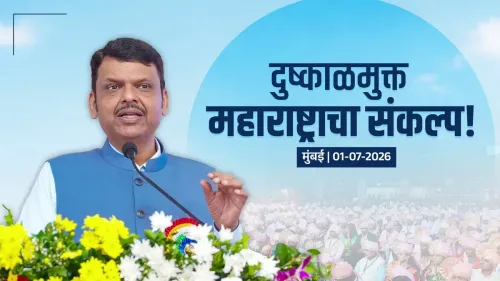
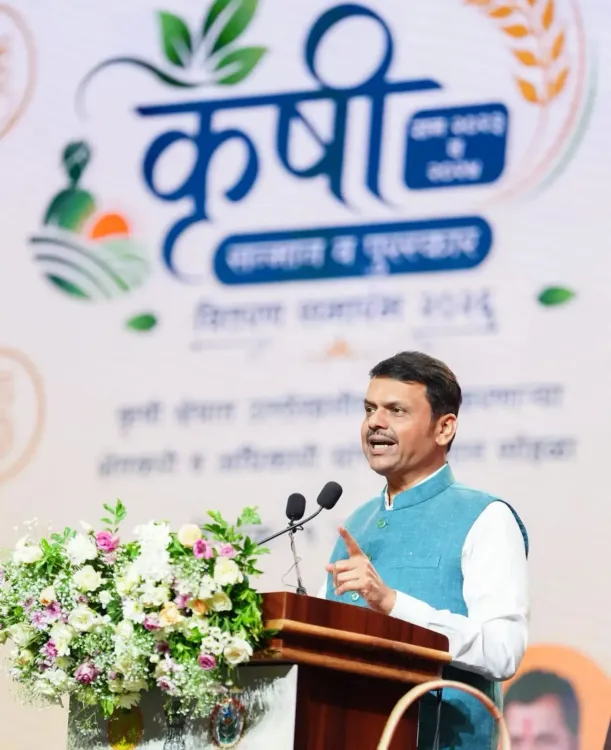
CM Devendra Fadnavis announced India's first AI-driven mobile app for agriculture on 1 July 2025 at the Krishi Award Distribution Ceremony , Mumbai.
All seed varieties will require mandatory certification through the government's official website to curb counterfeit seeds.
Maharashtra spends ₹28,000 crore annually on free electricity for farmers and targets 12 hours of free daytime power for all farmers by end of 2025.
The state accounts for 60% of all solar agricultural pumps installed across India under the PM's scheme.
Water conservation work has reached more than 22,000 villages via the Jalyukt Shivar Abhiyan and Farm Pond Scheme .
A flood diversion project via the Ujani dam aims to make Maharashtra completely drought-free.
Maharashtra Chief Minister Devendra Fadnavis on 1 July 2025 announced the development of India's first AI-driven mobile application exclusively for the agricultural sector, unveiling the initiative on Maharashtra Krishi Diwas (Agriculture Day) at the Krishi Award Distribution Ceremony in Mumbai. The app, to be launched by the state's agriculture department, is aimed at drastically reducing production costs for farmers across Maharashtra.
Key Announcements at Krishi Diwas
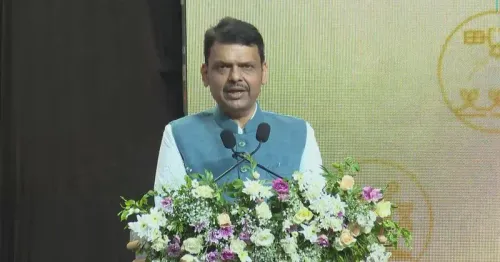
'Our agriculture department will soon launch a dedicated app that will prove highly beneficial for farmers,' Fadnavis said at the ceremony. Beyond the AI application, he also declared that all seed varieties will now require mandatory certification through the government's official website — a move designed to eliminate counterfeit seeds and protect farmers from exploitation. Maharashtra, he noted, already allocates the highest budget in the country for agricultural mechanisation, with ₹1,500 crore to ₹2,000 crore committed annually and subsidies of 80% to 100% on farming equipment.
Free Electricity and Solar Push
Fadnavis highlighted that the state government spends ₹28,000 crore annually to provide free electricity to farmers. Maharashtra currently accounts for 60% of all solar agricultural pumps installed across India under the Prime Minister's scheme, leading the nation by a wide margin. At present, 75% of the state's farmers receive daytime electricity; the government has set a target to extend 12 hours of free daytime electricity to all farmers by the end of this year.
Water Conservation and Climate Strategy
Addressing the chronic water stress in Vidarbha and Marathwada, the Chief Minister said water conservation work has been completed in more than 22,000 villages through the Jalyukt Shivar Abhiyan and the Farm Pond Scheme. These interventions have enabled farmers in several regions to shift from single-crop to double and triple-crop farming. An ambitious flood diversion project has also been launched to channel surplus water to drought-prone talukas of Western Maharashtra and further into the Marathwada region via the Ujani dam. Farmers in climate-vulnerable areas will receive specialised training to adapt to shifting weather patterns. 'We will not let the next generation of Maharashtra suffer the scourge of drought,' Fadnavis asserted.
Long-Term Vision: Self-Reliant Farmers
While acknowledging relief measures such as loan waivers, Fadnavis stressed that the government's ultimate objective is to boost capital investment in agriculture and make farmers financially self-reliant. He described the award recipients at the ceremony as 'true ambassadors of the Agriculture Department,' whose innovative practices and resilience would serve as inspiration across the state. With the AI app, mandatory seed certification, expanded solar coverage, and a drought-free Maharashtra as the stated goal, the announcements collectively represent the most comprehensive agricultural policy package the state has outlined in recent years.
Point of View
But the absence of a launch date or technical specification makes it difficult to assess beyond intent. Maharashtra's ₹28,000 crore annual electricity subsidy is fiscally significant and warrants scrutiny on sustainability — particularly as the state simultaneously pushes solar expansion, which should theoretically reduce that burden over time. The mandatory seed certification move is arguably the most immediately impactful announcement for ground-level farmers, yet it received the least attention. The Vidarbha and Marathwada climate-adaptation commitments echo promises made across multiple state budgets; what is missing is a measurable outcome framework that would distinguish this package from its predecessors.
NationPress
1 Jul 2026
Frequently Asked Questions
What is India's first AI app for agriculture announced by CM Fadnavis?
It is a mobile application being developed by Maharashtra's agriculture department, announced on 1 July 2025 on Krishi Diwas, designed to use artificial intelligence to help farmers reduce production costs. A specific launch date has not yet been disclosed.
Why is seed certification being made mandatory in Maharashtra?
The Maharashtra government is making it mandatory to certify all seed varieties through its official website to combat the sale of counterfeit seeds and prevent the exploitation of farmers. The measure was announced by CM Fadnavis at the Krishi Award Distribution Ceremony.
How much does Maharashtra spend on free electricity for farmers?
The state government incurs an annual expenditure of ₹28,000 crore to provide free electricity to farmers. It currently covers 75% of farmers with daytime power and aims to extend 12 hours of free daytime electricity to all farmers by the end of 2025.
What is the Jalyukt Shivar Abhiyan and how many villages has it covered?
Jalyukt Shivar Abhiyan is Maharashtra's water conservation programme, implemented alongside the Farm Pond Scheme. According to CM Fadnavis, the initiative has completed water conservation work in more than 22,000 villages, enabling farmers in several regions to shift from single-crop to multi-crop farming.
What is the flood diversion project announced for drought-prone Maharashtra regions?
The government has launched a flood diversion project that will channel excess water to drought-prone talukas of Western Maharashtra and further into the Marathwada region via the Ujani dam. The stated goal is to build a completely drought-free Maharashtra.