CM Fadnavis Backs Drug-Free Mumbai Pledge Drive
Synopsis
Maharashtra CM Devendra Fadnavis on July 30, 2026 amplified the Drug Free Mumbai campaign, calling on citizens to take a personal pledge against drugs and work toward a healthier, substance-free Maharashtra — aligning the state drive with India's broader Nasha Mukt Bharat Abhiyan.
Key Takeaways
CM Devendra Fadnavis publicly backed the Drug Free Mumbai campaign on July 30, 2026 .
The campaign uses public pledges and social media mobilisation to build a drug-free movement in Mumbai .
Fadnavis posted in both English and Marathi, broadening the campaign's linguistic reach.
The state drive aligns with the Nasha Mukt Bharat Abhiyan , launched by the Government of India in 2020 .
Youth are the primary target demographic under the hashtag #NashaMuktYuva .
Participation numbers and any follow-up on rehabilitation or enforcement will indicate the campaign's real-world impact.
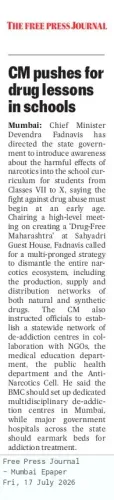
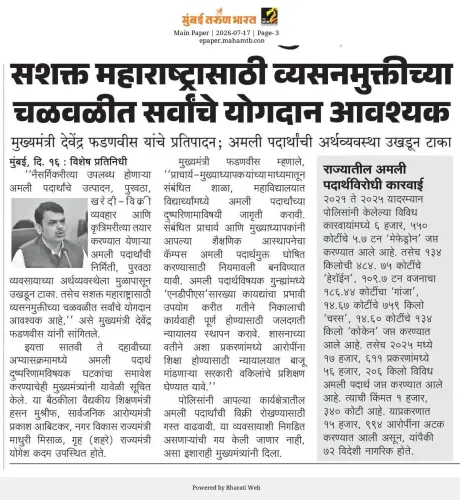
A pledge against drugs is also a promise to your family and your future — that is the message Maharashtra Chief Minister Devendra Fadnavis put out on Thursday, July 30, 2026, throwing his weight behind the Drug Free Mumbai campaign and calling on citizens across the city to raise their hands and commit to a substance-free life.
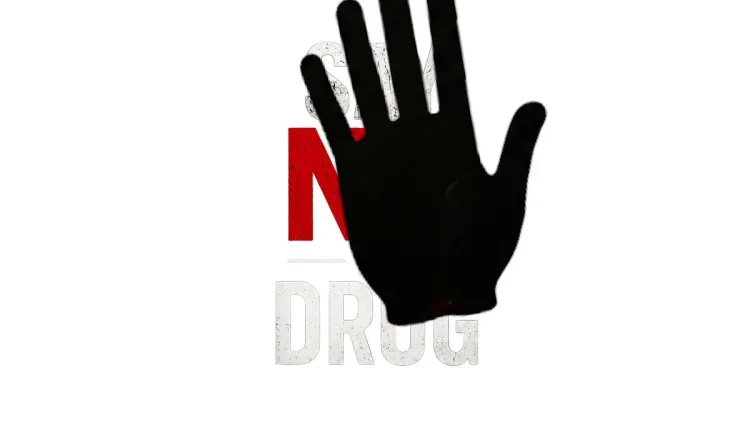
In a bilingual post mixing English and Marathi, Fadnavis framed the drive in unambiguous terms: 'Real strength lies in saying YES to your dreams and NO to drug.' The Marathi portion reinforced the resolve — मुंबईला 'ड्रग्ज फ्री करण्याचा संकल्प ('the resolve to make Mumbai drug-free') — anchoring the campaign in the language of everyday Maharashtra.
Mumbai at the Centre of Maharashtra's Anti-Drug Push
Mumbai, India's financial capital and Maharashtra's most populous city, has long grappled with urban drug use across age groups. The Drug Free Mumbai campaign — active under the handle @drugfreemumbai_ — is a state-level abhiyan built around public pledges, social media mobilisation and community awareness, targeting especially young residents under the hashtags #DrugFreeMumbai and #NashaMuktYuva.
The campaign sits within a well-established national framework. The Government of India launched the Nasha Mukt Bharat Abhiyan in 2020 to combat substance abuse through awareness drives and community action. Maharashtra's state-level push mirrors that architecture — combining the reach of social media with the moral weight of a personal pledge.
Why the Pledge Model Matters
Anti-drug drives in India have repeatedly used the public pledge as their core mechanic: it shifts the campaign from government instruction to personal ownership. Fadnavis leaned into exactly that logic — 'every pledge is a promise, to yourself, your family and your future.' The framing is deliberate: it makes the individual, not the state, the protagonist of the story.
For a city the size of Mumbai, participation numbers in the pledge drive will be the first real measure of reach. Any follow-through — on rehabilitation infrastructure, enforcement, or youth outreach — will determine whether this campaign leaves a structural footprint beyond the social media cycle.
Maharashtra has a large, young urban population that is precisely the demographic most targeted by such drives. The Chief Minister's direct amplification signals that the campaign has political backing at the highest level of the state — which typically accelerates administrative momentum on the ground.
The next test is simple: how many hands actually go up.
Point of View
Reinforcing BJP's governance narrative around public health and social welfare. The pledge-based model, however, is only as durable as the institutional follow-through: without announced investments in rehabilitation or enforcement, the campaign risks remaining a social media moment rather than a policy shift. The real signal to watch is whether this amplification precedes a concrete state-level announcement.
NationPress
30 Jul 2026
Frequently Asked Questions
What is the Drug Free Mumbai campaign?
Drug Free Mumbai is a Maharashtra state-level awareness abhiyan that mobilises citizens — especially youth — to take public pledges against drug use through community action and social media outreach.
What did CM Devendra Fadnavis say about the Drug Free Mumbai drive?
On July 30, 2026, Fadnavis called on citizens to take a personal pledge against drugs, saying 'Real strength lies in saying YES to your dreams and NO to drug,' and urged all of Maharashtra to unite for a healthier, drug-free state.
What is the Nasha Mukt Bharat Abhiyan?
The Nasha Mukt Bharat Abhiyan is a national programme launched by the Government of India in 2020 to combat substance abuse through community awareness, public pledges, and coordinated action across states.
Who is the target audience of the Drug Free Mumbai campaign?
The campaign primarily targets youth in Mumbai and across Maharashtra, as reflected in the hashtag #NashaMuktYuva, which translates to 'intoxication-free youth.'
How can Mumbai residents participate in the Drug Free Mumbai pledge?
Residents can participate by following the official campaign handle @drugfreemumbai_ on X and joining the pledge drive using the hashtags #DrugFreeMumbai and #NashaMuktYuva.